
Famous Egyptians
Egypt’s influence on the Arab world and beyond comes from its people as much as from its monuments. Cairo gave the region its best-loved singers and its film industry, and Egyptian writers, scientists and statesmen have won four Nobel Prizes between them. Egyptians have dominated world squash for two decades, footballers such as Mohamed Salah are known worldwide, and the country’s Olympic and Paralympic champions have a strong record in weightlifting, wrestling, taekwondo, karate and modern pentathlon. This guide introduces some of the people whose names visitors will hear again and again, on street murals and café radios, in museum halls and at stadiums.
01
Nobel Prize laureates
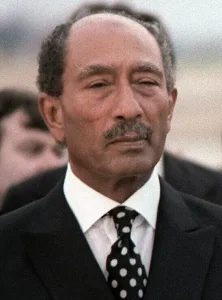
Anwar Sadat أنور السادات
Anwar Sadat was President of Egypt from 1970 until his assassination in October 1981. Born in the Nile Delta village of Mit Abu El Kom, he was an army officer and one of the Free Officers before succeeding Gamal Abdel Nasser. He led Egypt through the October War of 1973 and in 1977 became the first Arab head of state to visit Israel. The Camp David Accords of 1978 and the 1979 peace treaty followed, and he shared the 1978 Nobel Peace Prize with Israeli Prime Minister Menachem Begin. He was the first Egyptian Nobel laureate.
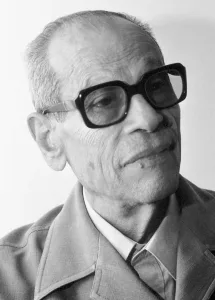
Naguib Mahfouz نجيب محفوظ
Naguib Mahfouz is the only Arabic-language writer to have won the Nobel Prize in Literature, awarded in 1988. Born in Cairo's Gamaliya district, he worked for decades as a civil servant while writing more than thirty novels and hundreds of short stories. His Cairo Trilogy (Palace Walk, Palace of Desire, Sugar Street), published in 1956–57, follows one family across the first half of the twentieth century. Many of his novels were adapted into Egyptian films. Visitors can trace his world in the old streets around Khan el-Khalili and at the Naguib Mahfouz Museum in Islamic Cairo.
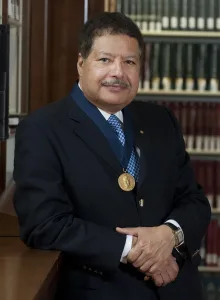
Ahmed Zewail أحمد زويل
Ahmed Zewail was awarded the 1999 Nobel Prize in Chemistry, unshared, for his studies of the transition states of chemical reactions using femtosecond spectroscopy. Born in Damanhour and educated at Alexandria University, he completed his doctorate in the United States and spent most of his career at the California Institute of Technology. His laser techniques made it possible to watch atoms move during a reaction, and his work founded the field known as femtochemistry. He later championed science education in Egypt, and Zewail City of Science and Technology near Cairo bears his name.
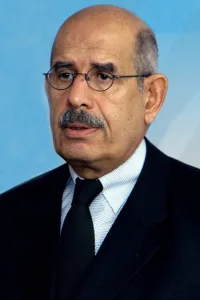
Mohamed ElBaradei محمد البرادعي
Mohamed ElBaradei is a Cairo-born lawyer and diplomat who served as Director General of the International Atomic Energy Agency (IAEA) from 1997 to 2009. He and the IAEA were jointly awarded the 2005 Nobel Peace Prize for their efforts to prevent nuclear energy from being used for military purposes and to ensure its safe peaceful use. Before joining the IAEA he worked in Egypt's diplomatic service and at the United Nations. He later returned to Egyptian public life and served briefly as interim Vice President in 2013.
02
Music
Umm Kulthum أم كلثوم
Umm Kulthum is widely regarded as the greatest Arab singer of the twentieth century and is often called the Star of the East (Kawkab al-Sharq). Raised in a Delta village, she began by singing religious songs with her father before moving to Cairo in the 1920s. From 1934 her monthly radio concerts, often lasting several hours, brought much of the Arab world to a standstill. Songs such as Enta Omri (1964), composed by Mohamed Abdel Wahab, and Al-Atlal remain classics. Millions attended her funeral in Cairo in 1975, and there is a museum dedicated to her on Roda Island.
Mohamed Abdel Wahab محمد عبد الوهاب
Mohamed Abdel Wahab was one of the most influential Arab composers of the twentieth century, known as the Musician of the Generations. A protégé of the poet Ahmed Shawqi, he blended Arabic maqam traditions with Western instruments, rhythms and orchestration. He starred in early Egyptian musical films from 1933 and wrote hundreds of songs, including works for Umm Kulthum such as Enta Omri (1964), as well as Abdel Halim Hafez and Fairuz. He also composed the music of Egypt's former national anthem, Walla Zaman Ya Selahy, used from 1960 to 1979.
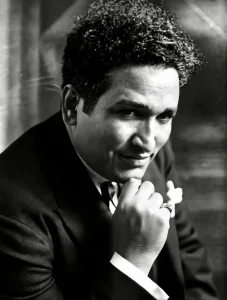
Sayed Darwish سيد درويش
Sayed Darwish, born in Alexandria, is considered the father of modern Egyptian popular music. In a short career he moved Arabic song away from ornate court styles towards melodies drawn from the everyday life of workers, craftsmen and street vendors, and wrote music for many stage operettas. His song Biladi, Biladi, Biladi, written around the 1919 revolution, became Egypt's national anthem in 1979 and remains so today. He died in 1923 at only 31, but his songs are still widely performed and the Sayed Darwish Theatre in Alexandria honours his memory.
Abdel Halim Hafez عبد الحليم حافظ
Abdel Halim Hafez, nicknamed the Dark-Skinned Nightingale (al-Andalib al-Asmar), was the leading romantic singer of Egypt's post-1952 generation. Orphaned as a child in Sharqia, he studied at the Cairo Conservatory and rose to fame in the 1950s with a softer, more intimate style than earlier singers. He starred in sixteen films and recorded hundreds of songs, from love ballads such as Ahwak to patriotic anthems. He suffered from bilharzia-related liver disease for most of his life and died in London in 1977. His songs and films remain hugely popular across the Arab world.
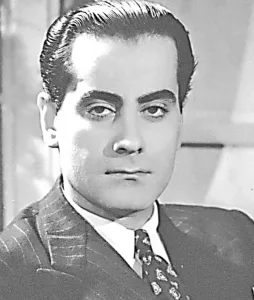
Farid al-Atrash فريد الأطرش
Farid al-Atrash was born in Syria to a prominent Druze family and moved to Cairo as a child with his mother and sister, the singer Asmahan. He became one of the great masters of the oud and a leading composer, singer and film star of Egypt's golden age. From Intisar al-Shabab (1941) onward he starred in about thirty musical films, often opposite leading actresses of the day. His long oud improvisations and songs such as Rabeea (Spring) are still celebrated, and he is buried in Cairo.
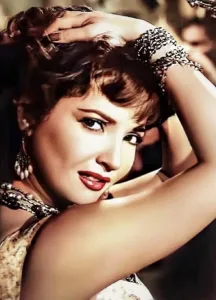
Shadia شادية
Shadia, born Fatma Ahmed Kamal Shaker in Cairo, was one of the most popular stars of Egyptian cinema and song from the late 1940s to the 1980s. She appeared in more than a hundred films, moving from light musical comedies to serious dramatic roles such as Naguib Mahfouz adaptations Al-Liss wal-Kilab (The Thief and the Dogs, 1962) and Miramar (1969). Her patriotic song Ya Habibti Ya Masr is still sung at national celebrations. She retired from public life in the mid-1980s and died in Cairo in 2017 at 86.
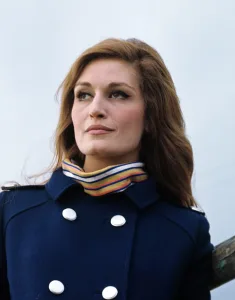
Dalida داليدا
Dalida was born Iolanda Gigliotti to an Italian family in Cairo's Shubra district and was crowned Miss Egypt in 1954. She moved to Paris that year and became one of France's best-selling singers, with hits such as Bambino (1956), Paroles, paroles (1973) and Gigi l'Amoroso. She recorded in many languages, including Egyptian Arabic songs such as Salma Ya Salama (1977) and Helwa Ya Baladi, a nostalgic tribute to Egypt. She also starred in Youssef Chahine's film The Sixth Day (1986).
Mohamed Mounir محمد منير
Mohamed Mounir, born in Aswan and nicknamed The King, is one of Egypt's most respected singers. Since his first album in 1977 he has mixed Nubian music, Egyptian folk melodies, jazz and pop, bringing southern Egyptian culture into mainstream music. Over a long career he has made classic albums, acted in films such as Youssef Chahine's Al-Massir (Destiny, 1997) and given frequent concerts across Egypt, the Arab world and Europe. His songs about Egypt, the Nile and Nubia are played on national occasions and are especially popular with younger audiences.
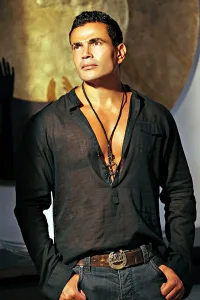
Amr Diab عمرو دياب
Amr Diab, born in Port Said, is the best-selling Egyptian pop star of the modern era and is often credited with creating the 'Mediterranean' sound that shaped Arabic pop from the late 1980s. His 1996 hit Nour El Ain became one of the most widely heard Arabic songs internationally, and he has received several World Music Awards as the best-selling Middle Eastern artist. Over a career of more than forty years and over thirty albums he has remained at the top of the Arab charts, and his concerts in Egypt and the Gulf regularly draw tens of thousands.
03
Film and theatre
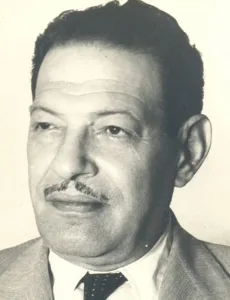
Naguib el-Rihani نجيب الريحاني
Naguib el-Rihani is regarded as the father of modern Egyptian comedy. Born in Cairo to an Iraqi Christian father and an Egyptian mother, he created the stage character Kish Kish Bey in the 1910s and founded his own troupe, which performed social comedies in colloquial Egyptian Arabic. Working with writer Badie Khairy, he used humour to address class, money and everyday hardship. He moved into cinema in the 1930s and 1940s; his final film, Ghazal al-Banat (1949), co-starring Leila Mourad, is still considered a classic of Egyptian cinema.
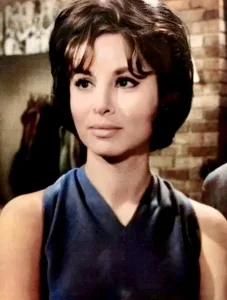
Faten Hamama فاتن حمامة
Faten Hamama, known as the Lady of the Arab Screen, began acting as a child in 1940 and went on to appear in nearly a hundred films over six decades. She worked with major directors including Henry Barakat, Youssef Chahine and Salah Abu Seif, in films such as Doaa al-Karawan (The Nightingale's Prayer, 1959). Her 1975 film Oreed Hallan (I Want a Solution) portrayed a woman's struggle to obtain a divorce and contributed to public debate on family law. She was married to Omar Sharif from 1955 to 1974.
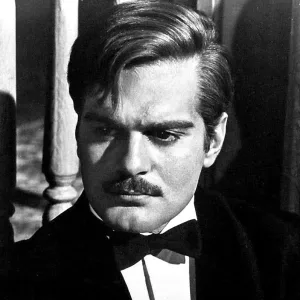
Omar Sharif عمر الشريف
Omar Sharif, born Michel Chalhoub in Alexandria, was the first Egyptian actor to become an international film star. After his debut in Youssef Chahine's Struggle in the Valley (1954), he was cast as Sherif Ali in David Lean's Lawrence of Arabia (1962), winning a Golden Globe and an Academy Award nomination. He then played the title role in Doctor Zhivago (1965), which brought another Golden Globe, and starred in Funny Girl (1968). A world-class bridge player, he received an honorary César for his career in 2004. He died in Cairo in 2015.
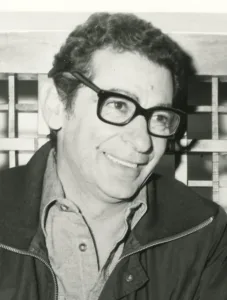
Youssef Chahine يوسف شاهين
Youssef Chahine, born in Alexandria, was Egypt's most internationally acclaimed film director. In a career of over forty films he moved from melodrama and realism, as in Cairo Station (Bab al-Hadid, 1958), to personal and historical works such as his Alexandria trilogy, beginning with Alexandria… Why? (1979). He introduced Omar Sharif to the screen and was a regular at the Cannes Film Festival, which gave him its 50th Anniversary Prize for his lifetime's work in 1997, the year it screened his film Destiny (Al-Massir) about the philosopher Averroes.
Soad Hosny سعاد حسني
Soad Hosny, often called the Cinderella of Egyptian cinema, starred in more than eighty films between 1959 and 1991. Born in Cairo into a large artistic family, she was discovered as a teenager and became the screen's leading lady of the 1960s and 1970s, equally at home in comedy, musicals and drama. Her best-known films include Khally Balak Men Zouzou (Watch Out for Zouzou, 1972), a box-office record of its time, and Al-Karnak (1975). She died in London in 2001, and her films and songs remain much loved.
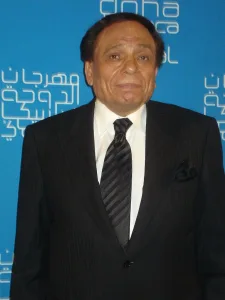
Adel Imam عادل إمام
Adel Imam, often called Al-Zaeem (The Leader), is the Arab world's most famous comic actor. Born in Mansoura, he rose to fame on stage in the 1960s and 1970s with long-running plays such as Madraset El-Moshaghbeen (School of Troublemakers, 1973) and later Shahed Ma Shafsh Haga. His films, including Al-Irhab wal-Kabab (Terrorism and Kebab, 1992) and The Yacoubian Building (2006), often mixed comedy with social commentary. He was appointed a UNHCR Goodwill Ambassador in 2000. He has largely withdrawn from public life in recent years.
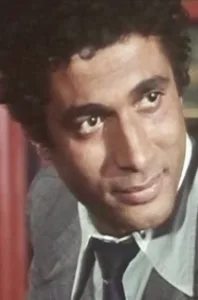
Ahmed Zaki أحمد زكي
Ahmed Zaki, born in Zagazig, was celebrated for intense, naturalistic performances that reshaped the image of the Egyptian leading man in the 1980s and 1990s. He starred in acclaimed films such as Al-Bari'a (The Innocent, 1986) and Ard al-Khof (Land of Fear, 2000), and was especially known for portraying real people: Gamal Abdel Nasser in Nasser 56 (1996), Anwar Sadat in Ayam El Sadat (2001) and the singer Abdel Halim Hafez in Halim, completed shortly before his death from cancer in 2005. Critics often rank him among the finest Arab actors.
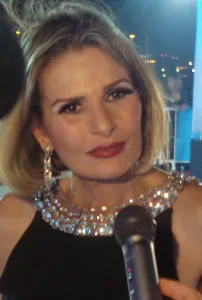
Yousra يسرا
Yousra, born Civene Nessim in Cairo, has been one of Egypt's leading actresses since the late 1970s, with more than eighty films and many television dramas to her name. She worked repeatedly with Youssef Chahine, including Alexandria Again and Forever (1989), and with Adel Imam in hits such as Al-Irhab wal-Kabab (1992). She also appeared in The Yacoubian Building (2006). Appointed a Goodwill Ambassador for the United Nations Development Programme in 2006, she often attends international film festivals and sits on their juries.
04
Literature, science and thought
Ahmed Shawqi أحمد شوقي
Ahmed Shawqi was the leading Arabic poet of his era and was hailed as the Prince of Poets (Amir al-Shu'ara) at a gathering of Arab poets in Cairo in 1927. Educated in Cairo and France, he revived classical Arabic verse while bringing in modern themes, and he pioneered Arabic poetic drama with plays such as Masra' Kliyobatra (The Death of Cleopatra, 1929). Many of his poems were set to music by Mohamed Abdel Wahab and Umm Kulthum. His former home in Giza, Karmet Ibn Hani, is now the Ahmed Shawqi Museum.
Taha Hussein طه حسين
Taha Hussein, known as the Dean of Arabic Literature, lost his sight as a small child in Upper Egypt yet became one of the most influential Arab intellectuals of the twentieth century. He studied at Al-Azhar, earned the first doctorate awarded by the Egyptian University in 1914 and a further doctorate at the Sorbonne. His autobiography Al-Ayyam (The Days) is a classic of modern Arabic prose. As Minister of Education from 1950 to 1952 he championed free public education, famously arguing that education should be as available as water and air.
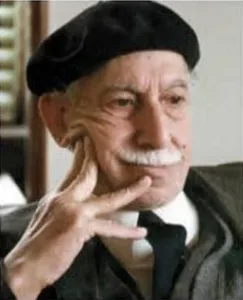
Tawfiq al-Hakim توفيق الحكيم
Tawfiq al-Hakim, born in Alexandria, is considered a founder of modern Arabic drama. After studying law in Paris in the 1920s, he returned to Egypt and in 1933 published the play Ahl al-Kahf (The People of the Cave) and the novel Awdat al-Ruh (Return of the Spirit), both landmarks of modern Arabic literature. Over his long career he wrote some ninety plays, ranging from philosophical drama to social comedy, as well as fiction such as Yawmiyyat Na'ib fi al-Aryaf (Diary of a Country Prosecutor, 1937), based on his own legal work.
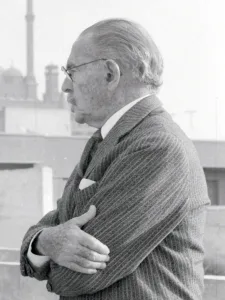
Hassan Fathy حسن فتحي
Hassan Fathy was an Egyptian architect who pioneered low-cost building with mud brick and traditional techniques such as Nubian vaults, domes and courtyards suited to a hot climate. His best-known project, the village of New Gourna near Luxor, begun in the 1940s, is described in his book Architecture for the Poor. His ideas influenced sustainable and community-based architecture worldwide. He received the Aga Khan Award for Architecture's Chairman's Award and the Right Livelihood Award, both in 1980. New Gourna is part of the Ancient Thebes World Heritage property.
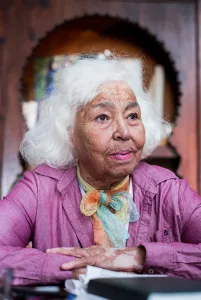
Nawal El Saadawi نوال السعداوي
Nawal El Saadawi was a physician, novelist and one of the best-known Arab writers on women's health and rights. Trained in medicine at Cairo University, she worked in rural clinics and later for the Ministry of Health. Her 1972 book Women and Sex addressed subjects then rarely discussed in public, and her novel Woman at Point Zero (1975) was translated into dozens of languages. She was imprisoned briefly in 1981 and wrote about the experience in Memoirs from the Women's Prison. She died in Cairo in March 2021.
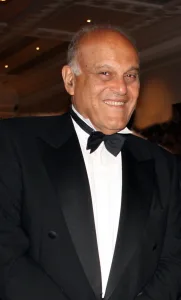
Sir Magdi Yacoub مجدي يعقوب
Sir Magdi Yacoub, born in Bilbeis in the Nile Delta, is one of the world's leading heart surgeons. Based at Harefield Hospital in England from 1969, he built one of the largest heart and lung transplant programmes in the world and pioneered several surgical techniques. He was knighted in 1992 and appointed to the Order of Merit in 2014, and remains Professor of Cardiothoracic Surgery at Imperial College London. Through the Magdi Yacoub Heart Foundation he founded the Aswan Heart Centre, which has treated thousands of patients free of charge since 2009.
Farouk El-Baz فاروق الباز
Farouk El-Baz is an Egyptian-American geologist who worked on NASA's Apollo programme. Born in Zagazig and educated in Egypt and the United States, he helped select lunar landing sites and trained astronauts in observing and photographing the Moon from 1967 to 1972. He later pioneered the use of satellite images to study deserts and find groundwater, including in Egypt's Western Desert. He has long directed the Center for Remote Sensing at Boston University, and an asteroid is named in his honour.
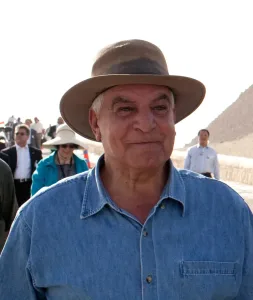
Zahi Hawass زاهي حواس
Zahi Hawass is Egypt's best-known archaeologist and a familiar face from international television documentaries. Born near Damietta, he worked for decades at Giza, where he directed excavations of the tombs of the pyramid builders. He served as Secretary General of the Supreme Council of Antiquities from 2002 and briefly as Minister of State for Antiquities in 2011. He led the DNA and CT-scan studies of royal mummies including Tutankhamun, campaigned for the return of antiquities held abroad, and has written many popular books on ancient Egypt.
05
Football
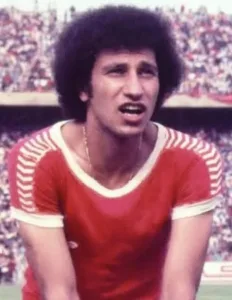
Mahmoud El Khatib محمود الخطيب
Mahmoud El Khatib, nicknamed Bibo, is one of the greatest players in the history of Al Ahly and Egyptian football. A gifted attacking midfielder, he spent his whole club career at Al Ahly from the early 1970s to 1988, winning numerous league titles and the club's first African Champions Cup in 1982. He was named African Footballer of the Year by France Football in 1983 and won the Africa Cup of Nations with Egypt in 1986. He later moved into administration and was elected president of Al Ahly in 2017.
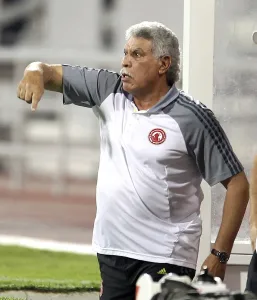
Hassan Shehata حسن شحاتة
Hassan Shehata is Egypt's most successful national-team coach. A former forward for Zamalek, he took charge of Egypt in 2004 and led the team to three consecutive Africa Cup of Nations titles, in 2006 on home soil, 2008 in Ghana and 2010 in Angola, a feat no other coach has achieved. His teams, built around players such as Ahmed Hassan, Mohamed Aboutrika and Essam El Hadary, also beat world champions Italy at the 2009 FIFA Confederations Cup. He left the post in 2011.
Hossam Hassan حسام حسن
Hossam Hassan is one of Egypt's most prolific strikers. With the national team he played in the 1990 FIFA World Cup in Italy and won the Africa Cup of Nations in 1986, 1998 and 2006, scoring around seventy international goals in well over 150 appearances. At club level he starred for Al Ahly and later Zamalek. Appointed Egypt head coach in 2024, he led the team at the 2026 World Cup, where Egypt won knockout-stage football for the first time by beating Australia on penalties before losing 3-2 to Argentina in the round of 16.
Ahmed Hassan أحمد حسن
Ahmed Hassan is Egypt's most-capped player, with more than 180 international appearances between 1995 and 2012. A powerful right-sided midfielder and captain, he won the Africa Cup of Nations four times, in 1998, 2006, 2008 and 2010, and was named player of the tournament in 2006 and 2010. His club career took him from Egypt to Turkey, where he played for clubs including Beşiktaş, and to Anderlecht in Belgium, before he returned home to play for Al Ahly and Zamalek.
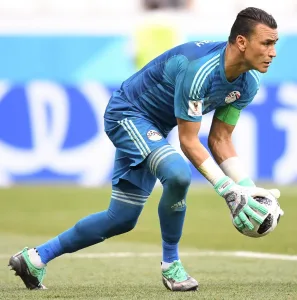
Essam El Hadary عصام الحضري
Essam El Hadary is one of Africa's most decorated goalkeepers. He won the Africa Cup of Nations four times with Egypt, in 1998, 2006, 2008 and 2010, and collected numerous domestic and African club titles with Al Ahly. On 25 June 2018, aged 45, he played against Saudi Arabia at the World Cup in Russia and saved a penalty, becoming the oldest player ever to appear at a FIFA World Cup finals tournament. He retired from international football later that year.
Mohamed Aboutrika محمد أبو تريكة
Mohamed Aboutrika is one of the most admired Egyptian players of the 2000s. An elegant attacking midfielder for Al Ahly, he won the CAF Champions League five times (2005, 2006, 2008, 2012 and 2013) and helped the club to third place at the 2006 FIFA Club World Cup. For Egypt he scored the decisive penalty in the 2006 Africa Cup of Nations final shoot-out and the winning goal in the 2008 final against Cameroon. He was named BBC African Footballer of the Year in 2008 and retired in 2013.
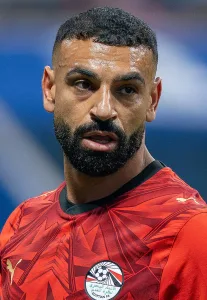
Mohamed Salah محمد صلاح
Mohamed Salah, from the village of Nagrig in Gharbia, is the most famous Egyptian athlete of his generation. Joining Liverpool in 2017, he won the Champions League (2019), two Premier League titles (2020 and 2025) and four Premier League Golden Boots, and was named African Footballer of the Year in 2017 and 2018. He announced in March 2026 that he would leave Liverpool and signed for Turkey's Trabzonspor in August 2026. As captain, he led Egypt at the 2026 World Cup, where the team reached the round of 16 for the first time.
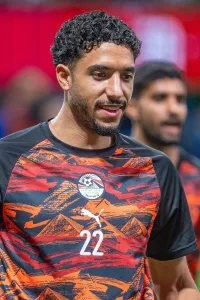
Omar Marmoush عمر مرموش
Omar Marmoush, born in Cairo, is one of the leading Egyptian forwards of the new generation. After starting at Wadi Degla, he developed in Germany with Wolfsburg, St. Pauli and Stuttgart before a breakthrough at Eintracht Frankfurt, where he was named Bundesliga Player of the Month twice in 2024. Manchester City signed him in January 2025 for a reported fee of about £59 million, and he won the FA Cup and League Cup with City in 2026. He was part of Egypt's 2026 World Cup squad and joined Tottenham Hotspur on loan in August 2026.
06
Squash champions
Ahmed Barada أحمد برادة
Ahmed Barada was the first Egyptian star of the modern professional squash era and inspired the generation that followed. Born in Cairo, he won the World Junior Open in 1994 and the World Games title in 1997, and rose to world No. 2 in December 1998. In 1999 he reached the final of the World Open, losing to Peter Nicol, and helped Egypt win the World Team Championship in Cairo. His exciting matches in front of the Pyramids made squash a popular sport in Egypt. He retired in 2001.
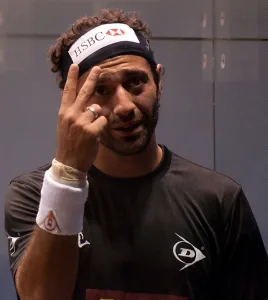
Amr Shabana عمرو شبانة
Amr Shabana, nicknamed the Prince of Squash for his touch and shot-making, was the first Egyptian man to win the World Championship, in 2003. He went on to win it again in 2005, 2007 and 2009, making him a four-time world champion, and became world No. 1 in 2006, holding the top spot for well over a year. His success, built on a left-handed attacking style, set off two decades of Egyptian dominance in men's squash. He retired from the professional tour in 2014.
Ramy Ashour رامي عاشور
Ramy Ashour is regarded as one of the most naturally gifted squash players of all time, celebrated for his speed and creative shot-making. He won the World Junior title twice and then the senior World Championship three times, in 2008, 2012 and 2014, and was ranked world No. 1 on several occasions. In 2013 he won 54 consecutive PSA matches. Injuries repeatedly interrupted his career, and he retired in 2019. He remains a hero to the many young Egyptian players who followed him.
Mohamed ElShorbagy محمد الشوربجي
Mohamed ElShorbagy, from Alexandria, was world No. 1 for a large part of the period from late 2014 to 2020 and won the World Championship in 2017, beating his younger brother Marwan in the final. He reached several other world finals and won the British Open, the sport's oldest major, more than once. Known for his intensity and fitness, he was a central figure in Egypt's golden era. In 2022 he switched to represent England, where he has lived since his teens.
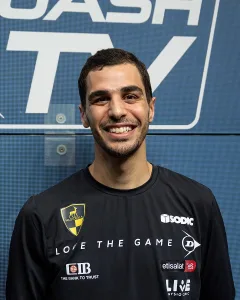
Ali Farag علي فرج
Ali Farag is a four-time world champion, winning the title in 2019, 2021, 2022 and 2023, and spent around 238 weeks as world No. 1 between 2019 and 2025. A Harvard graduate in mechanical engineering, he won 46 PSA titles, including the British Open, three US Opens and four Tournament of Champions crowns. At the 2017 US Open he and his wife Nour El Tayeb both won the title on the same day. He retired in May 2025 shortly after reaching his fifth world final.
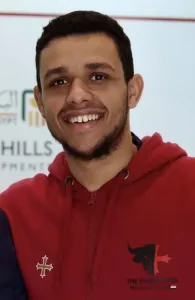
Mostafa Asal مصطفى عسل
Mostafa Asal, born in Cairo and nicknamed the Raging Bull for his powerful, physical style, is the leading men's player of the mid-2020s. He first reached world No. 1 in 2023 and won the World Championship in Chicago in 2025, going through the event unbeaten. In May 2026 he retained the title on home soil in Giza, beating fellow Egyptian Youssef Ibrahim in the final. He has also helped Egypt win the World Team Championship in 2023 and 2024.
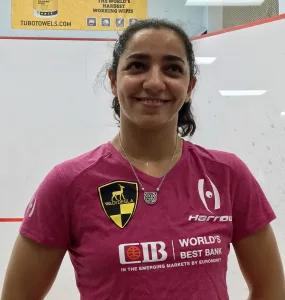
Raneem El Welily رنيم الوليلي
Raneem El Welily, from Alexandria, became the first Egyptian woman to reach world No. 1, in 2015. Famous for her attacking flair and deceptive racket work, she won the World Junior title and reached several senior world finals before claiming the World Championship in Manchester in 2017, beating Nour El Sherbini. She regained the No. 1 ranking for long spells and helped Egypt win world team titles. She retired from professional squash in 2021 and remains one of the most popular figures in the women's game.
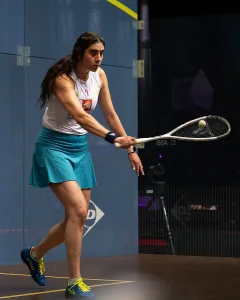
Nour El Sherbini نور الشربيني
Nour El Sherbini, born in Alexandria, is the most successful women's world champion in squash history, with eight world titles: two in 2016, followed by wins in 2019, 2020, 2021, 2022, 2023 and 2025. She became world No. 1 in 2016 at the age of 20 and has also won the British Open several times. She has reached most world finals of the past decade, finishing runner-up to Amina Orfi in Giza in 2026, and has been part of Egypt's world team champions.
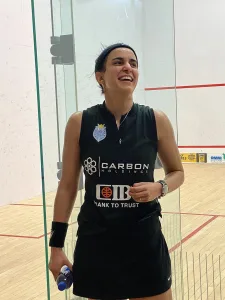
Nour El Tayeb نور الطيب
Nour El Tayeb, from Cairo, was one of the leading players of Egypt's golden era in women's squash, reaching a career-high ranking of world No. 3 in 2018. She won the US Open in 2017 on the same day as her husband Ali Farag, making them the first married couple to win the same major title on the same day. She reached the world final in 2019, won world medals in 2017 and 2019, and was part of Egypt's world team champions in 2012, 2018 and 2022. She retired in 2024.
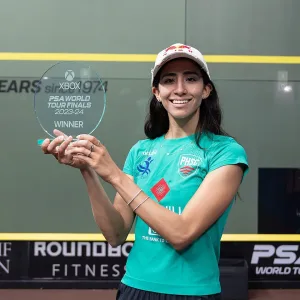
Nouran Gohar نوران جوهر
Nouran Gohar, born in Cairo, became world No. 1 in 2020 and held the top ranking for long periods in the following years. Known for her power and physical strength, she reached three consecutive world finals between 2021 and 2023 before winning the World Championship in Cairo in 2024, beating Nour El Sherbini. She has also won the British Open and was part of Egypt's world team champions in 2016, 2018 and 2022. She is a former world junior champion.
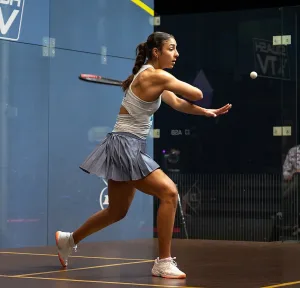
Hania El Hammamy هانيا الحمامي
Hania El Hammamy, from Cairo, reached world No. 1 for the first time in November 2025 after years in the top five. A former world junior champion, she reached her first World Championship final in Chicago in 2025, finishing runner-up to Nour El Sherbini. In 2026 she won the El Gouna International as world No. 1, beating El Sherbini in the final, and retained the Optasia Championship title. She is one of the leaders of the generation following Egypt's golden era.
Amina Orfi أمينة عرفي
Amina Orfi, born in Cairo in 2007, won the PSA World Championship in Giza in May 2026, beating defending champion Nour El Sherbini in the final. She became the youngest woman ever to win the title, eclipsing El Sherbini's record, and the first woman to hold the World Junior and senior world titles at the same time. She won the World Junior Championship four years running, from 2022 to 2025, and reached a career-high ranking of world No. 2 in January 2026.
07
Olympic medallists
Khadr El-Touni خضر التوني
Khadr El-Touni is one of the great figures of early Olympic weightlifting. At the 1936 Berlin Olympics he won the middleweight gold medal with a total of 387.5 kg, a performance that outclassed the heavier divisions and drew wide international attention. He went on to win world titles in 1946, 1949 and 1950 and set numerous world records. He narrowly missed a medal at the 1948 London Games, losing bronze on a tie-break. He died in 1956 aged 39, and a hall at Cairo Stadium is named after him.
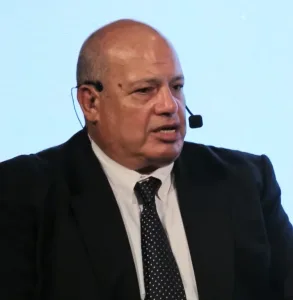
Mohamed Ali Rashwan محمد علي رشوان
Mohamed Ali Rashwan, from Alexandria, won the silver medal in the open-weight judo category at the 1984 Los Angeles Olympics. In the final he faced Japan's Yasuhiro Yamashita, who was carrying a leg injury, and Rashwan chose not to attack the injured leg. His sportsmanship earned him an international fair play award, and he is still respected for it, especially in Japan. He also won silver medals at the World Judo Championships in 1985 and 1987, and remains Egypt's only Olympic medallist in judo besides Hesham Mesbah (2008 bronze).
Karam Gaber كرم جابر
Karam Gaber won the Greco-Roman 96 kg gold medal at the 2004 Athens Olympics, beating Georgia's Ramaz Nozadze 12-1 in the final. It was Egypt's first Olympic gold since 1948 and its first in Greco-Roman wrestling since 1928. Eight years later, at London 2012, he took silver in the 84 kg category. He also won world championship silver medals in 2002 and 2003 and two Mediterranean Games titles, and is one of Egypt's best-known Olympic athletes.
Hedaya Malak هداية ملاك
Hedaya Malak is Egypt's most successful female taekwondo athlete and one of the few Egyptians with two Olympic medals. She won bronze in the women's 57 kg category at Rio 2016, becoming one of the first Egyptian women to stand on an Olympic podium, and added a second bronze in the 67 kg category at Tokyo 2020. She was also chosen as Egypt's flag bearer at the Tokyo opening ceremony, alongside the fencer Alaaeldin Abouelkassem.
Sara Ahmed سارة أحمد
Sara Ahmed, from Ismailia governorate, won bronze in the women's 69 kg weightlifting at Rio 2016 at the age of 18, becoming the first Arab woman to win an Olympic weightlifting medal. Eight years later she won silver in the women's 81 kg category at Paris 2024 with a total of 268 kg. Her two Olympic medals, won in different weight classes, make her one of Egypt's most successful female Olympians.
Mohamed Ihab محمد إيهاب
Mohamed Ihab won the bronze medal in the men's 77 kg weightlifting event at the Rio 2016 Olympics, Egypt's first men's weightlifting medal awarded at the Games themselves in decades. He has been one of Egypt's leading weightlifters for more than a decade, winning medals at world championships, African championships and the Mediterranean Games. Together with Sara Ahmed's bronze at the same Games, his medal revived Egypt's historic strength in the sport.
Feryal Abdelaziz فريال أشرف عبد العزيز
Feryal Abdelaziz, born in Cairo, became the first Egyptian woman to win an Olympic gold medal when she took the women's +61 kg kumite title at the Tokyo 2020 Games, held in 2021. She beat Azerbaijan's Iryna Zaretska in the final in karate's only appearance on the Olympic programme to date. Her gold, Egypt's first in any sport since 2004, made her a national celebrity and inspired many young women to take up combat sports.
Giana Farouk جيانا فاروق
Giana Farouk (also known as Giana Lotfy) won the bronze medal in the women's 61 kg kumite at the Tokyo 2020 Olympics. Before that she was already one of the sport's top competitors, winning individual world titles in the 61 kg category in 2014 and 2016, along with team medals for Egypt. Together with Feryal Abdelaziz's gold, her medal made karate one of Egypt's most successful sports at the Tokyo Games.
Seif Eissa سيف عيسى
Seif Eissa, born in Cairo, won the bronze medal in the men's 80 kg taekwondo event at the Tokyo 2020 Olympics. A Youth Olympic bronze medallist in 2014, he has become one of Africa's leading taekwondo athletes, winning African titles in 2021 and 2022, Mediterranean Games gold in 2022, world championship bronze medals in 2022 and 2023, and the world title in the 87 kg category in 2025. He also competed at the Paris 2024 Olympics.
Ahmed Elgendy أحمد الجندي
Ahmed Elgendy, born in Cairo, won the men's modern pentathlon gold medal at the Paris 2024 Olympics with a world-record score of 1,555 points, becoming the first African athlete to win Olympic gold in the sport. He had already won silver at Tokyo 2020, and as a teenager took two gold medals at the 2018 Youth Olympic Games in Buenos Aires. He has also won world junior titles and a world team title in 2023. His Paris gold was Egypt's only gold medal of those Games.
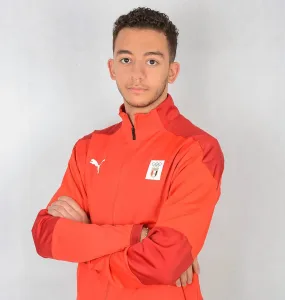
Mohamed El-Sayed محمد السيد
Mohamed El-Sayed, born in Cairo, won bronze in the men's individual épée at the Paris 2024 Olympics, which was Egypt's first medal of those Games. It was also Egypt's first Olympic fencing medal since Alaaeldin Abouelkassem's foil silver at London 2012. A former junior world medallist, he has won Mediterranean Games gold in 2022 and African titles, and is seen as one of the brightest prospects in Egyptian fencing.
08
Paralympic champions
Metwaly Mathana متولي مطحنة
Metwaly Mathana (also spelled Mathna) is one of Egypt's most successful Paralympians. He won three consecutive Paralympic gold medals in powerlifting: in the men's 60 kg class at Sydney 2000 and in the 67.5 kg class at Athens 2004 and Beijing 2008, where he lifted 217.5 kg. He also won medals at Atlanta 1996 and London 2012, and collected several world titles. He competed at six Paralympic Games, a record for an Egyptian athlete.
Fatma Omar فاطمة عمر
Fatma Omar is Egypt's most decorated female Paralympian. She won four consecutive Paralympic gold medals in powerlifting: in the 44 kg class at Sydney 2000 and in the 56 kg class at Athens 2004, Beijing 2008 and London 2012, setting world records along the way. She added a silver medal in the 61 kg class at Rio 2016. She has also won four world championship titles, and is regarded as one of the greatest para powerlifters in history.
Sherif Othman شريف عثمان
Sherif Othman (also spelled Sherif Osman), born in Beni Mazar in Minya governorate, won Paralympic gold in powerlifting three Games in a row: in the 56 kg class at Beijing 2008, where he set a world record, and in the 59 kg class at London 2012 and Rio 2016, where he lifted a world-record 211 kg. He took silver at Tokyo 2020 and has won several world championship titles. He competed again at Paris 2024 and has spoken of aiming for Los Angeles 2028.
Rehab Ahmed رحاب أحمد
Rehab Ahmed won silver medals in powerlifting at Rio 2016 and Tokyo 2020 before finally claiming gold in the women's up to 55 kg category at Paris 2024, where her winning lift of 121 kg settled the contest. She is a multiple world champion, adding a fifth world title at the 2025 World Championships in Cairo only months after recovering from a torn chest muscle. Her persistence across three Paralympic Games has made her one of Egypt's best-known para athletes.
Mohamed Elmenyawy محمد المنياوي
Mohamed Elmenyawy won Egypt's first medal of the Paris 2024 Paralympic Games, taking gold in the men's up to 59 kg powerlifting on his Paralympic debut. He beat China's Qi Yongkai and Iran's Mohsen Bakhtiar to the title. Egypt has a long record of success in the 59 kg division, in which Sherif Othman had previously won gold twice.
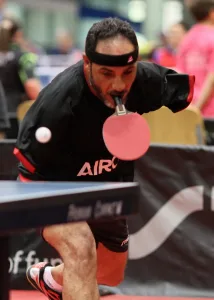
Ibrahim Hamadtou إبراهيم حمدتو
Ibrahim Hamadtou has never won a Paralympic medal, yet he is one of the most widely recognised para athletes in the world. He lost both arms in a train accident at the age of ten and taught himself to play table tennis by holding the bat in his mouth and serving with his right foot. He competed at the Rio 2016 and Tokyo 2020 Paralympic Games, where videos of his matches reached millions of viewers, and he is known around the world for his determination.
Last checked in October 2026. Titles and rankings change, so confirm with the official source before you travel: nobelprize.org, britannica.com, caltech.edu, npr.org, sis.gov.eg, gulfnews.com, bbc.com, ina.fr.