This Aswan travel guide covers the best things to do in Aswan: Philae Temple, felucca rides, Nubian villages, the High Dam and day trips to Abu Simbel. Below you will also find the best time to visit Aswan, how to get there and around, and a choice of hotels in Aswan.
Aswan has long been a favourite with travellers, explorers, historians and archaeologists, and visitors to this southern city usually describe it in glowing terms. The area has been archaeologically important since prehistoric times, especially at El-Kab, further north near Edfu.
Throughout ancient history and into modern times, Aswan has been an important administrative, religious and commercial centre.
Aswan High Dam
The Aswan High Dam (1960–1971) was a major national project, built with international help, to stop Nile water draining into the Mediterranean Sea and to generate electricity for the country. The dam and the artificial Lake Nasser are among the most important projects in modern Egypt.
North of Aswan are two of the most important Ptolemaic temples, Edfu and Kom Ombo. The Ptolemaic kings built Egyptian temples and portrayed themselves as pharaohs to win acceptance in Egyptian society.
Historical background
The Temple of Edfu
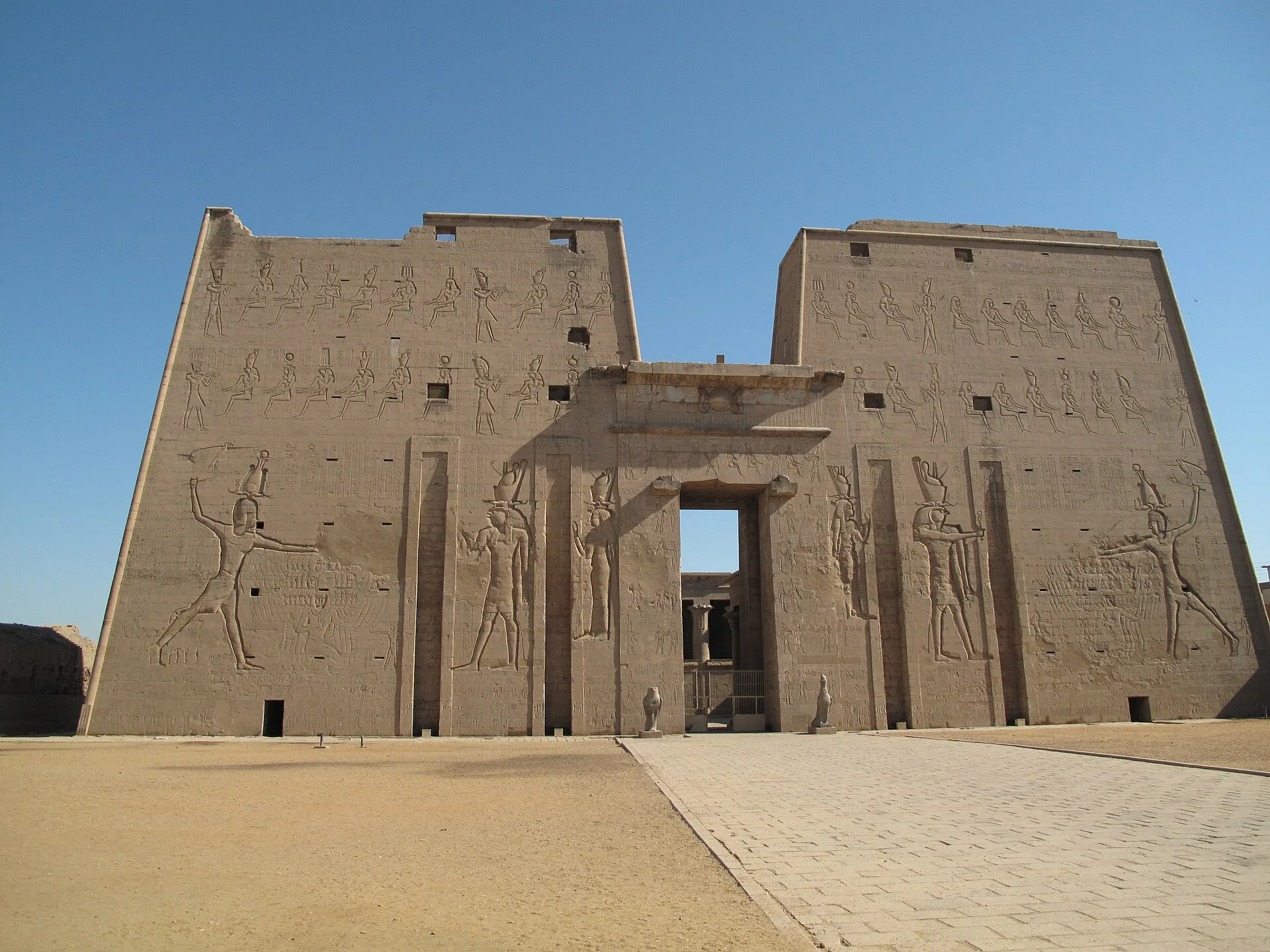
It was built on the ancient site that mythically witnessed the battle between the gods Horus and Seth. The ancient myth symbolizes the victory of good against evil, therefore the temple was dedicated to Horus, standing as a falcon in front of the entrance of the Temple, guarding his territory from chaos. It is considered as the most complete and best-preserved of all the temples of Egypt. The long history of constructing the temple, helped in documenting the history of Egypt from the reign of Ptolemy III until the reign of Ptolemy XII.
The Temple of Kom Ombo
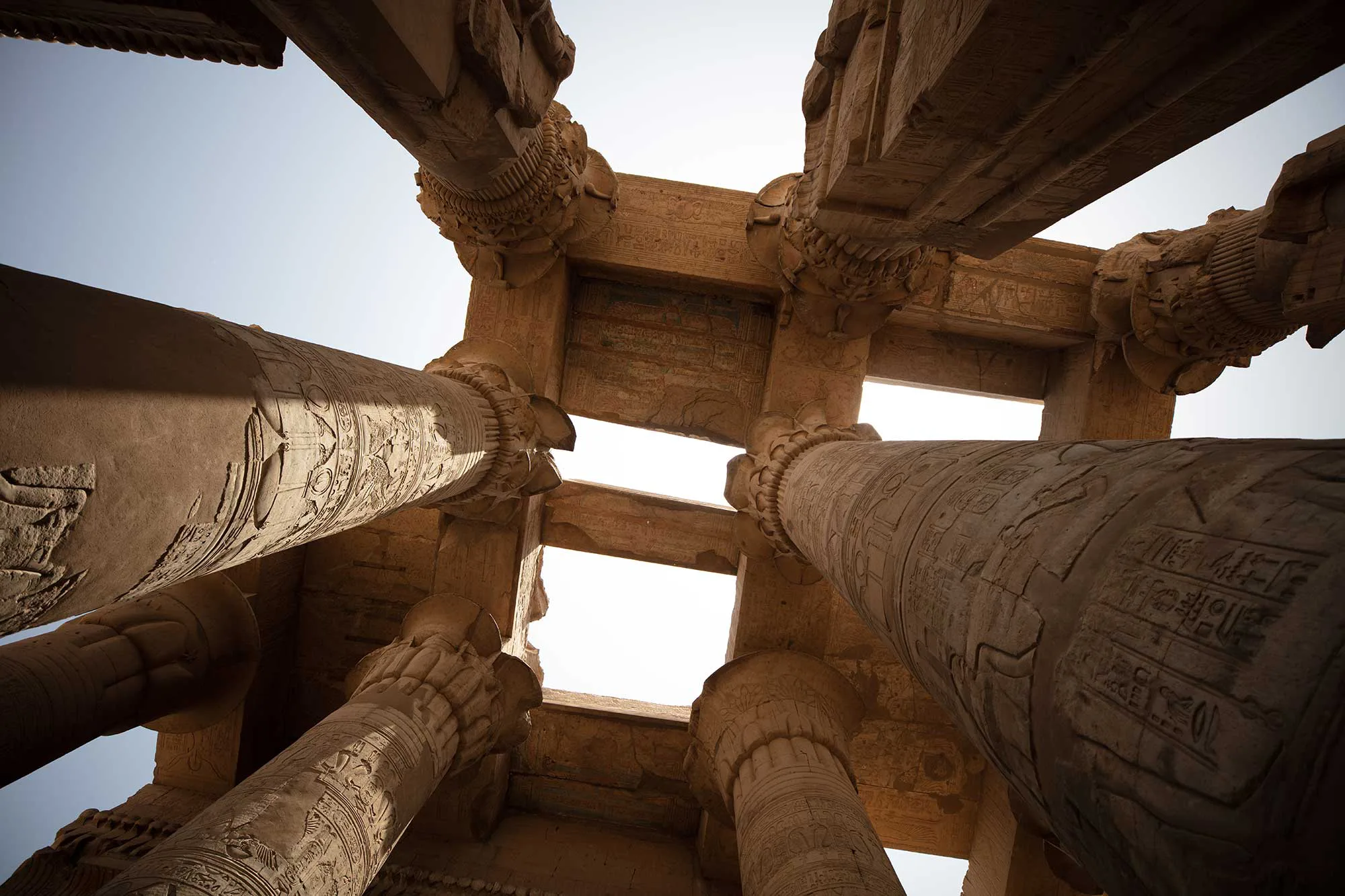
It is very unusual because it was dedicated to two sets of Triad gods which meant that there were duplicated courts, halls and sanctuaries. The temple was heavily destructed by the inundation and several earthquakes, and restored in the late nineteenth century AD. In addition to that, the Crocodile Museum was constructed to present some of the mummified crocodiles discovered in the temple.
El-Kab
It lies 25 km south of Esna. A cemetery mainly for the nobles of the New Kingdom was carved in the mountain. The rock-cut tombs revealed many secrets about the battles against the Hyksos and the Kushites, included in the autobiographies inscribed on the walls of tombs of high officials, such as Ahmose Son of Ibana, who was a military in the army of King Ahmose who expelled the Hyksos, and served also during the reigns of Amenhotep I and Thutmose I.
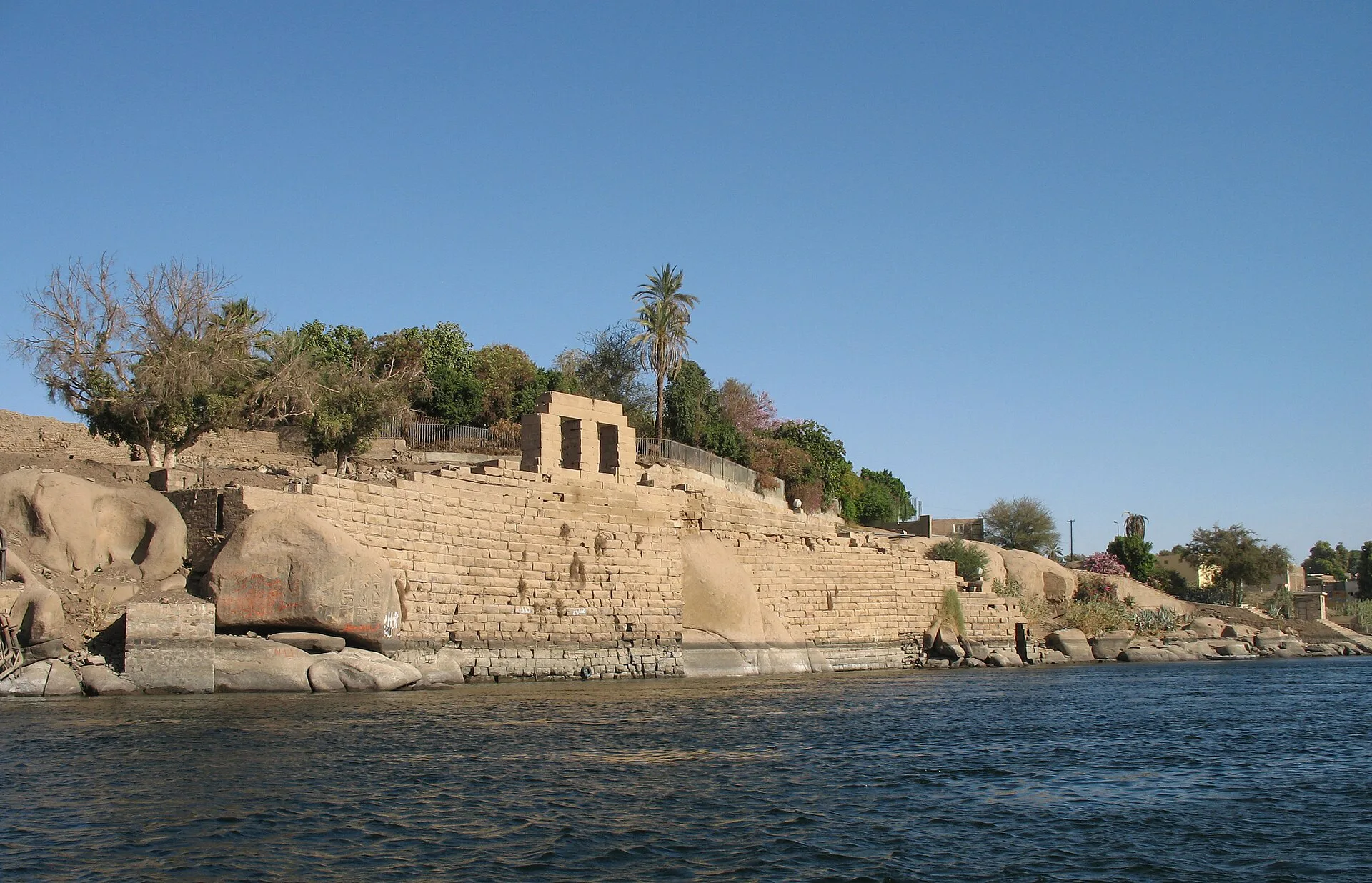
The Island of Elephantine
It lies midstream in the Nile, just above the first Cataract. The Island has a special importance in ancient Egypt as a capital to the first Upper Egyptian nome, and therefore monuments were constructed on the island as early as the first dynasties. As a cult center for Khunum, during the Old, Middle, New Kingdom and the Late Period many temples were erected and added to, but unfortunately, only ruins are left.
There is also a site-museum on the island as well as traditional Nubian houses. The gateway of the Temple of Khunum is one of the impressive remaining elements to have survived intact, as well as the reconstructed New Kingdom temple of the goddess Sattet.
Qubbet El Hawa
On the western bank of the Nile, opposite to Elephantine Island, lies the ancient site Qubbet El-Hawa, which is an ancient burial for Old, Middle and New Kingdom high-officials, which is known for the causeways leading from the Nile up to the tombs cut in the mountain. The name of the site is attributed to the dome commemorating the Islamic Sheikh Abu El Hawa. The Mausoleum of Agha Khan is a Fatimid Monument in this site, built as a tomb for Sir Sultan Mohammed Shah (a famous head of the Alawite sect), and was visited daily by his wife (The Begum Umm Habiba) to lay down a red rose on his cenotaph, until her death in the first of July 2000.
Temple of Philae
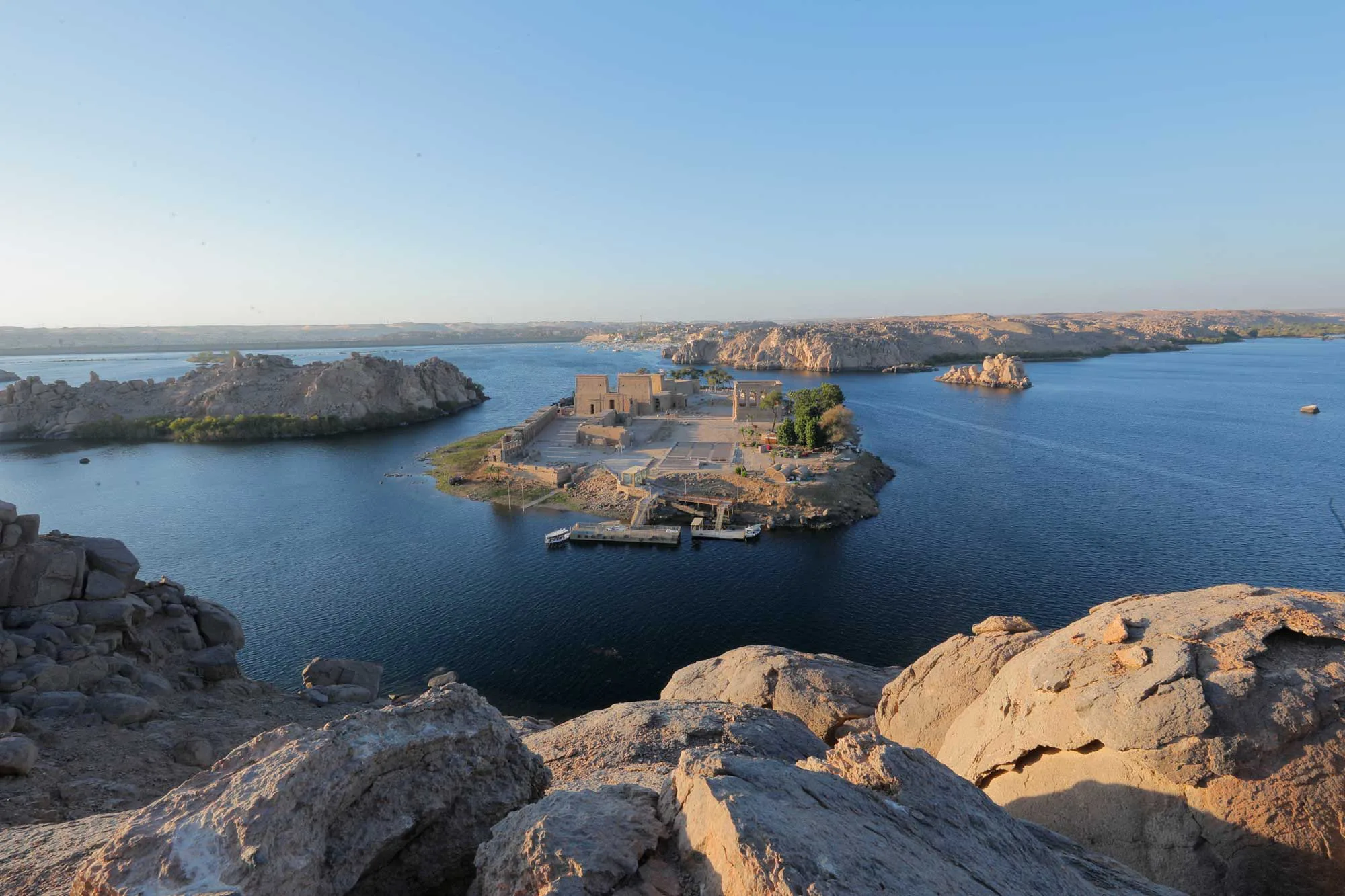
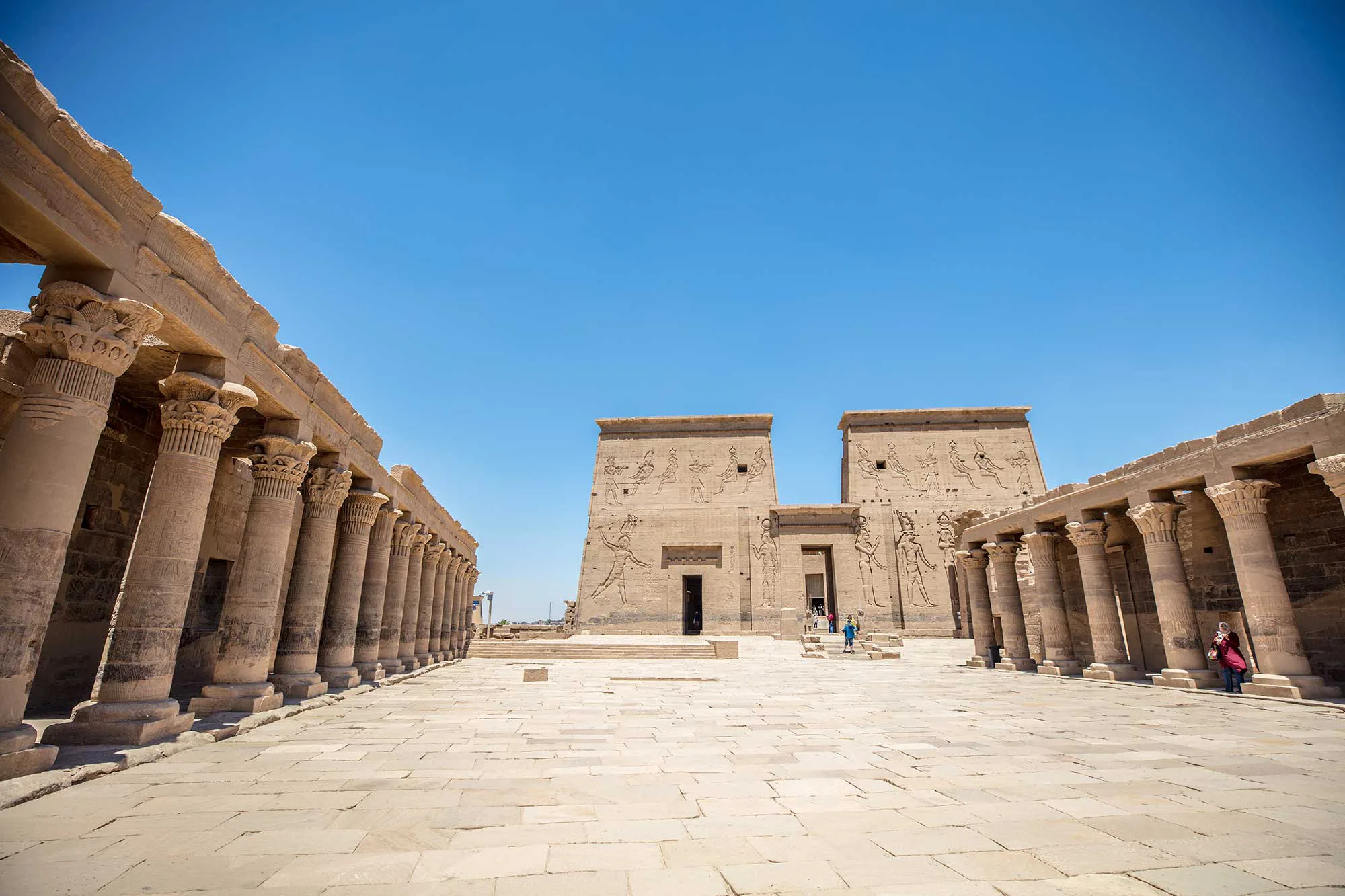
To the south of the High Dam, which was built in the 1960s, the Temple of Philae was re-erected. The temple was originally built during the Ptolemaic era on Philae Island, which is now submerged beneath the waters of the Nasser Lake. As a part of an unprecedented international campaign by the UNESCO, the temple was dismantled and reconstructed on the island of Agilika. The temple was initially constructed by the last Pharaoh, Nectanebo I, and later added to by the Ptolemaic kings, and dedicated to the goddess Isis, until it was converted into a church, in 527 AD. The temple is very famous for a French inscription during the Napoleonic expedition against the Mohammed Ali Dynasty.
Temples of Abu Simbel
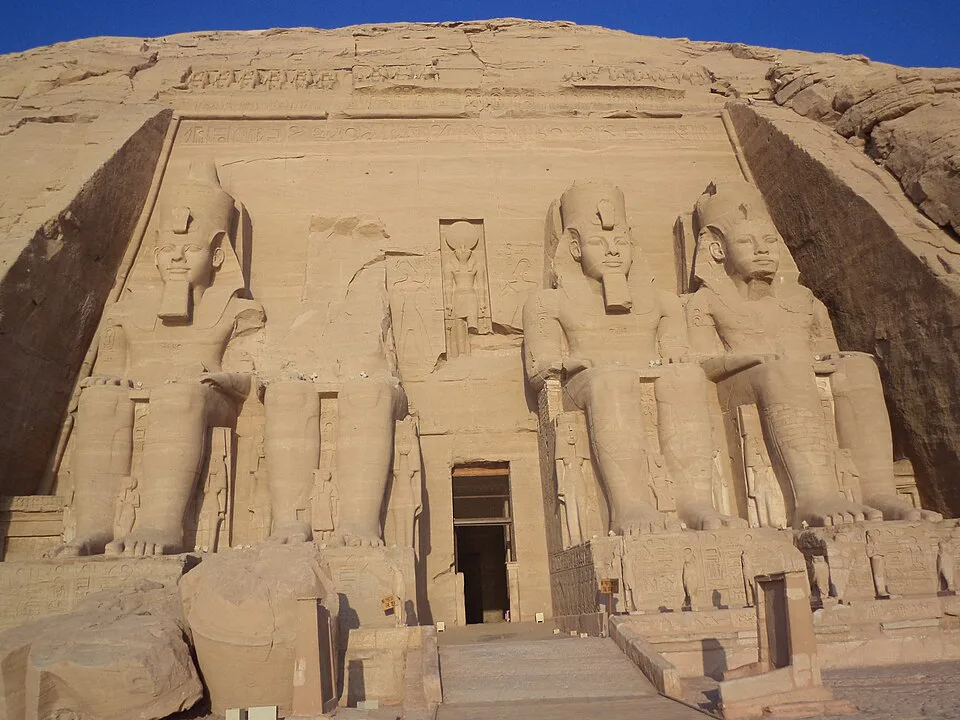
Far to the south, and on the western bank of the Nile, King Ramses II constructed two magnificent rock-cut Temples for himself and his wife, Queen Nefertari, the Temples of Abu Simbel. It is considered as the greatest rock-cut temple which the king constructed in Nubia and the most impressive of all Egyptian Monuments in the area. The temple was among the monuments dismantled upon the construction of the High Dam. Due to international efforts combined with Egyptian archaeologists, and the role of the UNESCO, the Temple was dismantled from the hill and transferred 60 m higher to be cut into blocks out of the mountain hill and reconstructed inside an artificial concrete hill on a dryland overlooking the Nasser Lake. Breathtaking boat trips can be done on the lake to admire the beauty of the temples representing the royal couple Ramesses II and Nefertari.
The temple commemorates the battle of Qadesh, and states the divinity of Ramses II. The temple’s holy of holies was constructed to exactly illuminate the statues of the deified form of Ramesses II, Amun-Re, Re-Horakhty, leaving the statue of Ptah in the darkness. This phenomenon is repeated twice a year on the twenty-second of October and the twentieth of February, in a very delightful and remarkable sight.
Gharb Sehel
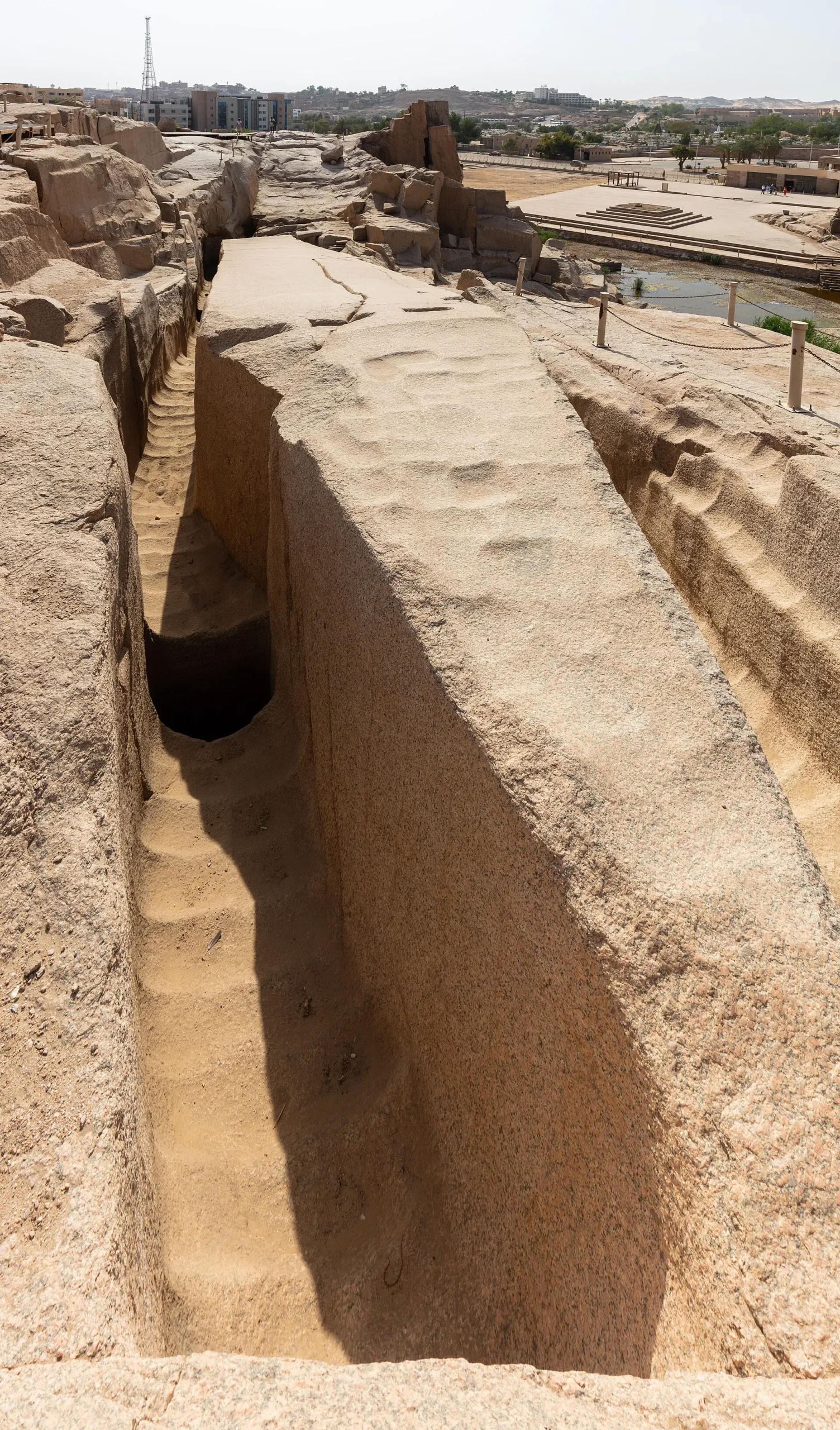
On the Island of Sehel, stands one of the great monuments, known as the Famine Stela which was inscribed during the Ptolemaic period but narrates a story of a famine from the Old Kingdom: the reign of king Djoser, reminding us of the story of Prophet Joseph in Egypt. In addition, about 300 inscriptions were left by high-officials who were sent by the kings to record the expeditions of digging canals and reforming projects in the Nile stream. The island is also an ancient mining site, together with many other quarries at Aswan, which as a city, this was a mining site for pink granite. This island is considered as an Open-Air Museum for the Nubian Culture, a place known as Gharb Sehel, or the Nubian Village, is a real experience of the Nubian life.
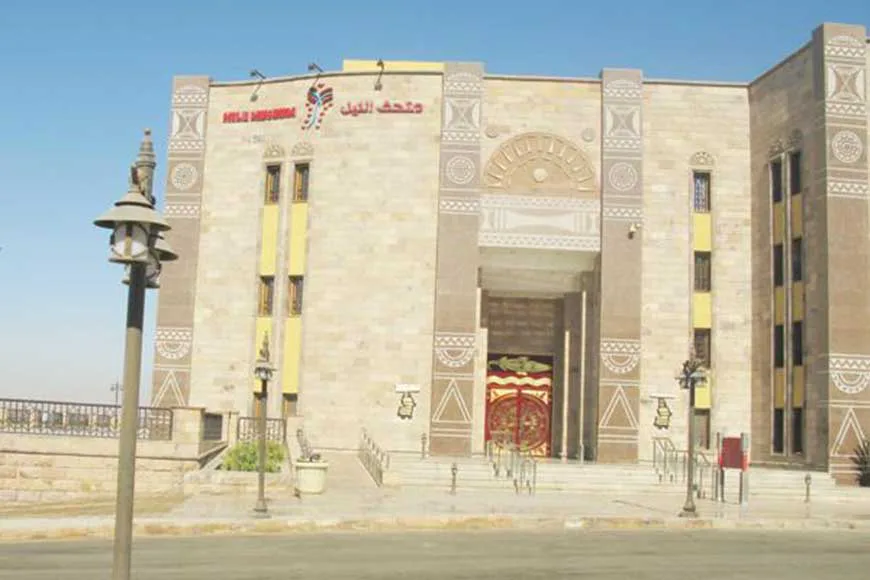
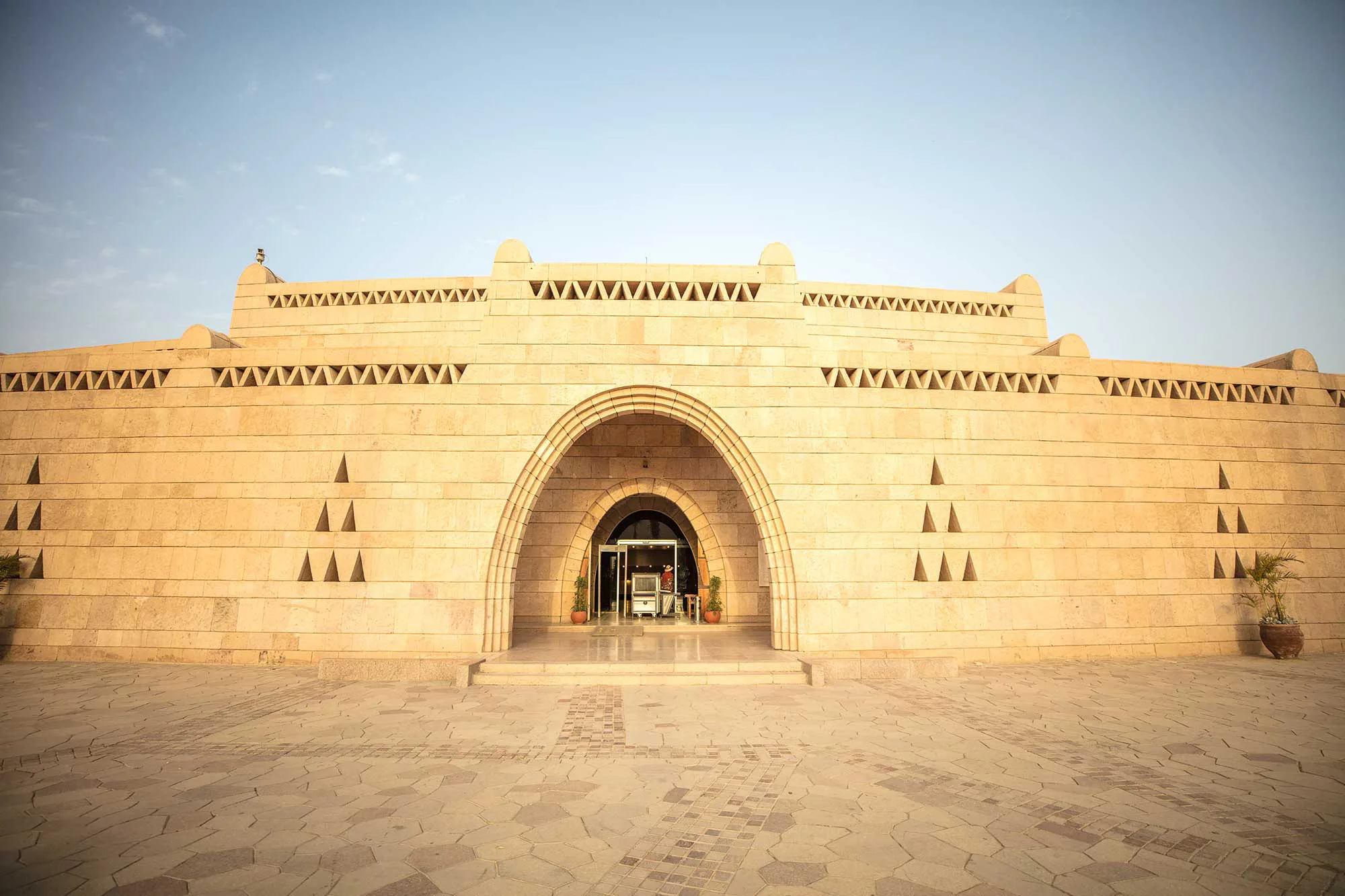
The Nubian Museum
It was realized with the help of UNESCO, and dedicated to the Nubian culture and civilization, housing more than 3000 pieces of Egyptian antiquity throughout different ages from the prehistory until modern ages.
Monastery of St. Simon
On the western bank of the Nile, lies the Monastery of St. Simeon. The fortress like monastery was built in the seventh century AD and re-built in the tenth century AD and is the first monastery to be dedicated to the local Saint Anba Hedra.
The Fatimid Cemetery
While on the eastern bank, not far from the Nubian Museum, lies the Fatimid Cemetery, constructed during the ninth century AD. It is a unique feature in southern Egypt, where the cemetery is covered with domed structures.
Aswan Botanical Garden
To the north of Elephantine Island lies Kitchener’s Island. The British commander’s project turned the entire island into a Botanical Garden, in the late 1800s, importing plants from India and the Far east, as well as African species. Till now the garden is a peaceful refugium to enjoy the fauna and flora of different places from the world.
The Lotus Tower
It was built to commemorate the Russian involvement in building the High Dam, is hard to miss. A tower built more than 70 m high, based on a five-petal lotus flower, allows you to view Aswan in a panoramic view. The beautiful city could be site-seen from the tower that commemorates the construction of a great project, the city being a mixture of ancient, Coptic, Islamic and modern monuments, where the nature intertwines with the civilizations in a mystical scenery viewed from the top of the Lotus Tower.
Tourist ideas
Complete guide to Aswan
About the city, its weather, the best time to visit and how to get there.
About Aswan
- Arabic name
- أسوان
- Governorate
- Aswan (أسوان)
- Region
- Upper Egypt
- Top landmark
- Abu Simbel
- Good for
- Culture, Nile
- Destination type
- Main
- Travel region
- The Nile Valley
What is the weather like in Aswan?
- Jan
- Apr
- Jul
- Oct
Average daytime highs, °C. Reference: Aswan and Abu Simbel.
When is the best time to visit Aswan?
- Best season
- Oct–Mar
- Ideal stay
- 2–3 days
Summer days are very hot: visit open-air sites early in the morning and rest at midday.
How do I get to Aswan?
- Nearest airport
- Aswan (ASW)
Daily flights from Cairo, trains on the Cairo–Luxor–Aswan line including the overnight sleeper train, and Nile cruises between Luxor and Aswan.
What to see in Aswan
- Abu Simbel
- Philae
- Nubian village
- felucca to Elephantine
- High Dam
- Nubian villages
- Kom Ombo
- Edfu
Archaeological sites in Aswan governorate
Museums in Aswan governorate
Hotels near Aswan
Things to do from Aswan
Day trips with hotel pickup, run by a local operator. Book directly with them.
Where to eat in Aswan
1902 Restaurant (Old Cataract) مطعم 1902 - فندق أولد كتراكت
Grand domed dining room in the legendary hotel; book ahead and dress smartly.
Panorama (Movenpick Aswan) بانوراما - موفنبيك أسوان
Tower-top restaurant with sweeping views over the Nile and the islands.
El Dokka الدكة
Island restaurant offering Nubian dishes with river views.
Salah Eddin صلاح الدين
Multi-level terrace restaurant on the Nile, good at sunset.
Nubian House البيت النوبي
Terrace restaurant overlooking the First Cataract, serving Nubian food.
Al Masry المصري
Local favourite for kofta, kebab and pigeon at modest prices.
Chef Khalil شيف خليل
Small fish restaurant where you choose fresh fish to be grilled.
Last checked October 2026. Opening hours and menus change; check with the venue before you go.
Shopping in Aswan
Aswan Souk (Sharia as-Souq) سوق أسوان
Long market street for spices, hibiscus, Nubian baskets, scarves and perfume oils, and calmer than most Egyptian bazaars.
Gharb Soheil Nubian Village قرية غرب سهيل النوبية
Painted Nubian village where stalls sell handicrafts, beadwork and spices.
Last checked October 2026. Opening hours and menus change; check with the venue before you go.
Frequently asked questions
When is the best time to visit Aswan?
The best time to visit Aswan is from October to March.
How do I get to Aswan?
Daily flights from Cairo, trains on the Cairo–Luxor–Aswan line including the overnight sleeper train, and Nile cruises between Luxor and Aswan.
What is the nearest airport to Aswan?
The nearest airport to Aswan is Aswan International Airport (ASW).
How many days should I spend in Aswan?
Plan to spend 2–3 days in Aswan.
What are the must-see places in Aswan?
The must-see places in Aswan include Philae, a Nubian village, a felucca trip to Elephantine and the High Dam.
Where can I eat in Aswan?
Popular choices include 1902 Restaurant (Old Cataract), Panorama (Movenpick Aswan), El Dokka, Salah Eddin. See the dining section above for more.
Where can I go shopping in Aswan?
Try Aswan Souk (Sharia as-Souq), Gharb Soheil Nubian Village. See the shopping section above.