This Luxor travel guide covers the best things to do in Luxor: Karnak, Luxor Temple, the Valley of the Kings, Hatshepsut’s temple and balloon rides. Below you will also find the best time to visit Luxor, how to get there and around, and a choice of hotels in Luxor.
Ancient Egyptian Thebes
Luxor, the modern city on the site of Thebes, was the home town of heroes of the ancient world. King Mentuhotep Nebhebetre, who reunified Egypt and founded the Middle Kingdom, came from here, and so did King Ahmose, who expelled the Hyksos and founded the New Kingdom, the age of empire.
UNESCO listed the city as a World Heritage Site in 1979, and it holds nearly a third of the world’s antiquities. Almost every part of Luxor has some relic of ancient Egyptian civilization.
The Nile divides the city in two. On the East Bank was the city of the living, with the temples of Luxor and Karnak where the daily rituals took place. The West Bank holds the royal tombs and the Temple of Millions of Years.
Historical background
The Eastern Side
It is the city of the livings, and the place of the divine temples built to serve as house of the gods of ancient Egypt.
Karnak Temples
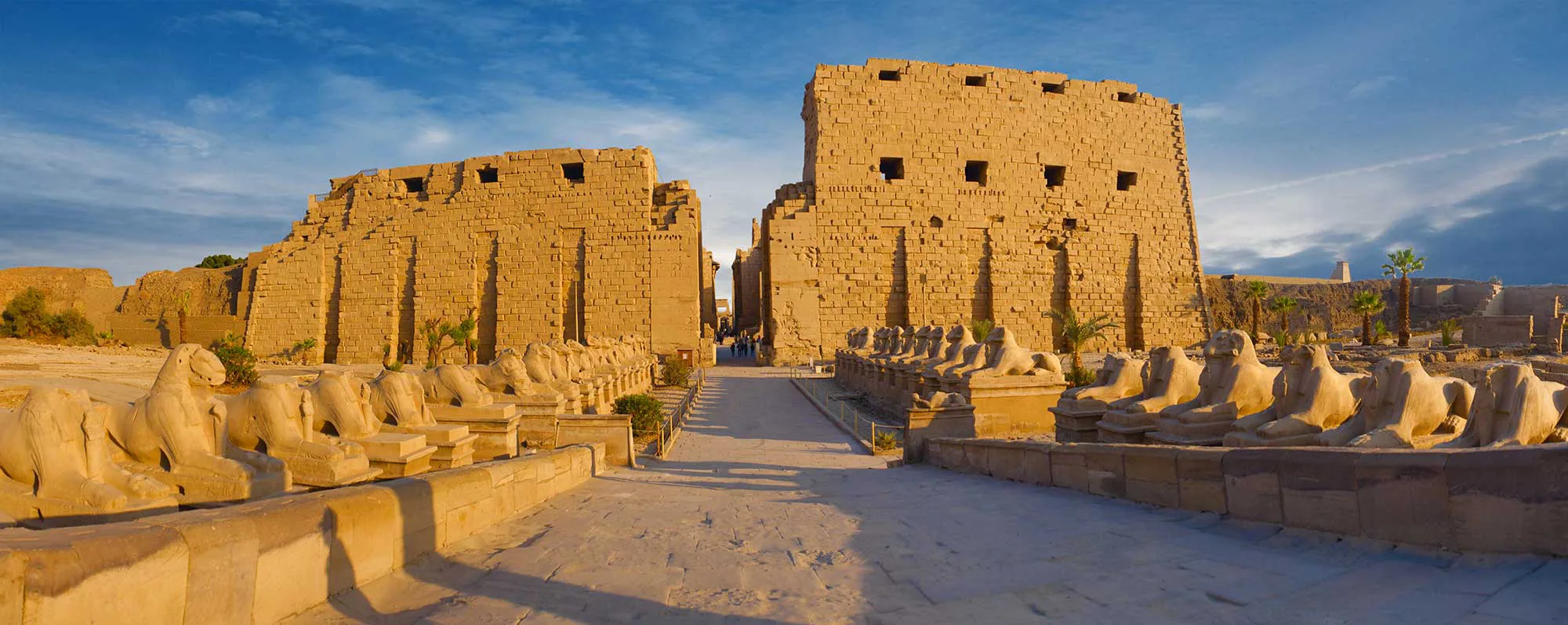
Karnak Temples are considered the world’s greatest Open-Air Museum, a temple complex which consists of a significant number of temples, chapels and pylons.
Witness to the early history of the Temple is the White Chapel constructed by Senwosret I, as coronation Kiosk which was later used as a barque shrine, and during the reign of Amenhotep III it was dismantled and used as fillers of the Third Pylon. Archaeologists accurately re-constructed the chapel, and along many other monuments, it is currently presented at the Karnak Open-Air Museum.
Kings of the New Kingdom, Late Period and even the Ptolemaic Kings added buildings and monuments in the temple complex; which included the sacred lake, the obelisks, and the Hypostyle Hall (one of the most significant monuments known to the ancient world). The temple complex was mainly dedicated to Amun, Mut and Khunso.
Luxor Temple
Luxor Temple lies less-than 3 km south of the Karnak Temples, and both were anciently linked by the “Avenue of the Rams”. In this ancient Egyptian temple, we find Roman and Coptic additions as well as the Abu El-Haggag mosque on top of columns from its peristyle court.
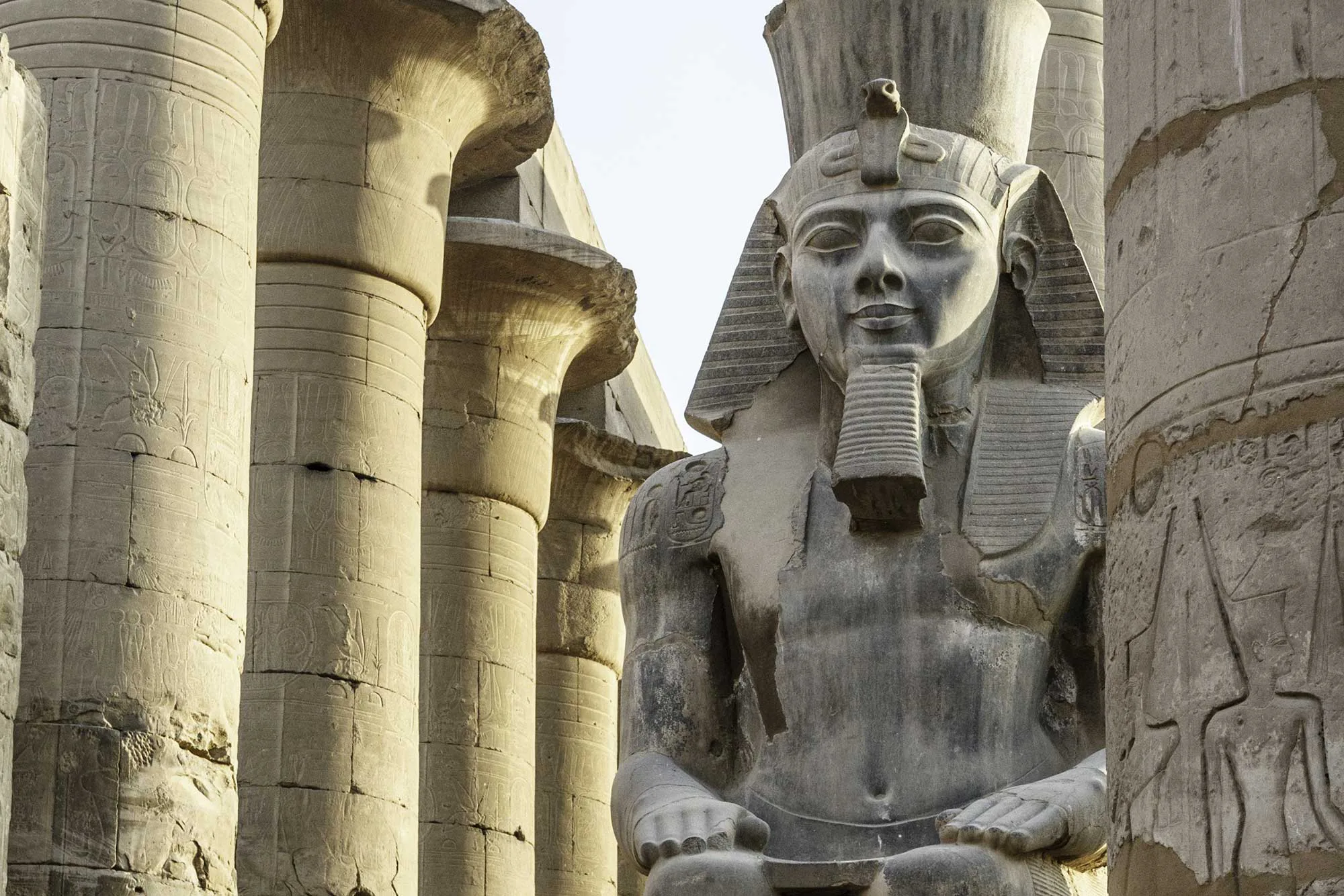
The temple was built by Amenhotep III to prove his legacy as the son of Amun, therefore it was dedicated to the Theban Triad: Amun, Mut and Khunso. It was later added to by New Kingdom, Late Period and Ptolemaic Kings. The temple welcomes its guests by an obelisk and great colossal statues of Ramses II.
Museums at Luxor
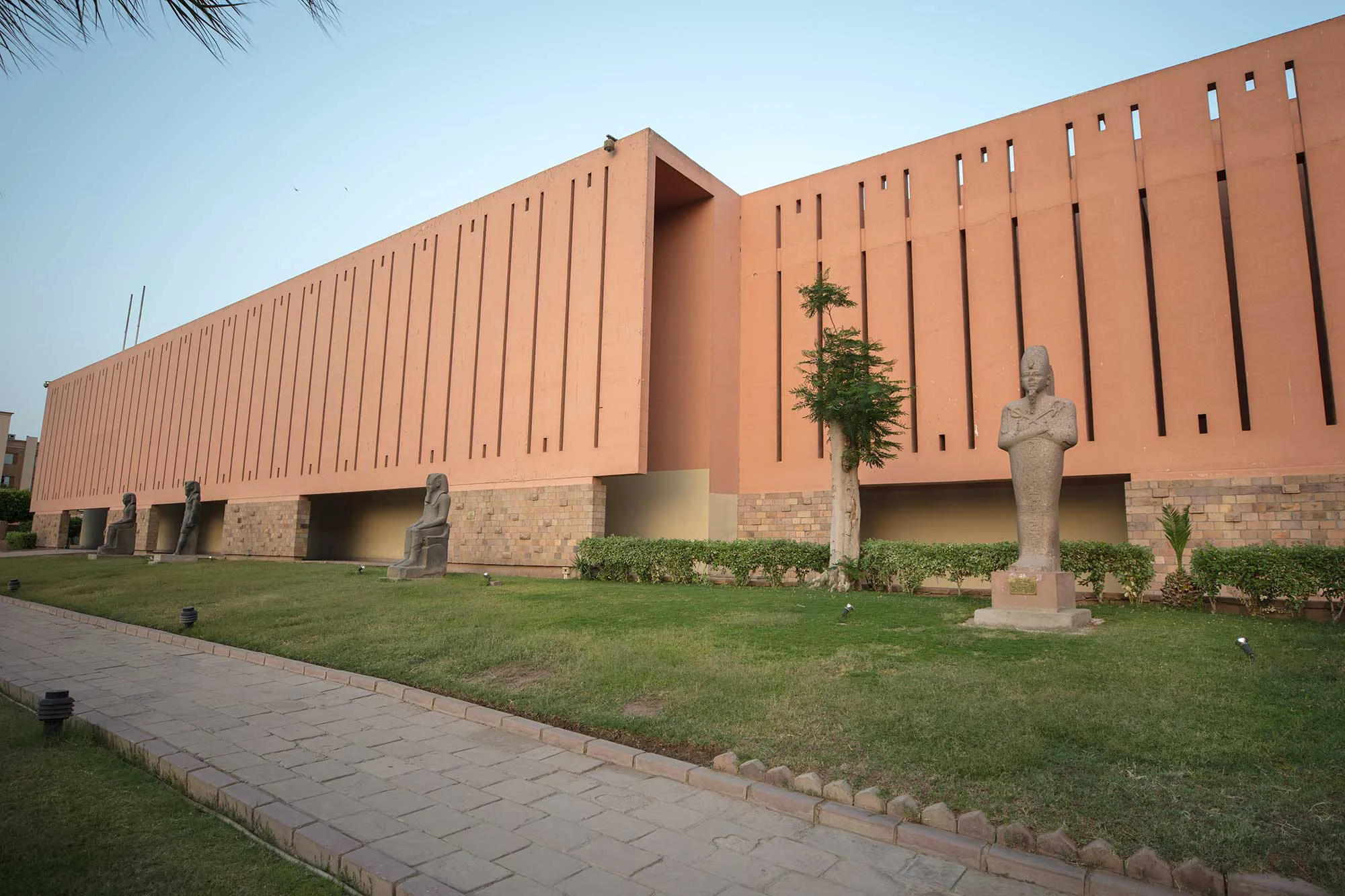
At Luxor Museum, you will explore ancient Egyptian artifacts from Luxor Temple, the Temple of Aten and many other ancient Egyptian and Greco-Roman artifacts.
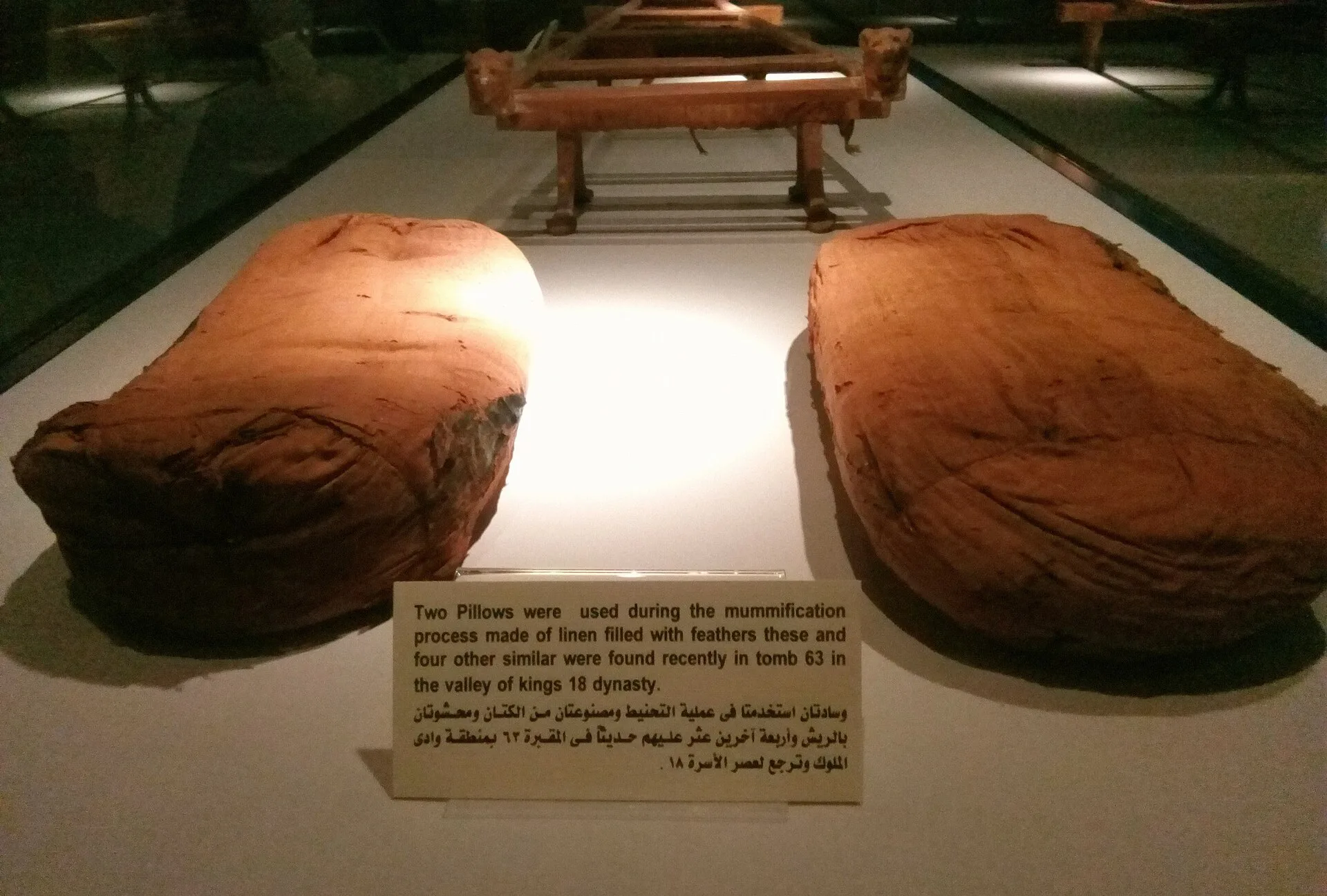
On the Nile corniche, not far from Luxor Temple, lies the Mummification Museum, where you enter the world of ancient Egyptian mummification with its techniques, tools and gods associated.
The Western Side
It is the gate to the netherworld; all Egyptians whether a royal, a high-official or workmen were concerned with the afterlife and worked hard to be able to afford a suitable tomb with important religious texts and scenes inscribed to help them access the realm of the dead.
Temples were built by kings on the western part to serve the rituals of the defied kings, the Temples for Millions-of-Years or Mortuary Temples, guarantees the deceased king continuous offerings and prayers to millions-of-years to come. The best-preserved examples of this type of temples date to the New Kingdom.
El-Deir El-Bahari
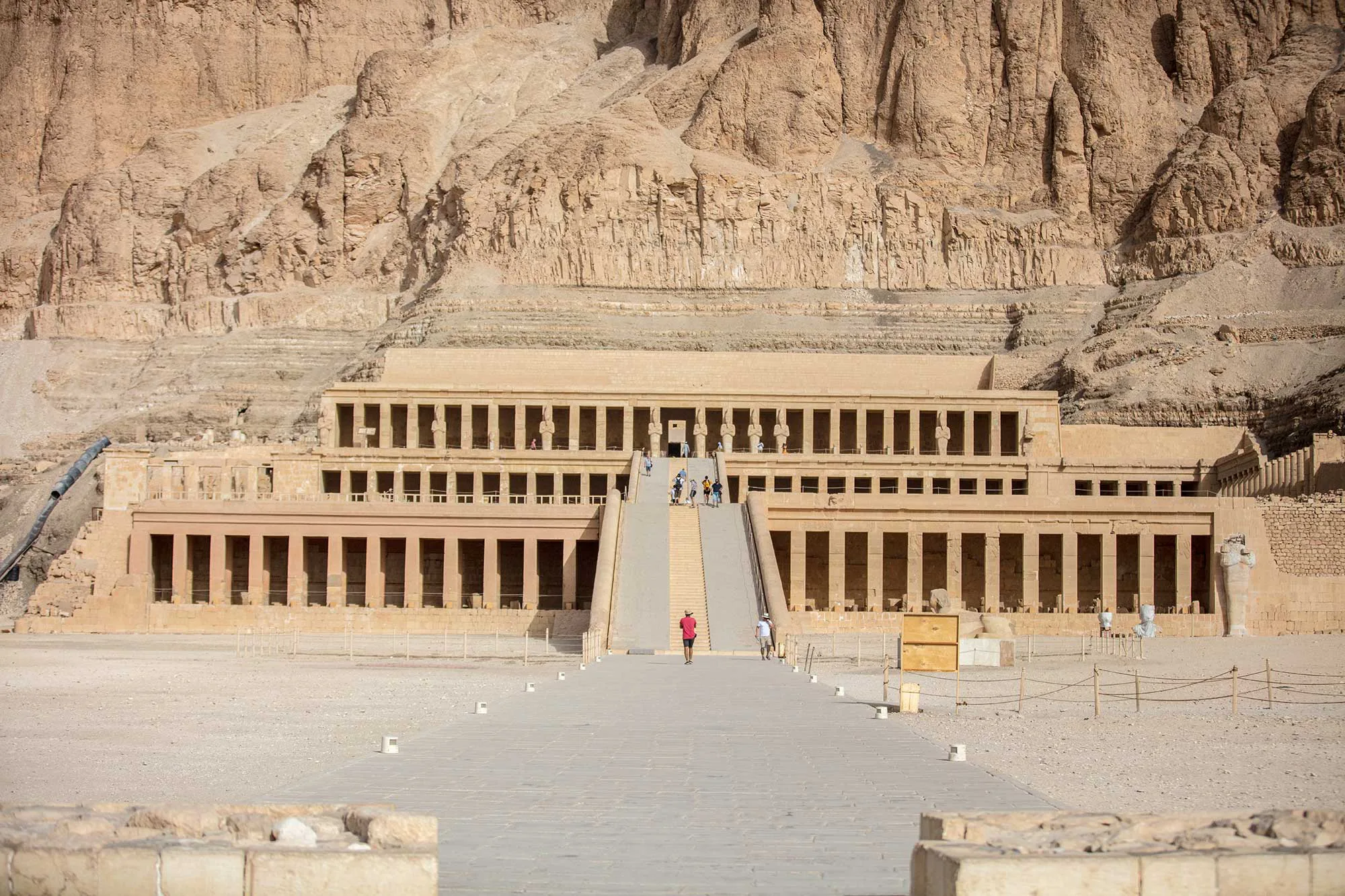
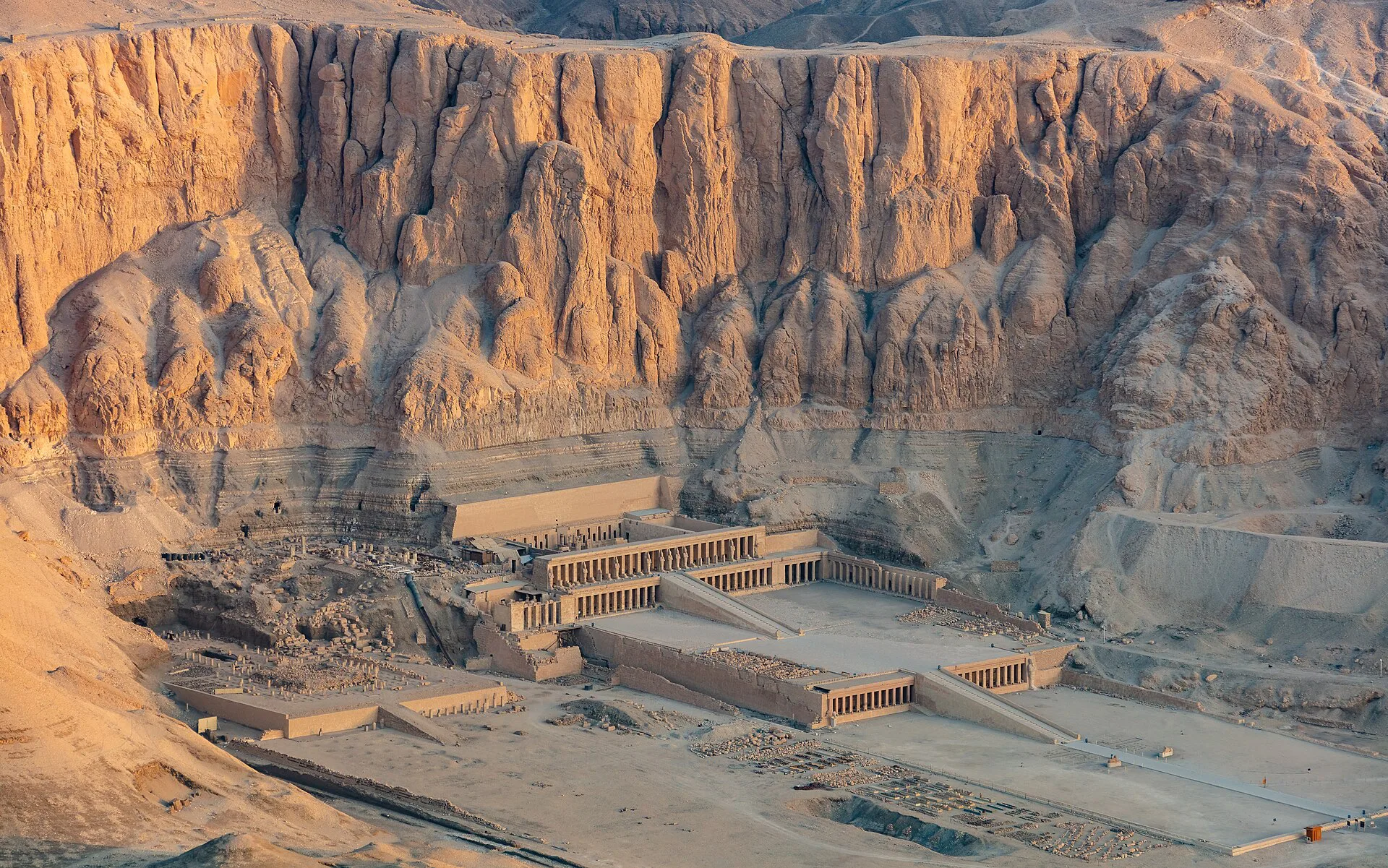
On the foothill of the western mountain, the founder of the Middle Kingdom, Monutotep Nebhebetre, built his mortuary temple, at El-Deir El-Bahari, as a very unusual funerary complex, the transition from a pyramid to a temple, which resulted in a terraced temple with probably a pyramidion on the top, the same style was carried on by Thutmose III and Hatshepsut, but without the pyramidion on top. Unfortunately, only the temple of Hatshepsut survived from the continuously falling rocks, as it was deeply carved into the mountain.
The temple of Hatshepsut was mainly built to prove her legacy as a divine daughter of Amun, during her struggle with Thutmose III over the Egyptian throne. The temple also served as cult center for Hathor, one of the main goddesses of the Afterlife.
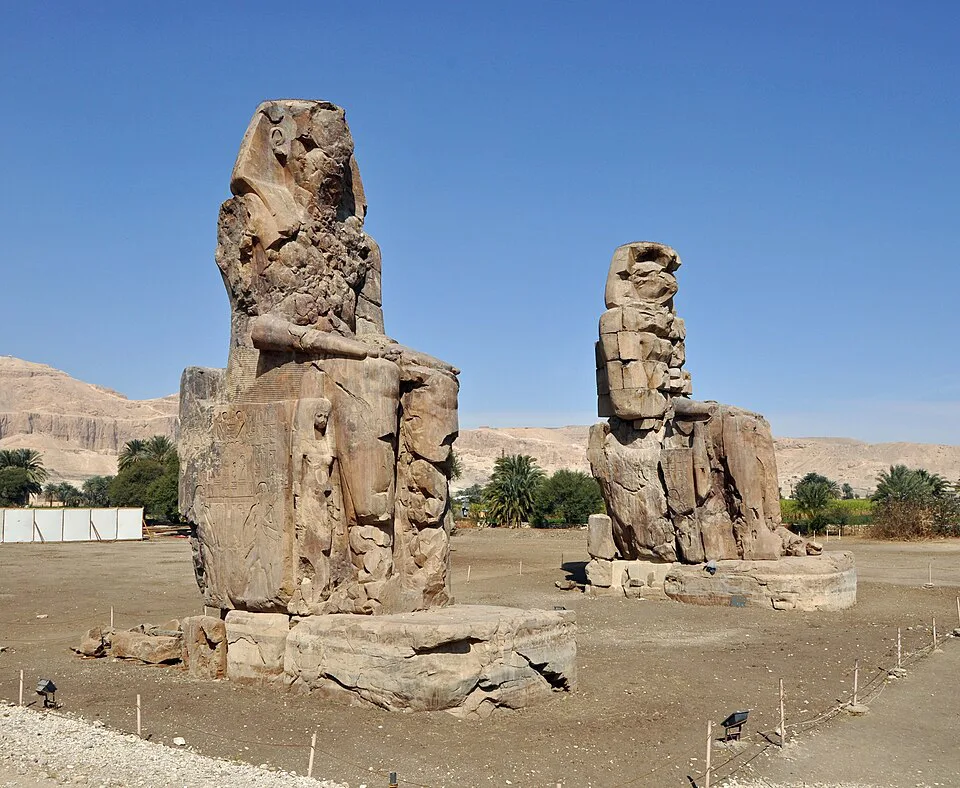
Likewise, kings of the eighteenth and nineteenth dynasties built their temples on the western bank, including the temples of Thutmose III, and Amenhotep III who also constructed the Colossi of Memnon, which were severely damaged, and re-constructed in modern times with great efforts of the archaeologists.
The Ramesseum
It was described by Champollion as “The greatest of all the storeyed monuments of Thebes”, and has the remains of the largest free-standing statue ever made in Egypt. It was built by Rameses II as a mortuary temple of the defied king. The story of the war of Qadesh was inscribed on the walls of the pylon of the temple. It is also famous for the portico with Osiride pillars of Ramses II forming the entrance of the Hypostyle Hall.
The Temple of Medinet Habu
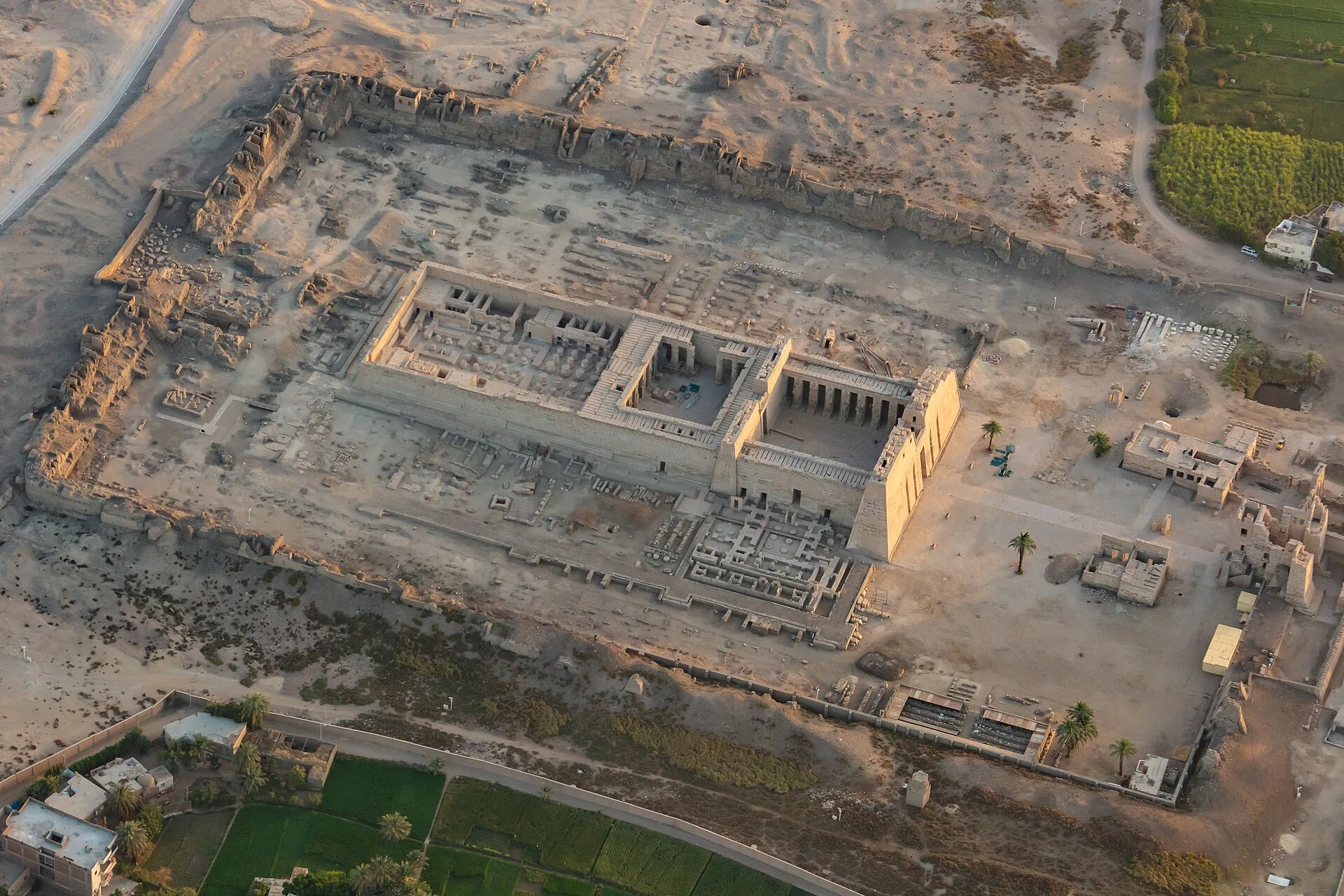
The temple witnessed the peak of the New Kingdom during the nineteenth Dynasty, and its falling during the twentieth Dynasty. The temple was built by Ramses III to commemorate his victorious battles against the Hittites and the Sea People, it also describes the feasts of God Min and God Soker. But on the other hand, it became an administrative building during the twentieth Dynasty, and witnessed the famous recorded Deir El Medina workmen rebellion against the administration because of the financial decline.
The Valley of the Kings
The royal burial ground for over 500 years was the Valley of the Kings, where the famous kings of the New Kingdom were buried. The splendid tomb of Tutankhamun was excavated there, and the best-preserved scenes reflecting the Egyptian Mythology are found in the royal tombs.
From more than 60 royal burials, only the tomb of king Tutankhamun was found almost-intact. Discoverer Howard Carter said when opening the tomb: “I see wonderful things!”
The tomb builders and high-officials were the only people who saw and witnessed these royal tombs, the situation is described by the Advisor of King Thutmose I in his own tomb: “I saw to the excavation of the rock-tomb of his majesty, alone, no one seeing, no one hearing”.
The valley embraces the tombs of the most powerful kings; starting from the tomb of Thutmose I, Thutmose III (complete version of Imy-Duat), Hatshepsut (as a king), Ramses II (largest tomb), and the most beautiful tomb of Ramses VI, the tomb of the king Tutankhamun, and the last king buried there Ramses XI.
The Valley of the Queens
Meanwhile, and following the same trend, the Valley of the Queens was constructed, to engrave the wives of the kings. Princess Ahmose (King Ahmose’s half-sister) was the first to be buried, followed by the main wives of Sety I, Ramses I, and the most beautifully decorated tomb of Queen Neferetari, the wife of Ramses II. Several princes and members of the nobility were also buried in the valley.
Tombs of the Nobles
The nobles were buried in specific cemeteries on the western bank of the Nile; Sheikh Abd El-Qurna, Qurnet Mar’i, El-Assasif and El-Khokha. One of the most interesting tombs in Sheikh Abd El-Qurna is the tomb of Ra-mose, who was a vizier during the reigns of Amenhotep III and Akhenaton. While his tomb was under construction at Western Thebes, he shifted to Tell El-Amarna in accordance to the political change. The funeral procession is the only scene painted, which is one of the best-preserved scenes.
Deir El-Medina
It is the city of workmen, and one of the few cities found from the ancient Egypt. Since the eighteenth Dynasty it was inhabited by the royal-tomb builders and abandoned during the twentieth Dynasty because of the declining administrative and financial situation. The workmen built their beautifully painted tombs following the royal trend; the very colorfully decorated tombs are rich in religious scenes that were supposed to be limited to royals. The city is composed of houses, roads and temples, along with the tombs. The excavations revealed many papyri, which explained the administrative routine and reflected the social life in Egypt during that period. The city was re-occupied when Ptolemy I built a temple for the goddess of the West: Hathor nearby.
Temple of Esna
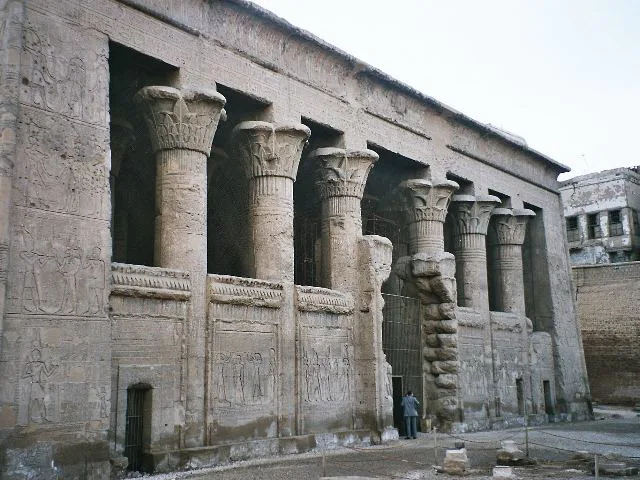
Far to the south, The Temple of Esna is considered the oldest Ptolemaic temple known in Egypt, dedicated mainly to gods Khunum and Neith. The scenes of the temple include a full coverage of the sacred calendar.
Tourist ideas
Complete guide to Luxor
About the city, its weather, the best time to visit and how to get there.
About Luxor
- Arabic name
- الأقصر
- Governorate
- Luxor (الأقصر)
- Region
- Upper Egypt
- Top landmark
- Karnak Temple
- Good for
- Culture
- Destination type
- Main
- Travel region
- The Nile Valley
What is the weather like in Luxor?
- Jan
- Apr
- Jul
- Oct
Average daytime highs, °C. Reference: Luxor and Upper Egypt.
When is the best time to visit Luxor?
- Best season
- Oct–Apr
- Ideal stay
- 2–3 days
Summer days are very hot: visit open-air sites early in the morning and rest at midday.
How do I get to Luxor?
- Nearest airport
- Luxor (LXR)
Daily flights from Cairo, trains on the Cairo–Luxor–Aswan line including the overnight sleeper train, and Nile cruises between Luxor and Aswan.
What to see in Luxor
- Karnak Temple
- Karnak
- Luxor Temple
- Valley of the Kings
- Hatshepsut Temple
- balloon ride
- Esna
- hot-air balloons
Archaeological sites in Luxor governorate
Museums in Luxor governorate
Hotels near Luxor
Things to do from Luxor
Day trips with hotel pickup, run by a local operator. Book directly with them.
Where to eat in Luxor
Sofra سفرة
Traditional dishes served in a restored old house with a rooftop terrace.
Al Sahaby Lane الصحابي لين
Rooftop restaurant close to the temple, popular for tagines and grills.
1886 (Sofitel Winter Palace) 1886 - فندق وينتر بالاس
Formal dining room in the historic Winter Palace hotel; smart dress expected.
El Kababgy الكبابجي
Nile-side terrace restaurant serving grilled meats and Egyptian classics.
Pizza Roma.it بيتزا روما
Well-liked Italian spot for pizza and pasta when you want a change from local food.
Restaurant Mohammed مطعم محمد
Simple family-run garden restaurant near the Colossi of Memnon serving home-style dishes.
Marsam Hotel Restaurant مطعم فندق المرسم
Quiet garden restaurant at a historic mud-brick hotel near the Theban monuments.
Last checked October 2026. Opening hours and menus change; check with the venue before you go.
Shopping in Luxor
Luxor Souk سوق الأقصر
Covered tourist market selling spices, scarves, alabaster and souvenirs; haggling is the norm.
West Bank Alabaster Workshops ورش الألباستر بالبر الغربي
Family workshops where you can watch stone vases and statues being carved and buy direct.
Fair Trade Centre Luxor مركز التجارة العادلة بالأقصر
Fixed-price shop selling handicrafts made by Egyptian community projects.
Last checked October 2026. Opening hours and menus change; check with the venue before you go.
Frequently asked questions
When is the best time to visit Luxor?
The best time to visit Luxor is from October to April.
How do I get to Luxor?
Daily flights from Cairo, trains on the Cairo–Luxor–Aswan line including the overnight sleeper train, and Nile cruises between Luxor and Aswan.
What is the nearest airport to Luxor?
The nearest airport to Luxor is Luxor International Airport (LXR).
How many days should I spend in Luxor?
Plan to spend 2–3 days in Luxor.
What are the must-see places in Luxor?
Karnak, Luxor Temple, Valley of the Kings, Hatshepsut Temple, balloon ride.
Where can I eat in Luxor?
Popular choices include Sofra, Al Sahaby Lane, 1886 (Sofitel Winter Palace), El Kababgy. See the dining section above for more.
Where can I go shopping in Luxor?
Try Luxor Souk, West Bank Alabaster Workshops, Fair Trade Centre Luxor. See the shopping section above.