Coptic Christmas
Holiday
Timing
In 2005 the Egyptian government made 7 January a national holiday to celebrate Christmas according to the Coptic and Orthodox calendars. Elsewhere, Christmas is celebrated on 25 December.
Celebrations
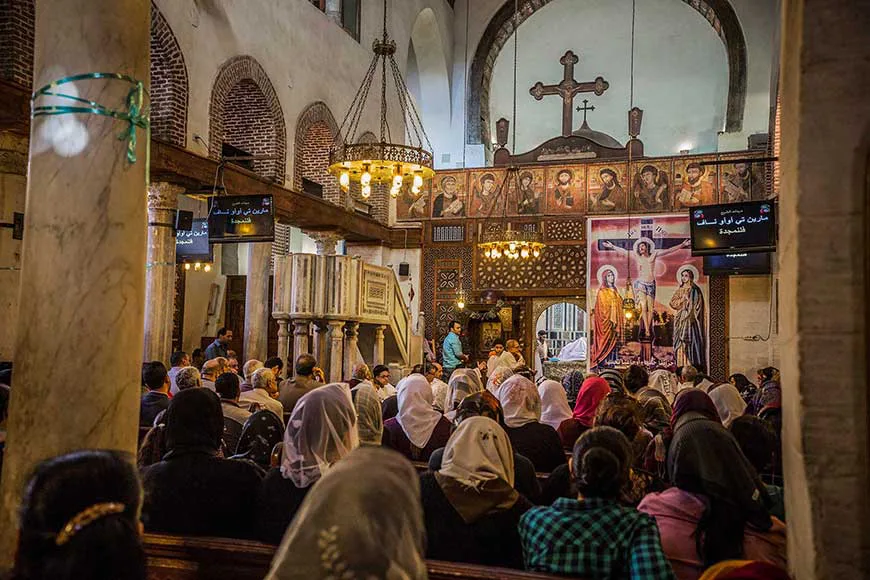
Copts, together with Muslims, officially celebrate Christmas at Saint Mark’s Coptic Orthodox Cathedral in Cairo, joined by the Egyptian president and the Pope of the Coptic Orthodox Church.
The 2019 celebrations were different. On 6 January, President Sisi and Pope Tawadros II joined the community celebrations at the inauguration of “The Nativity of the Christ Cathedral” in Egypt’s New Administrative Capital, 60 km east of Cairo.
How it is celebrated
For Coptic Christians, Christmas comes at the end of a long fast, often called the Advent or Nativity fast, during which many people eat no meat, fish or dairy products.
The main service is held on Christmas Eve, 6 January, and goes on late into the night. Afterwards families go home to break the fast together, usually with meat dishes such as fatta, a dish of rice, bread and meat with a garlic and vinegar sauce.
On Christmas Day people visit relatives and friends, children receive new clothes and small gifts, and homes and churches are decorated with lights and Christmas trees. Many Muslim friends and neighbours visit or send greetings, and it is common to see joint celebrations in towns and villages.
The usual greeting is “Kol sana wenta tayeb”, or “Merry Christmas” if you prefer.
What is open and closed
Government offices, banks and schools close for the day. Shops, restaurants and cafes are usually open, and most archaeological sites and museums usually keep their normal hours. If you need a bank or any official paperwork, sort it out a day or two before.
Some shops run by Christian families close for the day, and churches are very busy on the evening of 6 January.
Frequently asked questions
When is Coptic Christmas?
Coptic Christmas falls on Thursday 7 January 2027.
Are sites and shops open on public holidays?
Most archaeological sites and museums stay open. Government offices and banks close, and some shops keep shorter hours.