Historical background of Abydos
Abydos was the sacred land of Osiris, and temples were built here from the Old Kingdom onwards to win the god’s blessing. Tomb paintings often show the pilgrimage the ancient Egyptians made to Abydos, mainly because of a myth that Osiris, or at least his head, was buried in its soil.
The Temple of Sety I (1291–1278 BC) is the best preserved of these temples. His reign marks the high point of fine relief carving in Egyptian art, and the temple can be considered the most remarkably decorated known from ancient Egypt.
Abydos king list
The temple records the line of Egyptian kings from Na’rmer to Sety I in the famous Abydos King List. The Amarna period is left out as if it had never happened: the list goes straight from Amenhotep III to Horemheb, omitting Akhenaton, Tutankhamun and Ay.
Carved in the Gallery of Kings, the list shows Sety I with his young son Ramesses II burning incense before the cartouches of 78 earlier kings and Sety himself. It is one of the most important, reliable and contemporary sources for the succession of Egyptian kings.
Structure of the temple
Sety I died while the temple was being built, and his heir Ramesses II (1279–1212 BC) completed it. Ramesses also built a chapel to begin the deification of his father, which in turn made Ramesses the son of a god.
The temple has nine sanctuaries in all, dedicated mainly to the Osirian triad and to gods linked with Osiris in myth or theology: Amun, Re-Horakhty, Ptah, Nefertum, Ptah-Soker and, finally, the deified King Sety I.
The plan is roughly L-shaped. An entrance on the north leads through several courts built by Ramesses II and two hypostyle halls lined with papyrus columns.
At the southern end are seven shrines to Egyptian gods and the deified Sety I, and at the back lies the complex of Osiris, to whom the building was dedicated.
The eastern part of the temple holds the hall and chapels of Nefertum and Ptah-Soker. A corridor known as the Gallery of the Kings links the main building with this eastern part and with a stairway down to the Osireion (Temple of Osiris).
Scenes of the daily rituals
The fine wall reliefs show one of the main religious subjects of Egyptian temples, the daily ritual, made up of 29 rites that each temple’s high priests performed on the king’s behalf. The priests entered the god’s shrine to bathe, feed, adorn and cense the divine statue, so that the god would be satisfied and Egypt would stay prosperous and stable.
Other reliefs show Ramesses II fighting Asiatic enemies, a common scene in temples of the New Kingdom (the Age of the Empire).
The Osireion
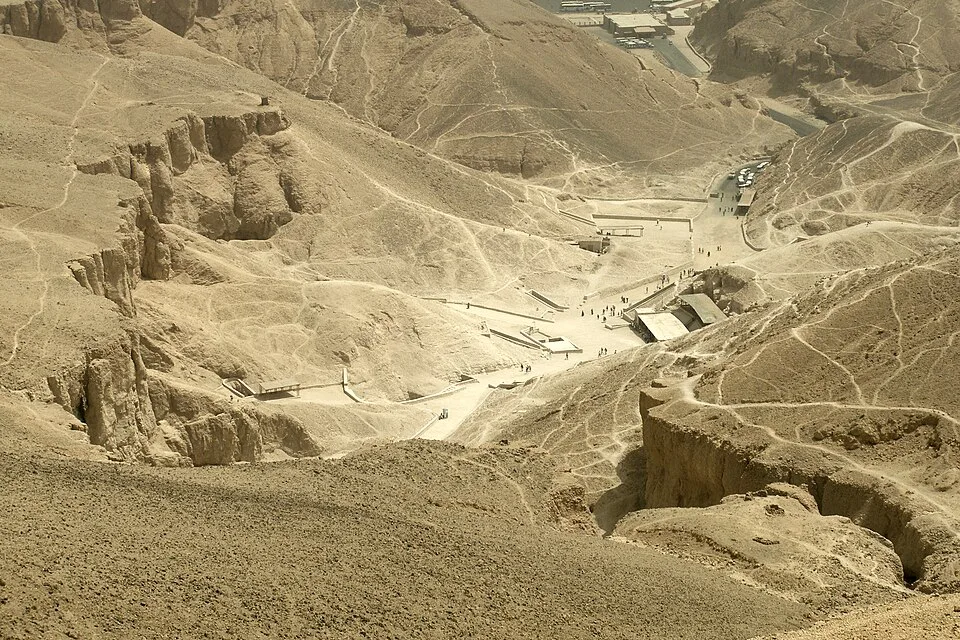
Behind the temple, on the same axis, lies the Osireion, built as a cenotaph for Sety I. His grandson Merenptah (1224–1214 BC) decorated it later. It is a mortuary temple: a long passage leads to a large hall holding a false sarcophagus and a canopic chest. The decoration includes funerary texts from the Book of the Dead and the Book of the Gates, and the structure shares many features with the New Kingdom royal tombs in the Valley of the Kings.
Information card
Abydos Road, Sohag
Daily: 6 AM-5 PM
At a glance
Arabic nameأبيدوس
GovernorateSohag
EraNew Kingdom
Prices and hours change often. Confirm on the Ministry’s official site egymonuments.gov.eg before you go.
Frequently asked questions
Where is Temple of Seti I at Abydos?
The Temple of Seti I at Abydos is in Sohag governorate, Egypt.
Can I buy tickets online for Temple of Seti I at Abydos?
Many sites and museums sell tickets on the official portal egymonuments.gov.eg; most also sell at the gate, usually by card only.