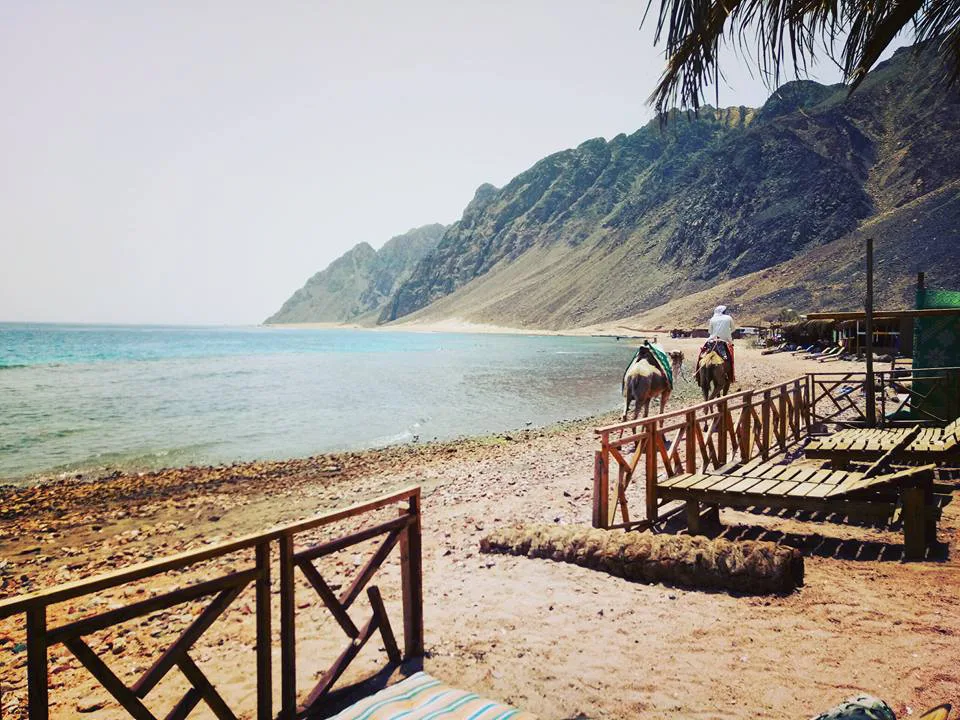
Salloum Gulf Protected Area
Nature
A sheltered Mediterranean bay near the Libyan border, protected for its clear waters, seagrass meadows and marine life.
- Arabic name
- محمية خليج السلوم
- Type
- Protected area
- Governorate
- Matrouh
- Area
- 390 km²
- Protected since
- 2010
- Nearest city guide
- Marsa Matrouh
- Official website
- eeaa.gov.eg
The Salloum Gulf protectorate lies at Egypt’s far north-western corner, where the Mediterranean coast meets the Libyan border. It is a landscape protected area that includes the gulf’s waters, beaches and the escarpment that rises behind the town of Salloum.
Marine life and history
The gulf has some of the clearest water on Egypt’s Mediterranean coast, with seagrass meadows, rocky reefs and sandy bays that support fish, octopus, sponges and sea turtles. Monk seals were once recorded on this coast, and the area is valuable for marine research. On land, the escarpment offers wide views, and the region was the scene of Second World War fighting, with a Commonwealth war cemetery in Salloum.
Visiting
Salloum is about 220 km west of Marsa Matrouh. As a border area it may be subject to security checks and restrictions on movement, so confirm current access before travelling. There is little tourist infrastructure; visitors usually base themselves in Marsa Matrouh.
Best time
June to September for swimming; spring and autumn for walking and exploring.
Entry fee: not confirmed (last checked October 2026).
Last checked October 2026. Entry fees and access rules change; check with the Egyptian Environmental Affairs Agency or a local operator before you go. Sources: eeaa.gov.eg, en.wikipedia.org.
Frequently asked questions
What is protected in the Salloum Gulf?
The protectorate covers the gulf's clear waters, beaches and the escarpment behind Salloum. Seagrass meadows, rocky reefs and sandy bays support fish, octopus, sponges and sea turtles.
Can tourists visit Salloum?
Salloum is a border town near Libya and may be subject to security checks and restrictions on movement, so confirm current access before travelling. There is little tourist infrastructure and most visitors base themselves in Marsa Matrouh, about 220 km east.
When is the best time to go?
June to September is best for swimming; spring and autumn are better for walking and exploring.
Is there anything historical to see?
The area saw Second World War fighting, and there is a Commonwealth war cemetery in Salloum.
Is there an entry fee?
No fee has been confirmed; check with the Egyptian Environmental Affairs Agency (eeaa.gov.eg) or a licensed local operator before you go.