The republic
On 23 July 1952 a group of army officers, the Free Officers, took power, and King Farouk left the country three days later. Egypt was declared a republic in June 1953, with Muhammad Naguib as its first president. In 1954 Gamal Abdel Nasser became prime minister, and in 1956 he was elected president. The last British troops left the Canal Zone the same year.
Nasser and the High Dam
On 26 July 1956 Nasser nationalised the Suez Canal Company. Britain, France and Israel invaded later that year but withdrew under international pressure. From 1958 to 1961 Egypt and Syria formed the United Arab Republic. To control the Nile flood and generate electricity, Egypt built the Aswan High Dam between 1960 and 1970, creating Lake Nasser. The rising waters threatened the monuments of Nubia, and UNESCO launched an international campaign in 1960. Between 1964 and 1968 the temples of Abu Simbel were cut into blocks and rebuilt on higher ground, and in the 1970s the temples of Philae were moved to Agilkia Island, reopening in 1980. In June 1967 Israel occupied the Sinai Peninsula during the Six-Day War. Nasser died in September 1970.
Sadat, 1973 and Camp David
His successor, Anwar Sadat, launched the war of 6 October 1973, in which Egyptian forces crossed the Suez Canal. He later opened the economy to private investment and, in 1977, travelled to Jerusalem. The Camp David Accords of 1978 led to the Egypt–Israel peace treaty of March 1979, and Sinai was returned to Egypt by 1982. Sadat was assassinated on 6 October 1981.
Later decades
Hosni Mubarak served as president from 1981 to 2011. In 1988 Naguib Mahfouz became the first Arab writer to win the Nobel Prize in Literature. Mass protests began on 25 January 2011, and Mubarak stepped down on 11 February 2011. Mohamed Morsi was elected president in June 2012 and was removed from office by the army on 3 July 2013. Abdel Fattah el-Sisi was elected president in 2014 and re-elected in 2018 and 2023. A new branch of the Suez Canal opened in 2015, and work began on a New Administrative Capital east of Cairo, where government ministries began moving in the early 2020s.
Heritage in the 21st century
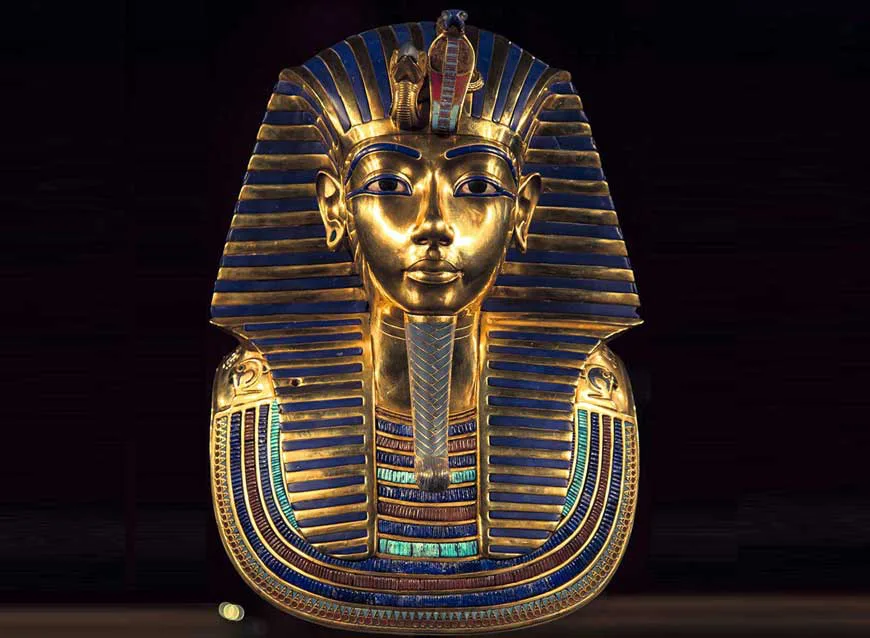
In April 2021 the Pharaohs’ Golden Parade carried 22 royal mummies from the Egyptian Museum to the National Museum of Egyptian Civilization. On 1 November 2025 the Grand Egyptian Museum beside the Giza plateau was officially opened, displaying the treasures of Tutankhamun together in one place.
Where to see it today
- Abu Simbel temples, Abu Simbel town
- Temple of Philae on Agilkia Island, Aswan
- Nubia Museum and Nile Museum, Aswan
- Grand Egyptian Museum (GEM), Giza
- National Museum of Egyptian Civilization (NMEC)
- Egyptian National Military Museum
- New Administrative Capital
Last checked October 2026. Sources: britannica.com, britannica.com, britannica.com, britannica.com, britannica.com.
Information card
| Dates | 1952–present |
|---|---|
| Capital | Cairo (government moving to the New Administrative Capital) |
| Key rulers | Muhammad Naguib; Gamal Abdel Nasser; Anwar Sadat; Hosni Mubarak; Mohamed Morsi; Abdel Fattah el-Sisi |
| Languages | Arabic (official); English and French widely used in business and tourism |
| Religions | Islam (majority, mainly Sunni); Coptic Christianity and other Christian churches |
| Big events | 1952 Revolution; Suez nationalisation (1956); Aswan High Dam (1960–1970); Abu Simbel moved (1964–1968); October War (1973); peace treaty with Israel (1979); 2011 uprising; Grand Egyptian Museum opens (1 Nov 2025) |