Maadi culture: Lower Egypt before the pharaohs
History Topic
The Maadi culture, also called the Maadi–Buto or Lower Egyptian culture, was the main culture of northern Egypt from about 3900 to 3300 BC. It is named after Maadi, now a district of southern Cairo, and Buto in the north-western Delta. Its villages traded with the southern Levant and used copper, and its slow replacement by the southern Naqada culture is one of the key steps on the road to a united Egypt.
Where and when
Maadi–Buto sites stretch from the Cairo area, including Maadi and the nearby cemetery at Wadi Digla, north into the Delta as far as Buto. The culture followed the earlier northern farming cultures such as El Omari and flourished during the first half of the fourth millennium BC. Dates differ a little between studies, especially for its end, which came at different times in different places.
How people lived
The people of Maadi were farmers and herders. They grew emmer wheat and barley and kept sheep, goats, cattle and pigs. Donkeys were also kept and were probably useful for carrying goods.
The village at Maadi had several kinds of houses: oval huts of posts and reeds, a few rectangular buildings, and, most unusually, houses cut partly into the ground, with steps and stone-lined walls. These sunken houses have been compared with houses in the southern Levant. Large storage jars and pits held grain and other food.
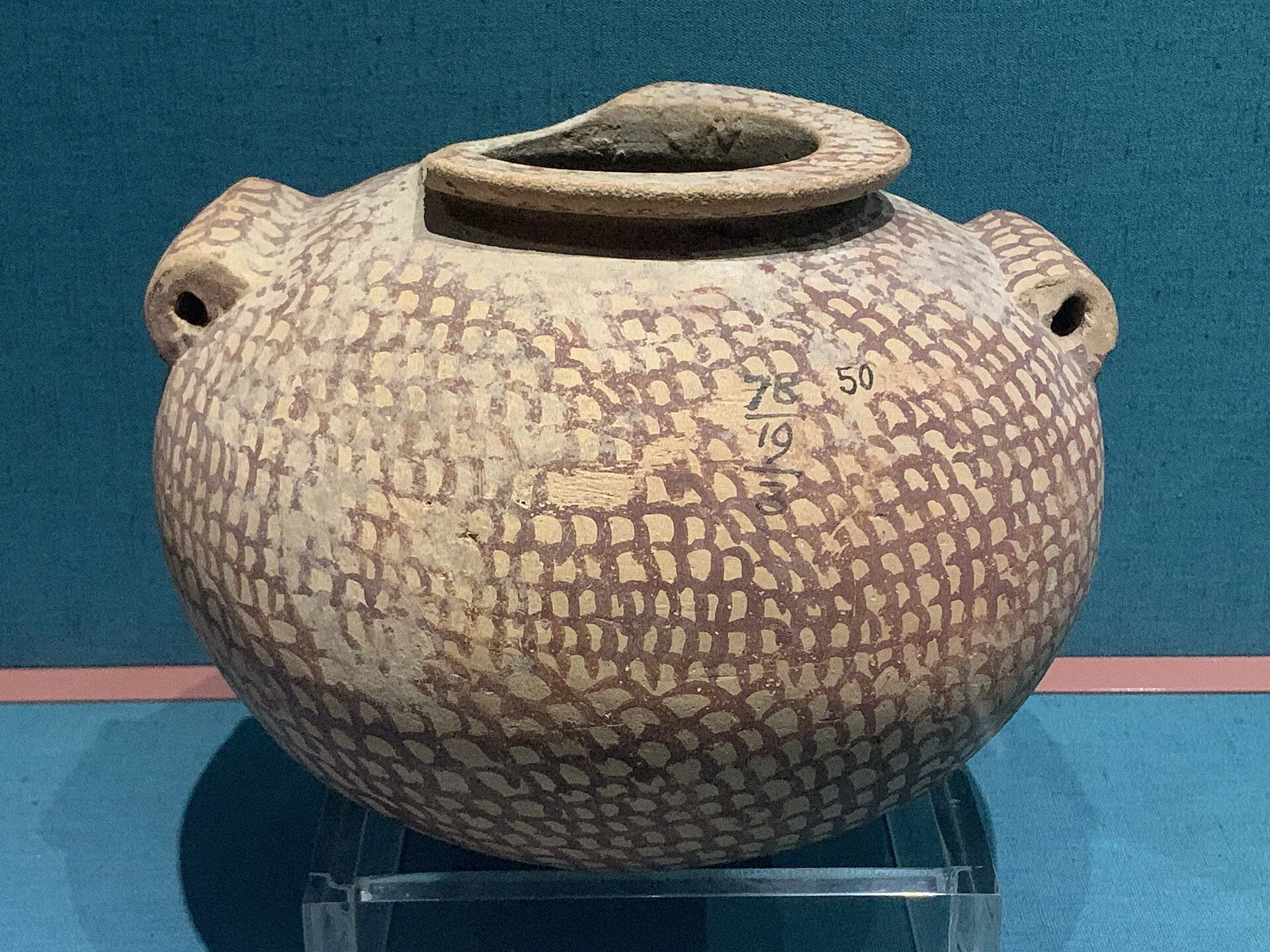
Maadi pottery is mostly plain, in brown and black, with globular jars on flat or ring bases. The flint tools include large blades, some imported from the Levant. Copper appears as tools, pins and lumps of ore, which makes Maadi one of the earliest places in Egypt where copper was used on any scale.
Contacts with the southern Levant
Trade with the southern Levant is one of the Maadi culture’s most distinctive features. Imported pottery jars, flint blades and other goods show regular exchange across Sinai, and the sunken houses may reflect people from the Levant living in the village. Maadi also had contacts with the south, and Naqada pottery turns up at its sites. This made northern Egypt a meeting point between Africa and Southwest Asia.
Burials and beliefs
Burials of the Maadi culture were simple. The dead were placed in a contracted position in oval pits, often with only a pot or two, or nothing at all. Cemeteries were separate from the villages, as at Wadi Digla. These modest graves are very different from the richer tombs of the Naqada culture in the south.
How it was discovered
The settlement at Maadi was excavated from 1930 onwards by Mustafa Amer and Oswald Menghin for Cairo University, with later seasons running into the 1950s. At Buto, also called Tell el-Fara’in, a team from the German Archaeological Institute led by Thomas von der Way found Lower Egyptian layers under the later town during the 1980s.
What happened to the Maadi culture?
The Maadi culture was gradually replaced by the Naqada culture, which spread north from Upper Egypt in the second half of the fourth millennium BC. At Buto, the layers show local pottery giving way, step by step, to Naqada-style pottery and building methods. Whether this happened mainly through conquest, migration, trade or a mix of all three is still debated. By around 3100 BC, the north shared one material culture with the south, and Egypt was ruled as one kingdom.
This story is told from the southern side in our article on the Naqada culture and in the overview of Egypt’s first farmers, and it continues in the Early Dynastic Period.
Why it matters
The Maadi culture shows that Lower Egypt had its own way of life, with its own houses, pottery and contacts abroad, before unification. Its trade with the Levant and early use of copper were important for later Egypt, and its absorption by the Naqada culture marks the moment when north and south began to grow together.
Where to see it today
The site at Maadi lies under the modern district, and Buto is an archaeological mound with little to see for visitors. Finds from Lower Egyptian sites are held in Egyptian museum collections, and predynastic material in general can be seen in major Egyptian museums and in the British Museum and the Petrie Museum in London.
Last checked November 2026. Sources: Wikipedia: Maadi culture, Wikipedia: Buto, Wikipedia: Prehistoric Egypt.
Information card
Frequently asked questions
What is the Maadi–Buto culture?
The Maadi–Buto culture was the main culture of Lower Egypt from about 3900 to 3300 BC, named after the sites of Maadi in southern Cairo and Buto in the Delta. Its people farmed, kept animals, used copper and traded with the southern Levant.
What replaced the Maadi culture?
The Maadi culture was gradually replaced by the Naqada culture, which spread north from Upper Egypt in the second half of the fourth millennium BC. How this happened, whether through conquest, migration or trade, is still debated.
Can you visit the Maadi archaeological site?
The prehistoric site at Maadi now lies under the modern Cairo district, so there is nothing to visit. Predynastic finds can be seen in major Egyptian museums and in museums such as the British Museum.