Naqada culture: the road to the first pharaohs
History Topic
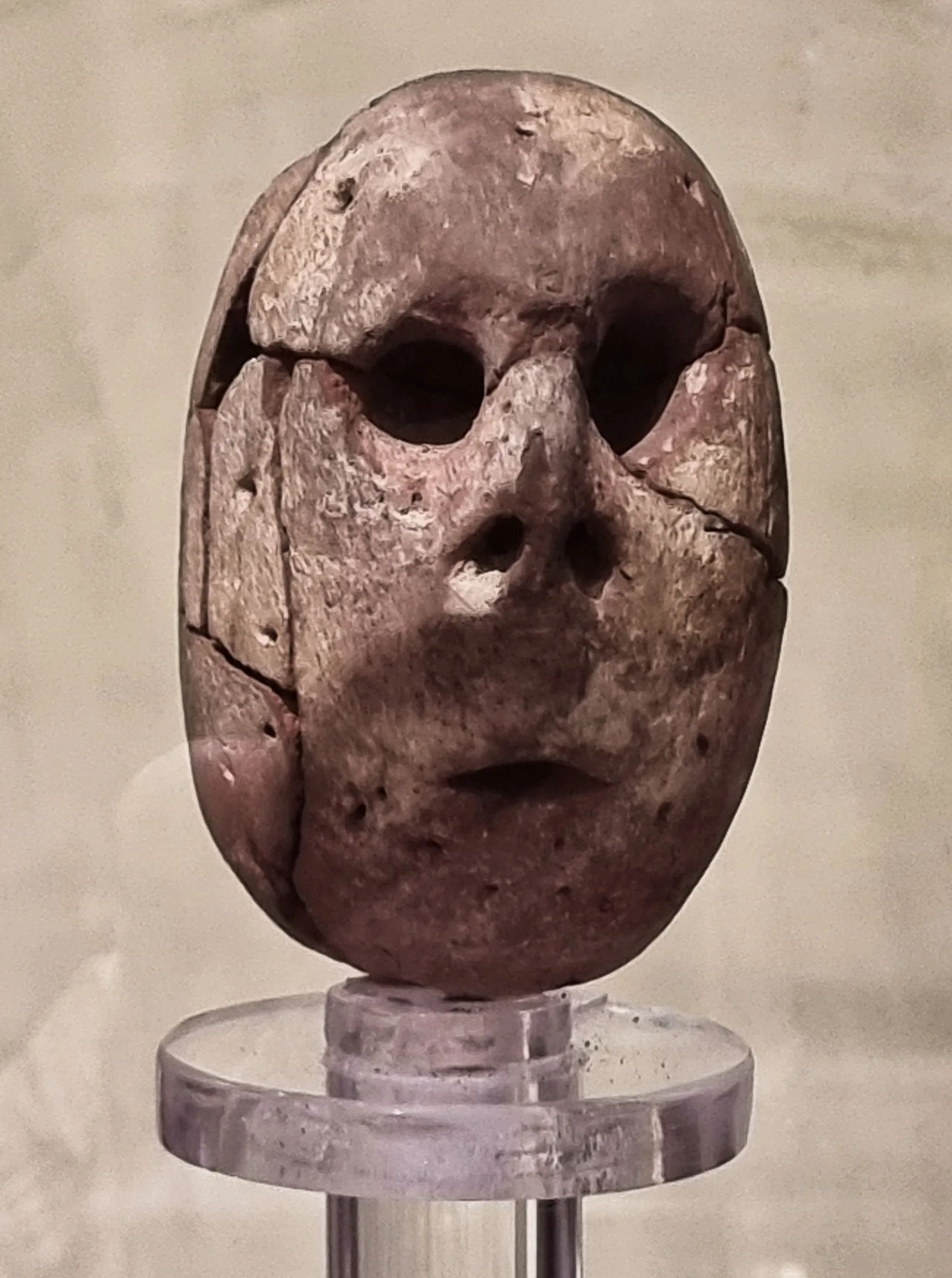
The Naqada culture is the last and greatest of Egypt’s Predynastic cultures. Named after the village of Naqada on the west bank of the Nile north of Luxor, it lasted from about 4000 BC to about 3000 BC. Over those thousand years farming villages in Upper Egypt grew into rival chiefdoms, spread their way of life down the whole valley and laid the foundations of the first Egyptian state.
Where and when
Naqada lies in the modern governorate of Qena, across the river from Qus. Ancient Nubt, the town of the god Seth, stood here, and its huge cemeteries gave the culture its name. Other major centres were Hierakonpolis to the south and Abydos to the north.
Archaeologists divide the culture into three stages. Naqada I, also called Amratian after the site of el-Amra, runs from about 4000 to 3500 BC. Naqada II, or Gerzean after el-Gerza near the Faiyum, runs from about 3500 to 3200 BC. Naqada III, from about 3200 to 3000 BC, overlaps with the first known kings, sometimes called Dynasty 0. The exact boundaries vary slightly between references.
How people lived
Naqada people farmed emmer wheat and barley, kept cattle, sheep, goats and pigs, and fished the Nile. They built on the farming traditions of the Badarian culture and the wider story told in the first farmers of the Nile. Over time villages grew into towns with mud-brick houses and specialist workshops.
Pottery changes are the easiest way to follow the period. Naqada I potters made polished red ware, black-topped ware and white cross-lined ware, red pots painted with white geometric patterns and sometimes animals. In Naqada II a new decorated ware appeared, buff pots painted in red-brown with boats, birds, wavy lines and human figures, alongside jars with wavy handles.
Slate palettes, used for grinding eye paint, took the shape of fish, turtles, birds and other animals. Flint working reached a very high standard, with long, finely rippled knives, and copper became more common.
Trade, chiefdoms and the spread north
During Naqada II contacts widened. Lapis lazuli from Afghanistan reached Egypt, and some objects and motifs, such as cylinder seals and niched brick façades, show links with Mesopotamia. Rich graves for a few people beside plain ones for many show that society was becoming unequal, with powerful local leaders.
At the same time Naqada pottery and burial customs spread northwards into Lower Egypt, where they gradually replaced the local Maadi-Buto culture. By Naqada III the whole valley shared one material culture, and rulers were using early hieroglyphic signs on labels and pots.
When was Egypt unified?
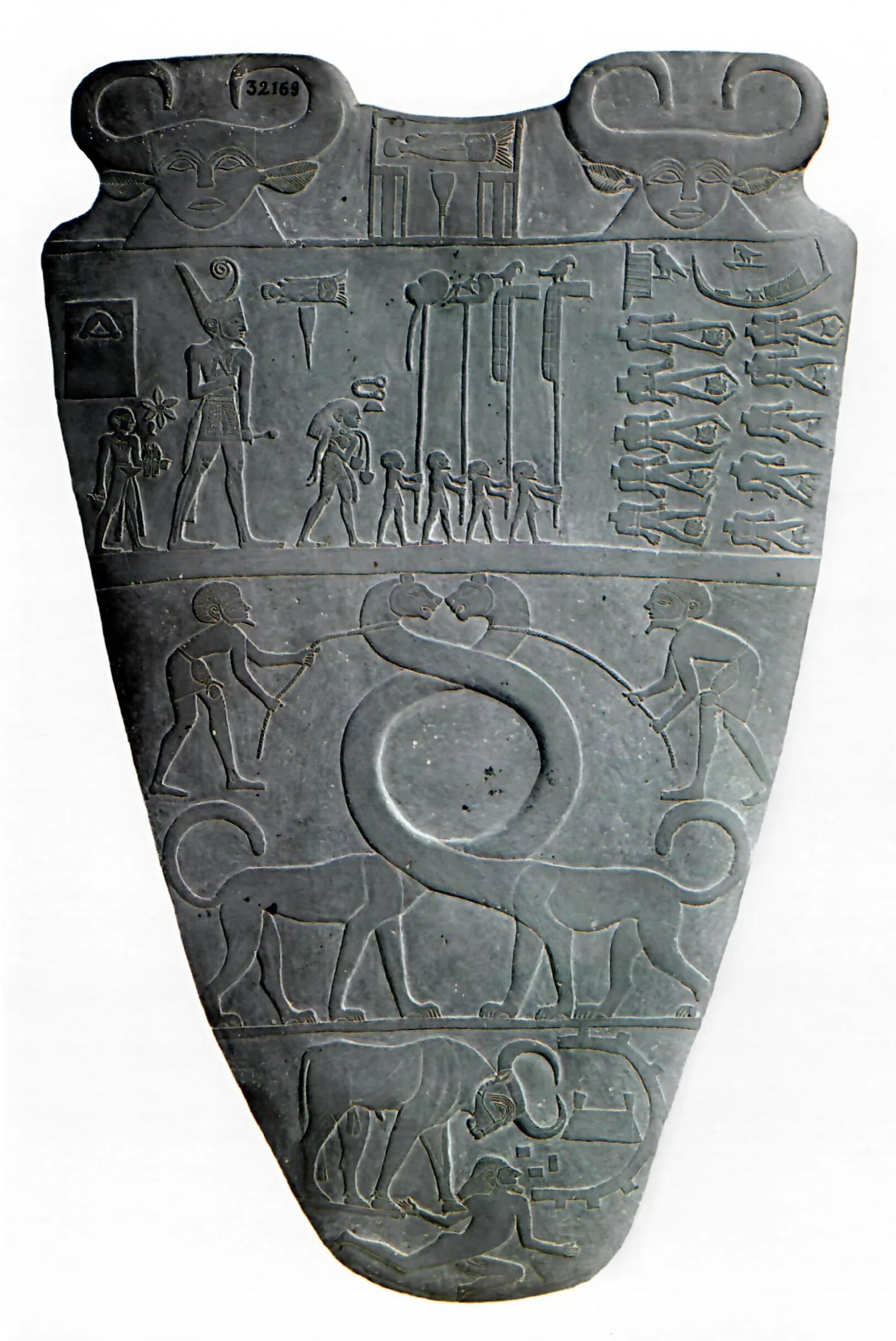
Egypt is usually said to have been unified around 3100 BC, at the end of the Naqada period. The process was probably gradual, with centres such as Abydos and Hierakonpolis absorbing their neighbours. Tradition credits the union to a king called Menes, often linked with Narmer, whose palette from Hierakonpolis shows him wearing the crowns of Upper and Lower Egypt. How exactly the two lands came together is still debated.
How it was discovered
Flinders Petrie and James Quibell excavated at Naqada and nearby Ballas in the 1890s, opening some two thousand graves. Petrie at first thought they belonged to foreign newcomers, but soon recognised them as Egyptian and earlier than the pharaohs. To put the graves in order without written dates, he invented sequence dating, arranging grave groups by the changing styles of their pottery. It was one of the first methods of its kind in archaeology. The German archaeologist Werner Kaiser refined the scheme in the 1950s into the Naqada I–III stages used today.
Where to see it today
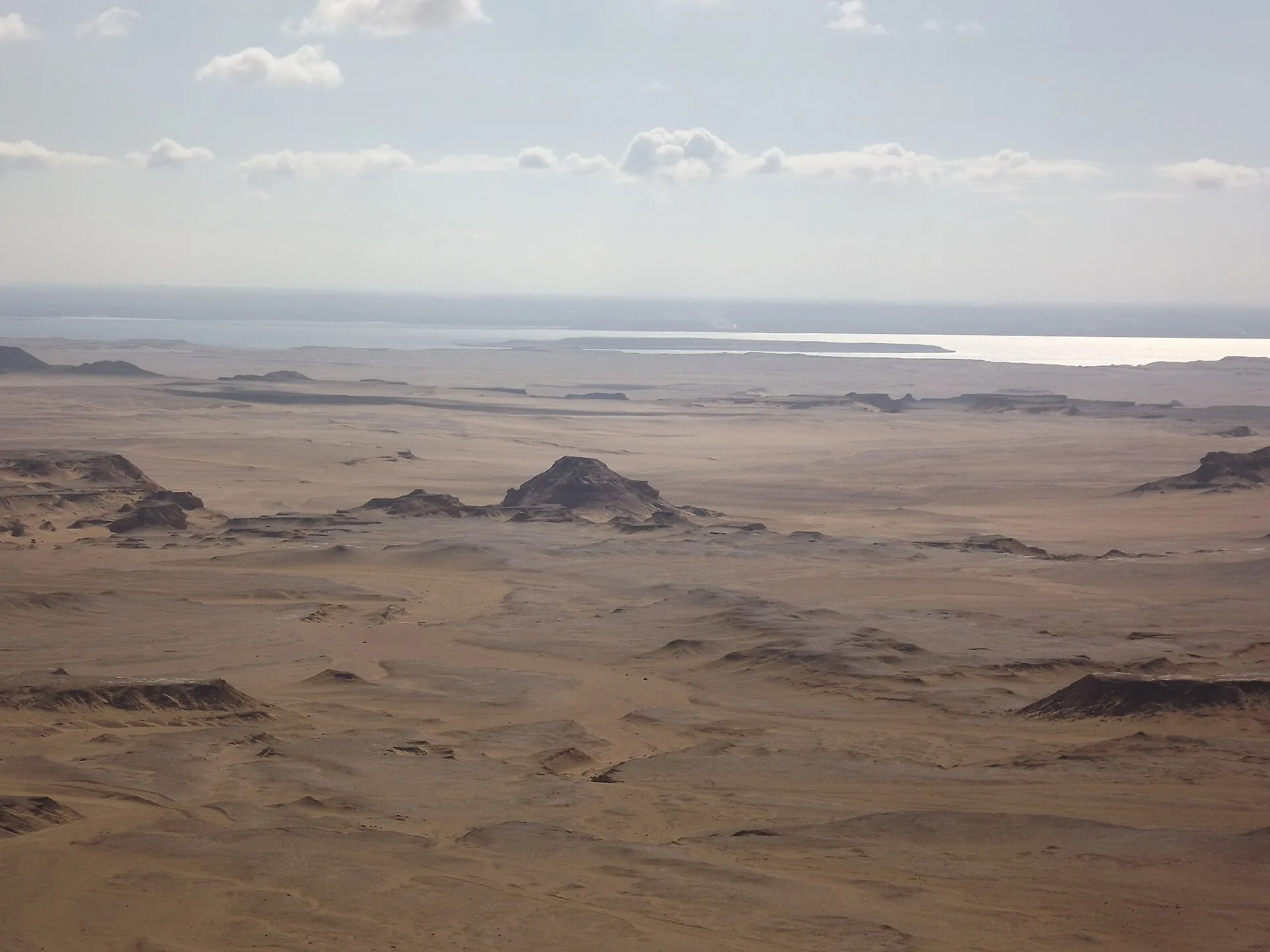
The cemeteries at Naqada are flat desert with nothing to see and are not set up for visitors. The finds are another matter. The Egyptian Museum in Cairo holds major Predynastic pieces, and the Petrie Museum in London has one of the largest collections of Naqada pottery anywhere, much of it from Petrie’s own digs. The British Museum also displays decorated pots, palettes and flint knives. For the story that follows, see the Early Dynastic Period.
Last checked November 2026. Sources: Wikipedia, Naqada culture, Wikipedia, Seriation (archaeology), Petrie Museum of Egyptian Archaeology, UCL.
Information card
Frequently asked questions
What are Naqada I, II and III?
They are the three stages of the Naqada culture: Naqada I (Amratian, about 4000–3500 BC), Naqada II (Gerzean, about 3500–3200 BC) and Naqada III (about 3200–3000 BC). Naqada III overlaps with Egypt's earliest kings.
What is sequence dating?
Sequence dating is a method Flinders Petrie devised after digging at Naqada in the 1890s. He placed graves in order by the gradual changes in their pottery styles, without needing written dates.
Where is Naqada?
Naqada is a village on the west bank of the Nile in Qena governorate, north of Luxor and opposite Qus. Its large Predynastic cemeteries gave the culture its name.