Badarian culture: early farmers of Middle Egypt
History Topic
The Badarian culture is the earliest known farming culture of Upper Egypt. It takes its name from el-Badari, a district on the east bank of the Nile between Asyut and Sohag, and flourished in about 4400–4000 BC. Its villages and cemeteries show people growing grain, keeping animals, making some of the finest pottery ever produced in the Nile Valley and working copper for the first time. Much of what came later in the south, from the Naqada culture to the pharaohs, grew out of this world.
Where and when
Badarian sites lie along the edge of the low desert on the east bank, where the cultivated land meets the sand. The best known are around el-Badari itself, at Hemamieh, Mostagedda and Matmar, all within reach of modern Asyut. Traces of the same culture have been found further south and in the Eastern Desert, but the heartland is this stretch of Middle Egypt.
In time the Badarian sits just after the earliest northern farming villages described in the first farmers of the Nile, and just before Naqada I, which followed it in the same region.
How people lived
Badarian people grew emmer wheat and barley and kept cattle, sheep and goats. They still hunted and fished, and the river would have provided a large share of their food. Their settlements were small, with light huts and storage pits rather than solid buildings, so most of what we know comes from graves.
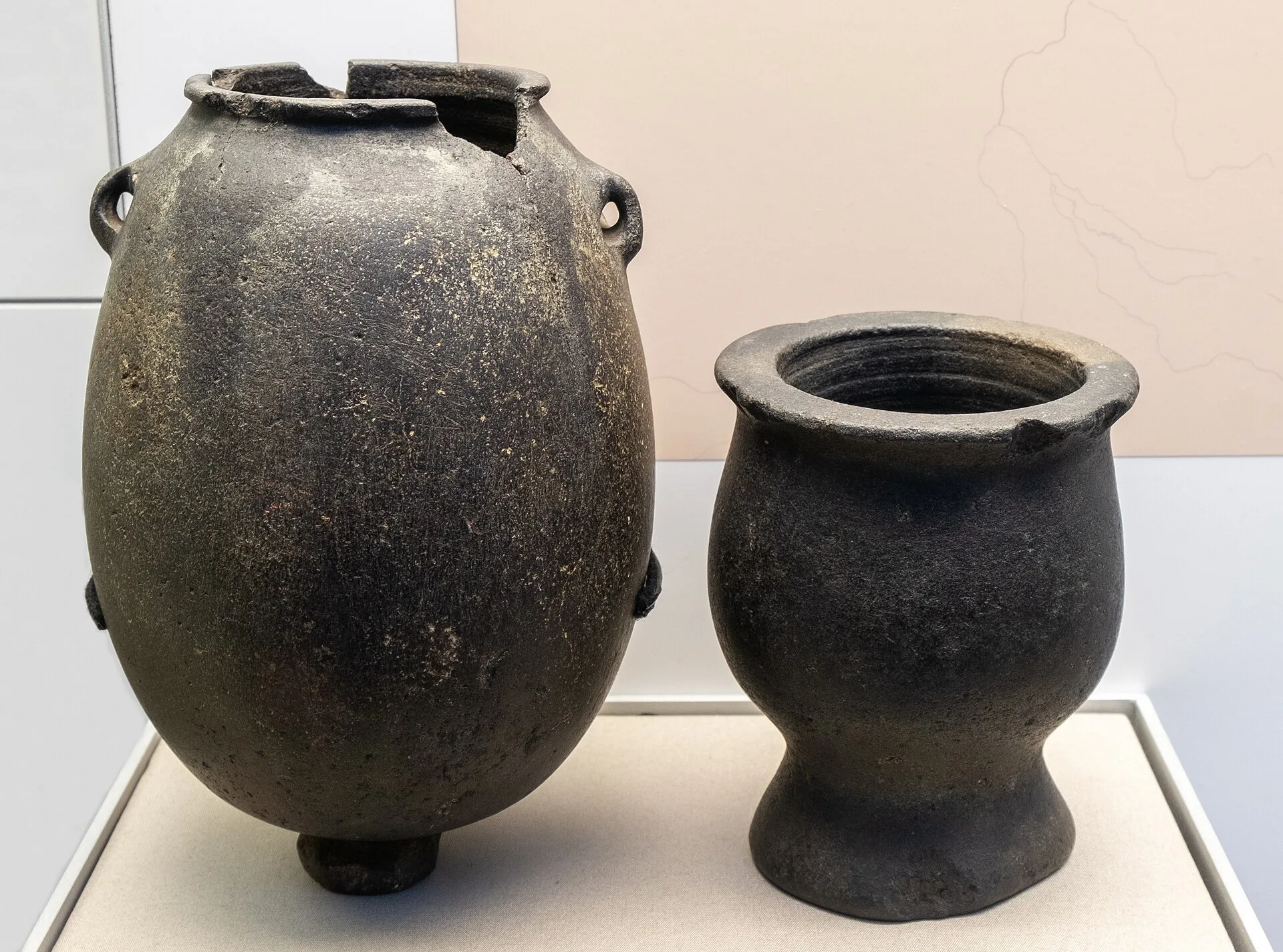
Their pottery is the hallmark of the culture. The best pieces are remarkably thin, with a surface combed and then burnished so it looks rippled. Many are red with a black rim, the black-topped ware made by firing the pot upside down so the mouth sat in smoke. The same black-topped style carried on into the Naqada period.
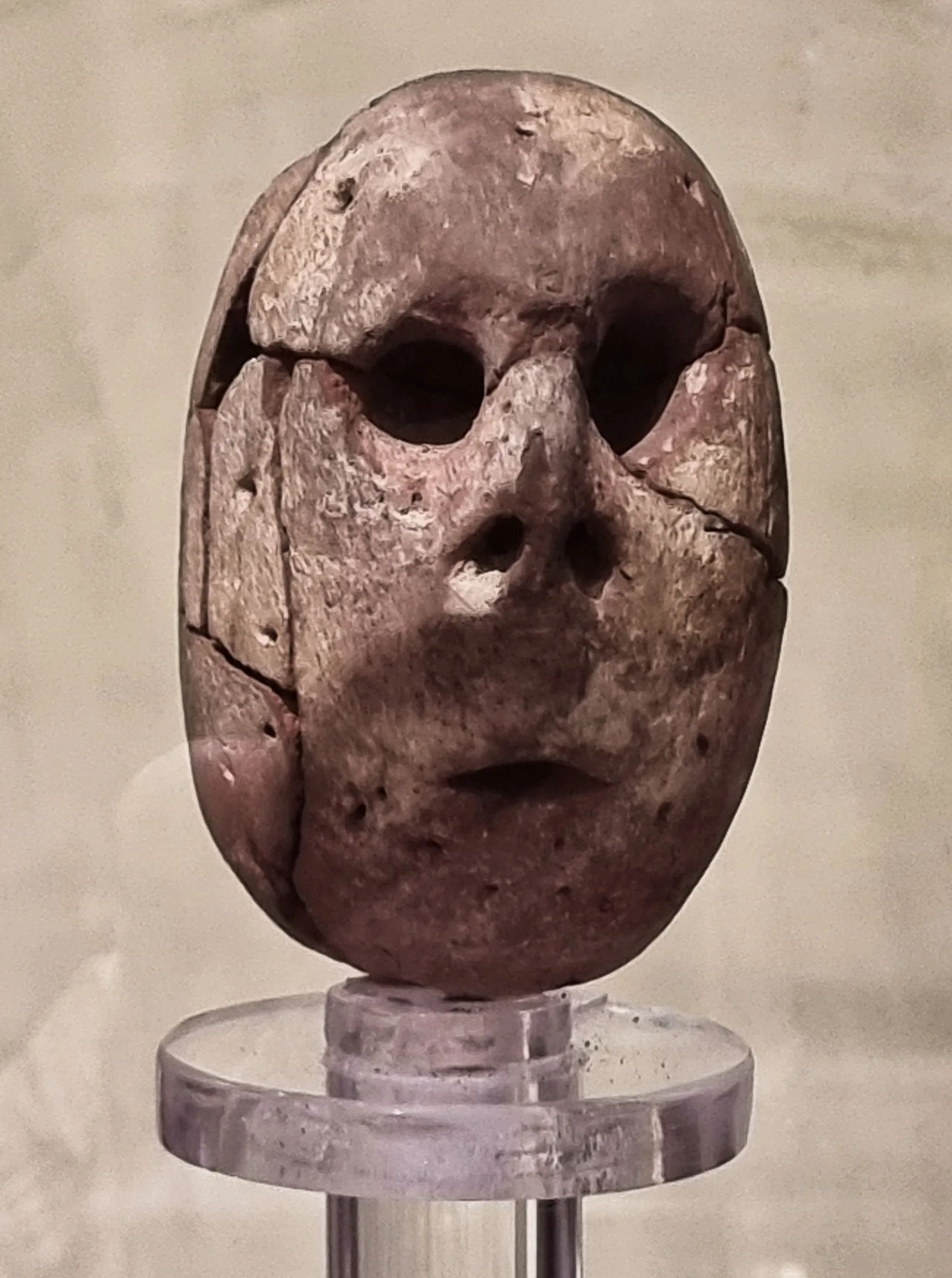
The Badarians also made small objects of copper, such as beads and pins, hammered from the metal rather than cast. These are among the earliest metal objects from Egypt. Other finds include ivory combs and spoons, stone and shell beads, and small figurines of people and animals.
Burials and beliefs
Badarian cemeteries were set apart from the villages on the desert edge. The dead were usually laid in an oval pit in a contracted position, on their side, often wrapped in matting or animal skin. Graves held pots, jewellery and other personal things.
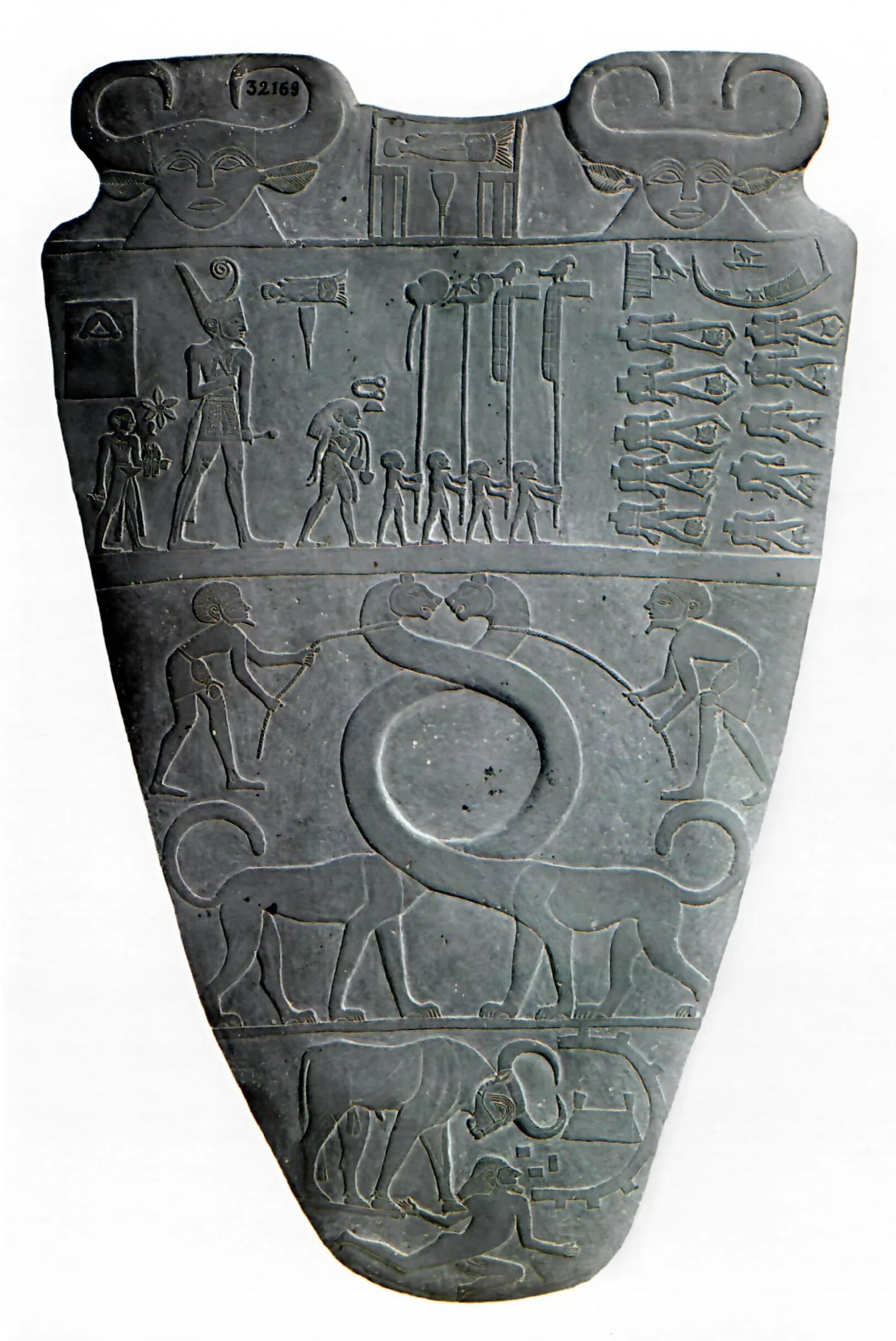
Slate palettes are a common grave good. These flat stones were used for grinding green malachite into a paste, probably for eye paint, and they became an important object type in the centuries that followed. The care taken over burial suggests a belief in some kind of life after death, though we cannot read the details.
How was the Badarian culture discovered?
The Badarian culture was identified in the 1920s by Guy Brunton, working for the British School of Archaeology in Egypt, with Gertrude Caton-Thompson. Brunton excavated the cemeteries around el-Badari and recognised that the pottery and graves belonged to a culture older than anything then known in Upper Egypt. Caton-Thompson dug the settlement at Hemamieh, where layers of occupation helped show that the Badarian came before the Naqada culture. Their joint report, The Badarian Civilisation, appeared in 1928.
Why it matters
The Badarian shows that farming, fine craft and careful burial were established in Upper Egypt well before the first towns and kings. Black-topped pottery, slate palettes and the habit of filling graves with goods all passed into the Naqada culture, which grew into the state that unified Egypt around 3100 BC. For an overview of the whole era, see the Predynastic Period.
Where to see it today
The Badarian sites themselves are low desert-edge cemeteries and settlement patches with nothing standing above ground, and they are not set up for visitors. To see Badarian objects you need a museum. Large collections from Brunton’s excavations went to Britain, and the British Museum and the Petrie Museum in London both hold Badarian pottery, palettes and small finds. In Egypt, major museums such as the Egyptian Museum in Cairo hold material from this period, and the rippled black-topped pots are worth looking out for in any predynastic gallery.
Last checked November 2026. Sources: Wikipedia, Badarian culture, Britannica, Badarian culture, Petrie Museum of Egyptian Archaeology, UCL.
Information card
Frequently asked questions
When was the Badarian culture?
The Badarian culture dates to about 4400–4000 BC. It came just before the Naqada I period in Upper Egypt.
Where is el-Badari?
El-Badari is a district on the east bank of the Nile in Middle Egypt, between Asyut and Sohag. It gave its name to the Badarian culture.
What is Badarian pottery like?
The finest Badarian pottery is very thin, with a combed and polished surface that looks rippled. Many pots are red with a black rim, a style known as black-topped ware.