Merimde Beni Salama: a Neolithic village in the Delta
History Topic
Merimde Beni Salama is a Neolithic village site on the western edge of the Nile Delta, north-west of Cairo, lived in from about 5000 to 4100 BC. It is one of the oldest farming settlements in Egypt and one of the largest of its time. Its people grew cereals, kept animals and buried their dead among their houses, and they left behind the Merimde head, one of the earliest sculpted human faces from the Nile Valley.
Where and when
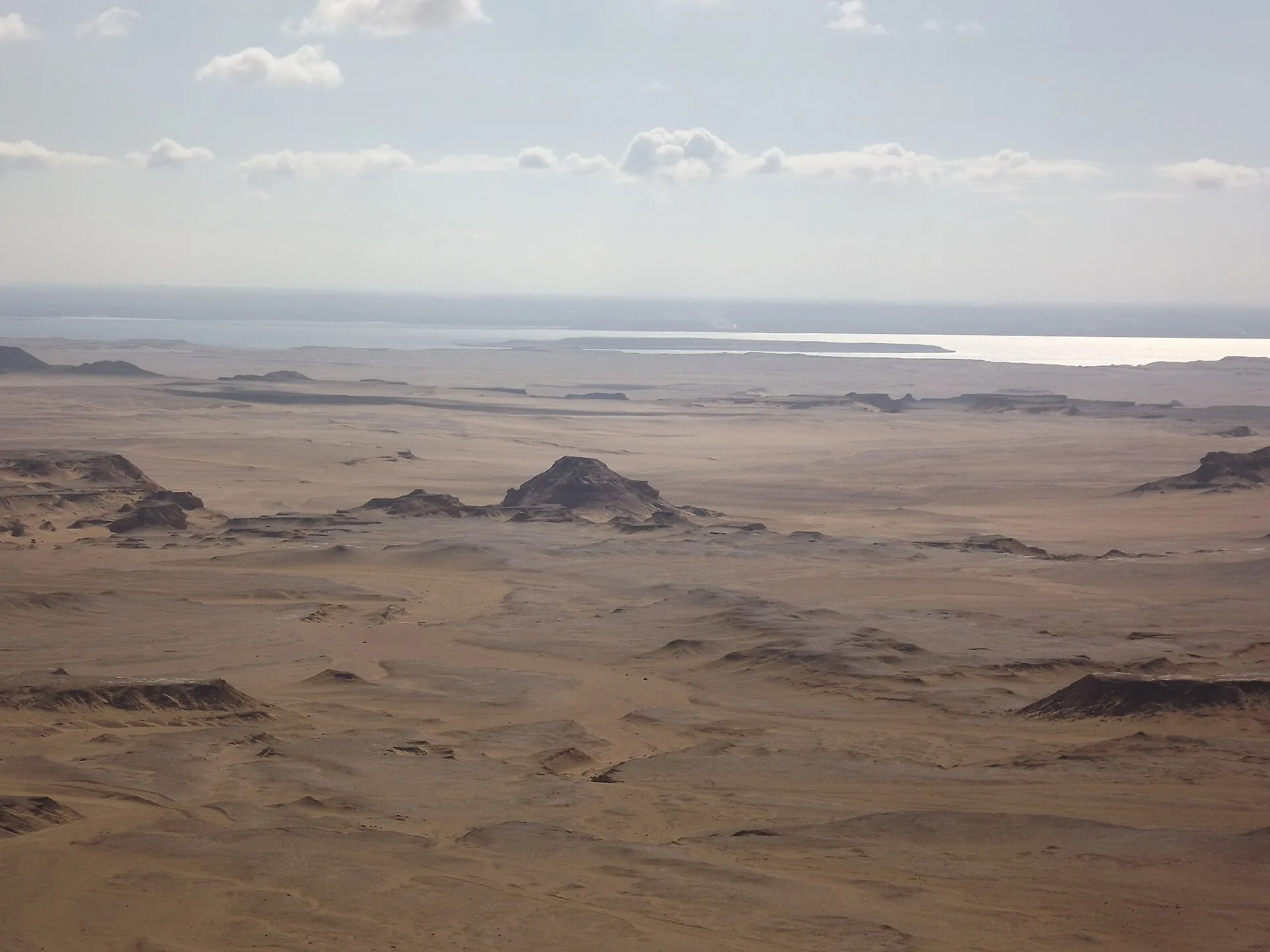
The site lies near the village of Beni Salama, on a low rise at the desert edge where the western Delta meets the desert. Its position gave the villagers fields on one side and dry ground for living on the other.
Merimde was occupied over a long period, from roughly 5000 BC until around 4100 BC. Excavators have divided the layers into several phases, and the village changed over time in its pottery, houses and tools. Dates vary somewhat between studies, but it is generally seen as slightly later than the earliest Faiyum farming sites and partly contemporary with them.
How people lived
The people of Merimde were farmers who also fished and hunted. They grew emmer wheat and barley and kept cattle, sheep, goats and pigs. Fish bones and remains of hippopotamus show that the river and marshes were still an important source of food.
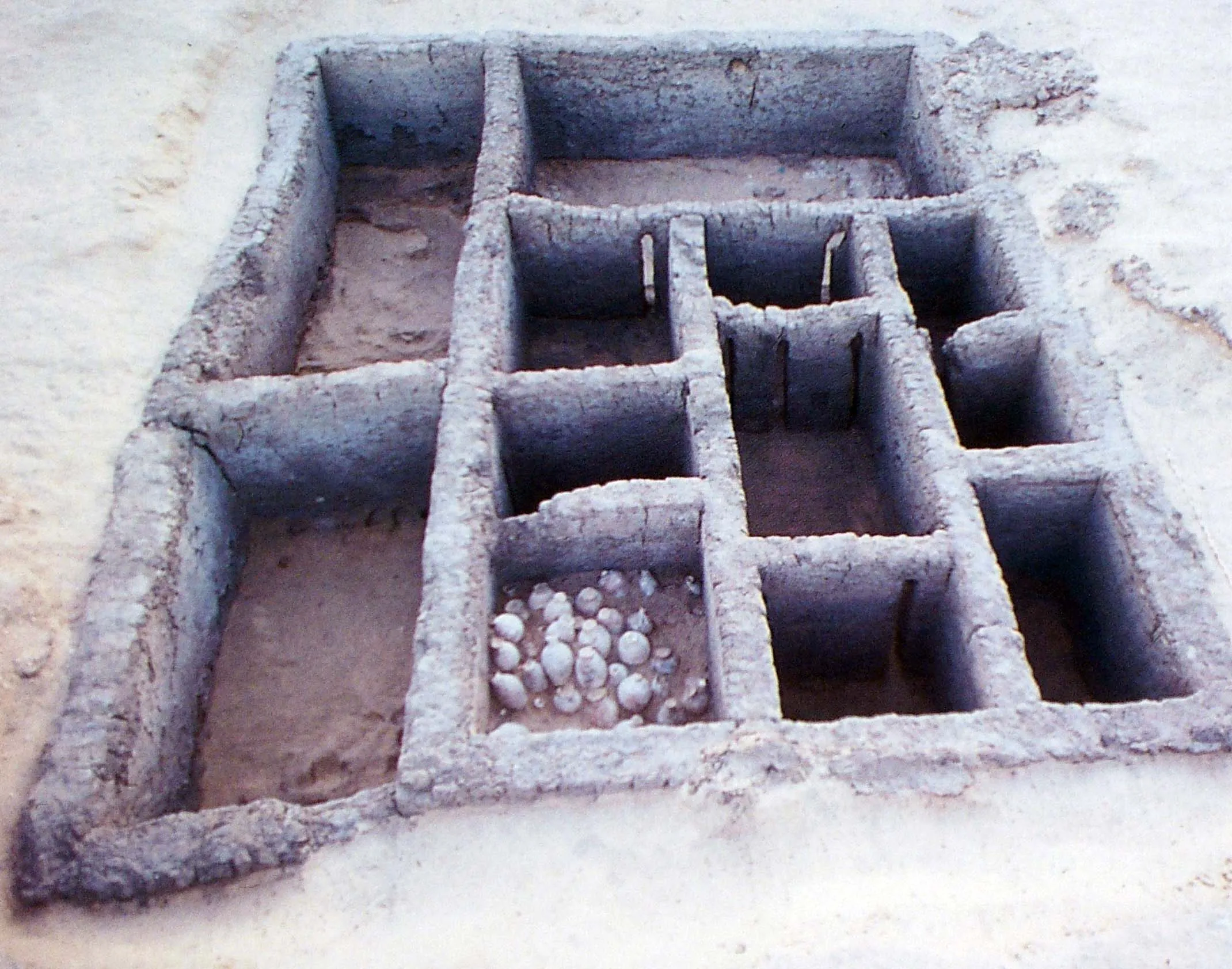
The houses in the later phases were small oval huts, built of mud and wattle or reeds, some with floors set a little below ground. Grain was kept in storage pits and in clay-lined basket granaries.
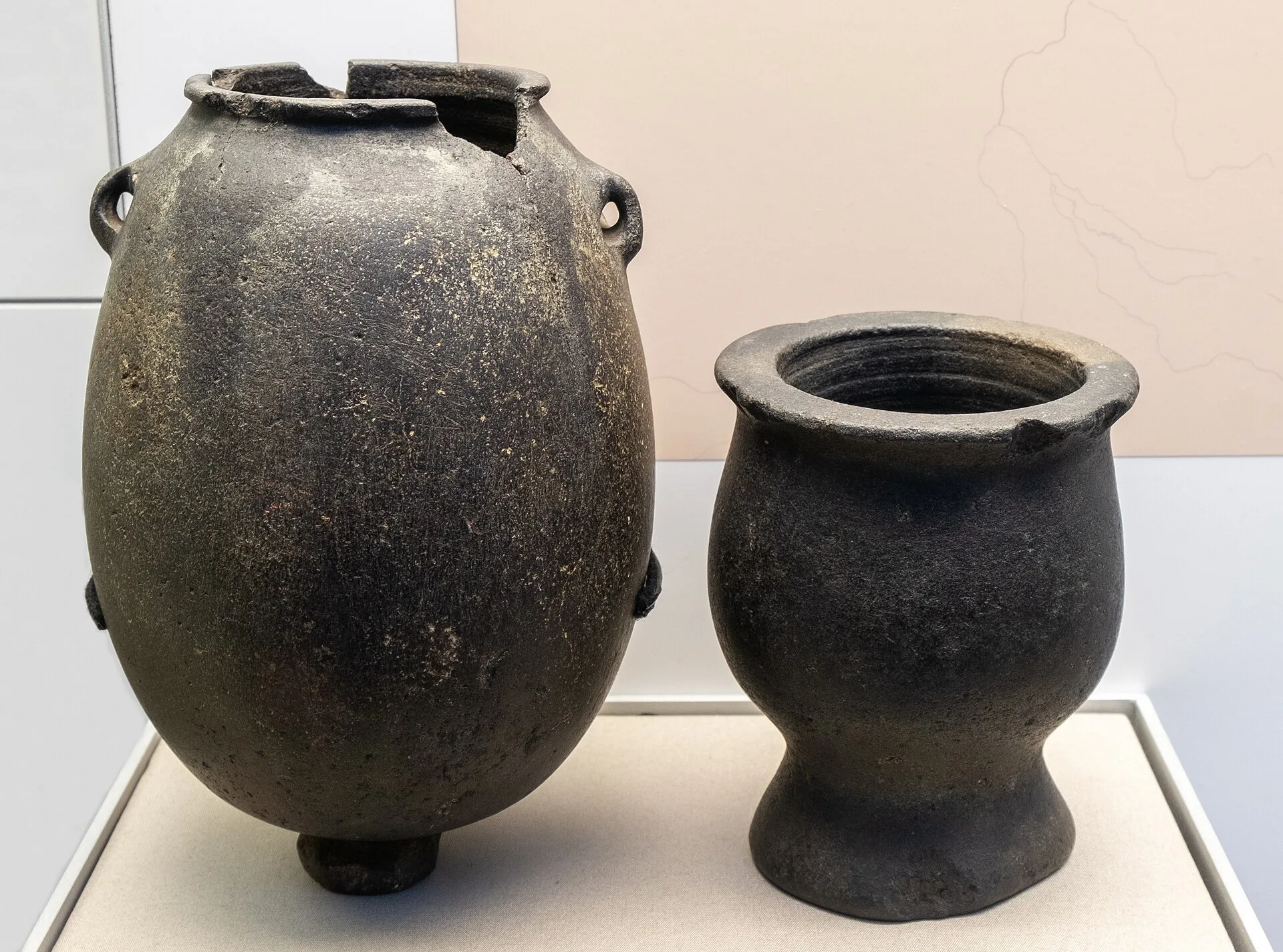
Pottery at Merimde is mostly plain, in red, brown or black, with some polished pieces. The villagers also made stone axes, flint arrowheads and sickle blades, and bone tools such as harpoons and fish hooks.
What is the Merimde head?
The Merimde head is a small, rough pottery head found at Merimde Beni Salama, and it is one of the oldest known sculptures of a human face from Egypt. It shows an oval face with simple eyes, nose and mouth. Small holes around the edge may once have held hair or a beard made of other materials. Nobody knows exactly what it was for; it may have been part of a figure, a mask or a ritual object.
The head is held by the Egyptian Museum in Cairo, where it has long been one of the best-known prehistoric objects. As objects move between Cairo’s museums, it is worth checking where it is on show before you visit.
Burials and beliefs
Burials at Merimde were placed within the settlement area, in simple pits between or close to the houses. Bodies were laid in a contracted position, and most graves had few or no objects. This is quite different from the separate desert cemeteries with grave goods that became typical in Upper Egypt. How the burials relate to the different phases of the village has been debated.
How it was discovered
The site was excavated by the Austrian Egyptologist Hermann Junker in several seasons during the late 1920s and the 1930s. His work first showed the scale of the village. In the 1970s and 1980s a team from the German Archaeological Institute, led by Josef Eiwanger, returned to the site and worked out its sequence of phases in much more detail.
Why it matters
Merimde shows that by around 5000 BC people on the edge of the Delta were living in lasting villages with houses, stores and burials. Together with the Faiyum Neolithic and the slightly later El Omari culture, it gives a picture of northern Egypt’s first farmers, long before the Naqada culture spread from the south. Our overview of Egypt’s first farmers sets out how these cultures fit together.
Where to see it today
The site itself is an archaeological mound at the desert edge with little for visitors to see, and it is not set up for tourism. The best way to meet Merimde is through its finds, especially the pottery head in the Egyptian Museum.
Last checked November 2026. Sources: Wikipedia: Merimde, Wikipedia: Hermann Junker, Wikipedia: Prehistoric Egypt.
Information card
Frequently asked questions
Where is Merimde Beni Salama?
Merimde Beni Salama is on the western edge of the Nile Delta, north-west of Cairo, near the village of Beni Salama. It sits on a low rise where the Delta meets the desert.
How old is Merimde Beni Salama?
The village was occupied from about 5000 to 4100 BC. That makes it one of the oldest farming settlements known in Egypt.
Where is the Merimde head now?
The Merimde pottery head is held by the Egyptian Museum in Cairo. Because objects move between Cairo's museums, it is worth checking where it is displayed before a visit.