Nabta Playa: stone circle of the Western Desert
History Topic
Nabta Playa is a dry lake basin in Egypt’s Western Desert, about 100 km west of Abu Simbel. Between about 9000 and 3000 BC, when the Sahara was wetter than today, people came here in the rainy seasons to camp beside a shallow lake. They herded cattle, and in later centuries they set up a small stone circle and other megaliths. Nabta Playa matters because it shows the desert as a lived-in landscape long before the Nile Valley’s first kings.
Where and when
A playa is a basin that fills with water after rain and dries out again. In the early Holocene, summer rains reached far further north than they do now, and Nabta Playa held water for part of each year. Groups returned again and again over several thousand years, leaving hearths, huts, wells and stone tools.
When the rains failed for long periods people left, then came back when conditions improved. Eventually, as the desert dried for good, the basin was abandoned. Many researchers think that people moving out of the drying Sahara helped shape life in the Nile Valley, the setting described in the first farmers of the Nile.
How people lived
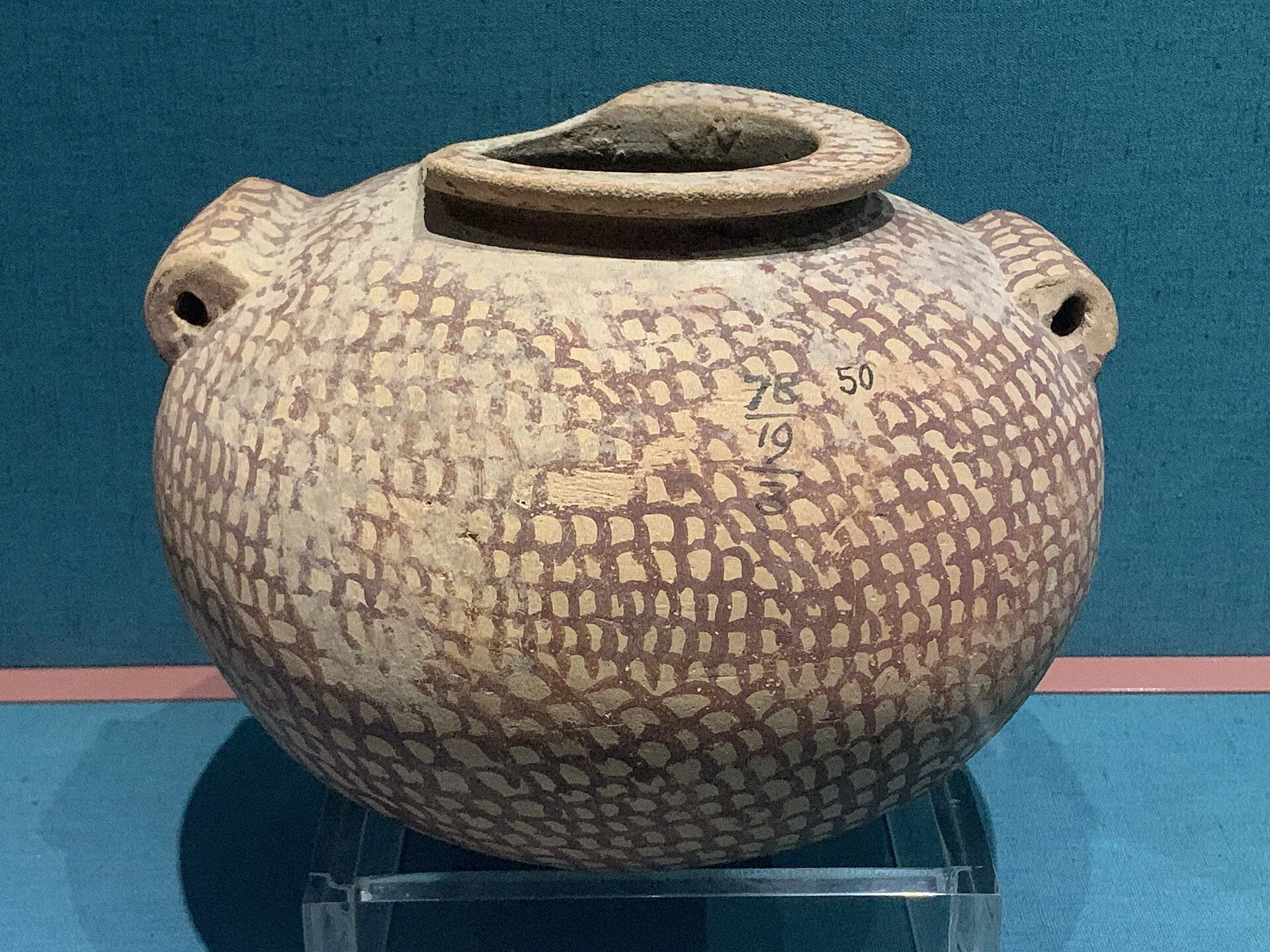
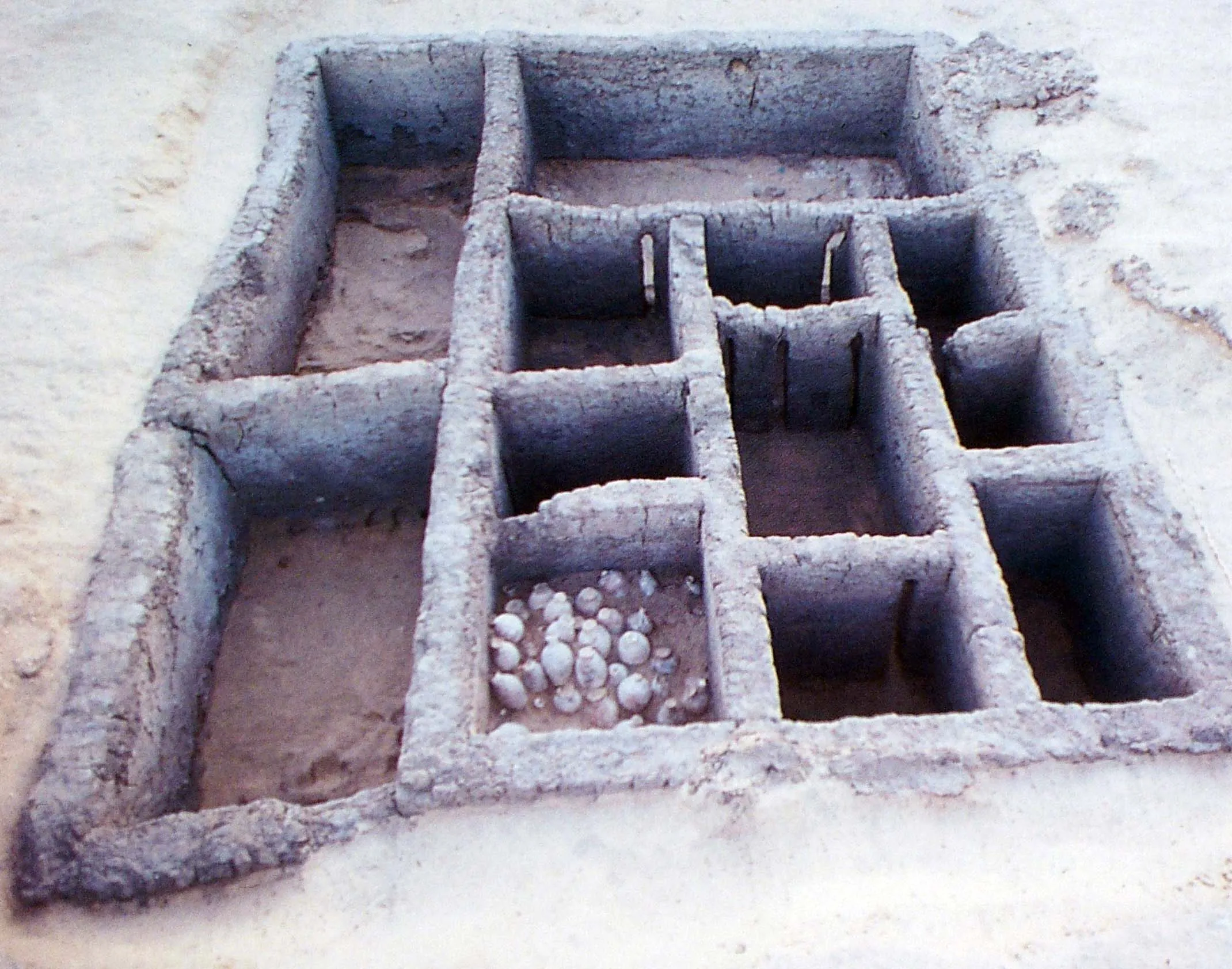
Nabta Playa’s people lived by hunting gazelle and hare, gathering wild plants such as sorghum and millet, and making pottery very early for this part of Africa. Later camps include rows of huts and deep wells that let groups stay longer in the dry months.
Cattle are central to the story. Fred Wendorf and his colleagues argued that cattle bones from the earliest levels came from domesticated animals, which would make these some of the earliest cattle herders anywhere. That early date is debated, as the bones are few and hard to tell from wild cattle. By later phases, sheep and goats had also arrived and herding was clearly established.
The stone circle and megaliths
In its later Neolithic phases, people at Nabta Playa built a set of stone structures. The best known is a small circle of upright slabs a few metres across, with gaps that form two lines of sight. Nearby are lines of standing stones and large stones set over shaped bedrock, along with stone-covered burials. One contained the remains of a young cow placed in a roofed chamber, which suggests cattle held a special place in belief.
Is Nabta Playa an astronomical calendar?
Nabta Playa has been proposed as an early astronomical site, but the idea is debated. Researchers working with Wendorf suggested that the gaps in the circle lined up with sunrise at the summer solstice, which roughly coincided with the coming of the rains, and that some lines of stones pointed to bright stars. Others have questioned the dating of the stones, the accuracy of the alignments and how much can be read into them. It is fair to say the circle may have had a seasonal or ritual purpose, but claims that it was a precise calendar remain unproven.
How it was discovered
Nabta Playa was found in 1973 by the Combined Prehistoric Expedition, led by the American archaeologist Fred Wendorf, while working in the Western Desert. Wendorf worked there for decades with the Polish archaeologist Romuald Schild and Egyptian colleagues, and the expedition published detailed reports on the site’s camps, animals and megaliths.
Why it matters
Nabta Playa shows that the Sahara was home to inventive people who herded animals, dug wells, made pottery and built monuments with stone. It adds a desert side to the story of Egypt’s origins, which is usually told only from the river. For the wider picture, see our Predynastic Period overview.
Where to see it today
Nabta Playa is remote, with no visitor facilities, and the stones themselves are low and easy to miss. It is not set up for tourism. The nearest base is Aswan or Abu Simbel, where the Nubia Museum tells the wider story of the far south from prehistory onwards.
A reconstruction of the Nabta Playa stone circle stands at the Nubia Museum in Aswan, the easiest way to see it.
Last checked November 2026. Sources: Wikipedia, Nabta Playa, Wikipedia, Fred Wendorf.
Information card
Frequently asked questions
Where is Nabta Playa?
Nabta Playa is a dry lake basin in Egypt's Western Desert, about 100 km west of Abu Simbel. It is remote and has no visitor facilities.
How old is the Nabta Playa stone circle?
The stone circle belongs to the later Neolithic use of the site, and its excavators placed it around the fifth millennium BC. Its exact date, like its purpose, is debated.
Who discovered Nabta Playa?
Nabta Playa was found in 1973 by Fred Wendorf's Combined Prehistoric Expedition. The team, which included Romuald Schild, worked there for many years.