Historical background
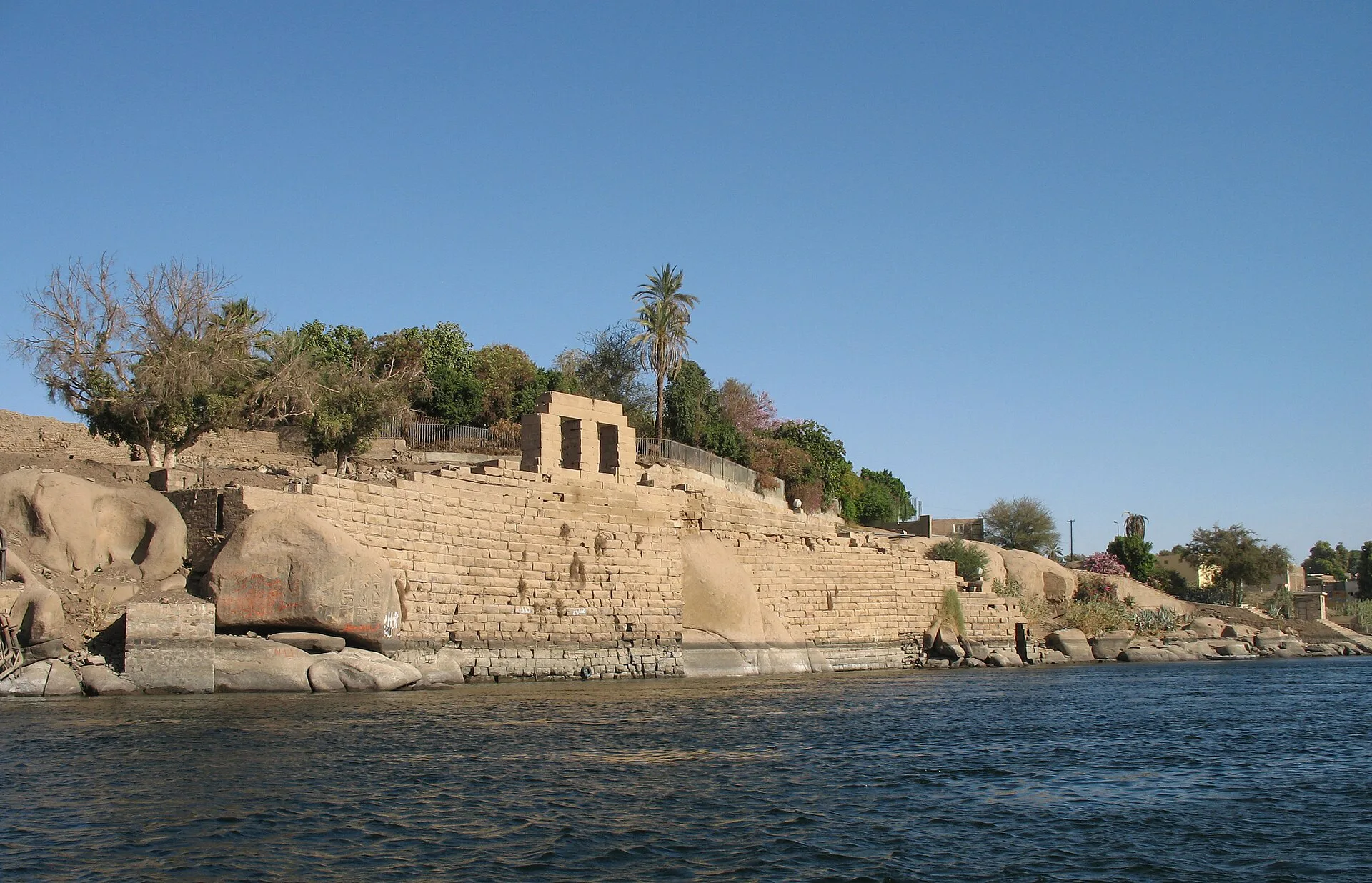
The island of Philae, once home to the sanctuary of the goddess Isis, was flooded by the Nile after the Aswan High Dam was built. Thanks to the international campaign to save the Nubian monuments, the Temple of Isis was rebuilt on the neighbouring island of Agilika. The temple holds important religious and historical evidence and records some of the major events of Egypt’s later history.
The temple is considered one of the most beautiful built in the Ptolemaic and Roman periods. Its earliest structure, however, dates from King Nectanebo I, near the end of the last ancient Egyptian royal dynasty: a royal kiosk used during royal and divine festivals.
The temple was built mainly for the worship of Isis, the goddess of femininity and beauty in ancient Egypt, and is one of the best-preserved examples of ancient art and architecture. It looks across to the burial place of her husband, the god Osiris, on Bija Island.
Structure of the temple
The temple follows the usual Egyptian layout of the Greco-Roman period. Its buildings line up on a north-south axis, from the royal kiosk in the south to the Temple of Herendotes at the northern end of the island.
Besides the main Temple of Isis, the island has temples and chapels to Nubian gods, the Trajan Kiosk, a mammisi and a temple of Hathor. In 527 AD the Copts began using the temple as a church.
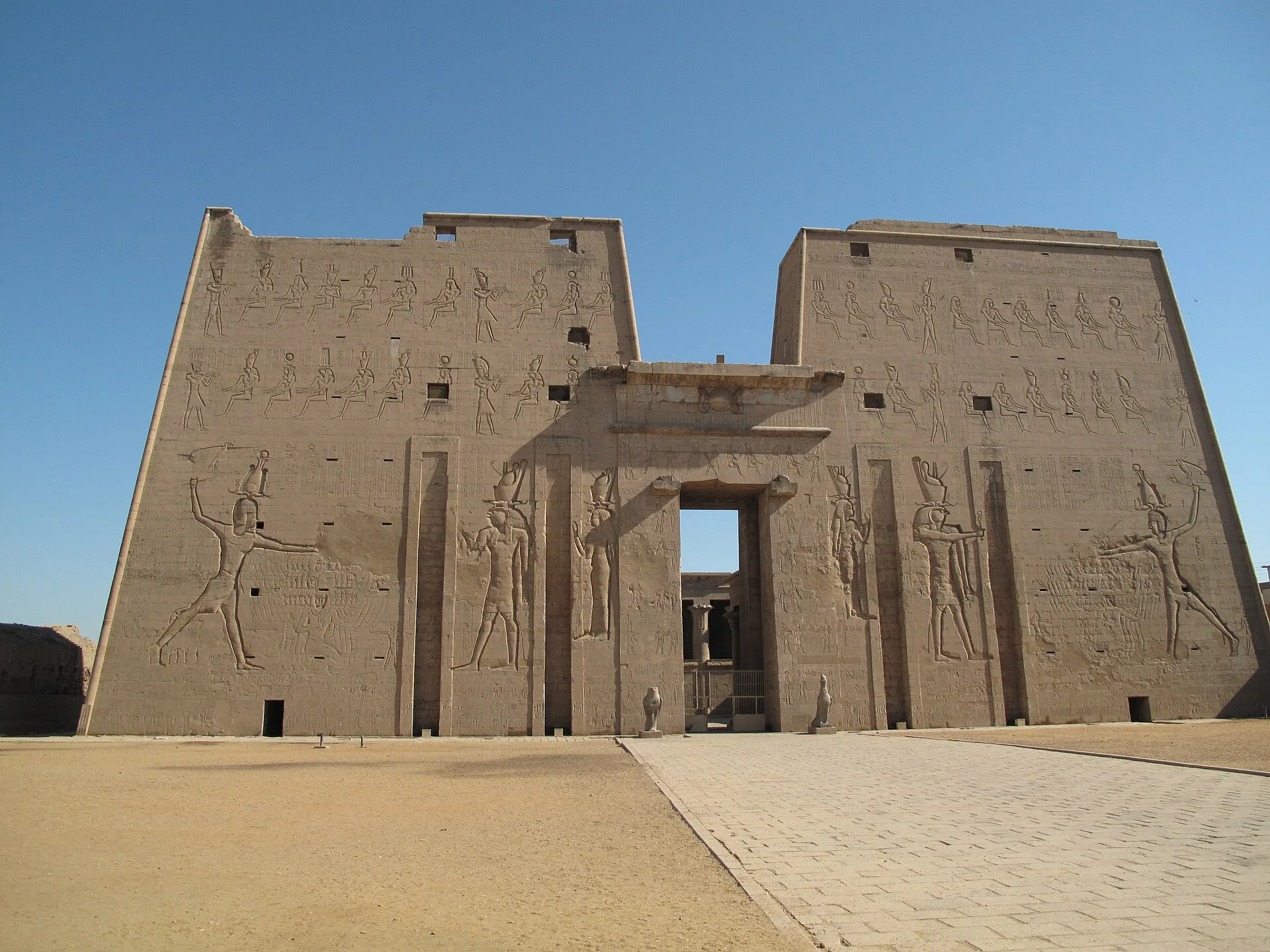
A colonnade with finely carved and varied column capitals leads to the Temple of Isis. The main entrance passes between the two towers of the first pylon, through a doorway eighteen metres high, with two granite lions in front. On the pylon, King Ptolemy XII is shown smiting his enemies in the traditional Egyptian manner.
A side entrance near the western tower leads to the mammisi built by Ptolemy VI, known for its scene of Isis nursing her son Horus. Stairs lead up to the second pylon, decorated with Ptolemy XII making offerings to various gods. Beyond it is a columned hall that combines a peristyle court and a hypostyle hall. Its screens show the change from the Greek to the Byzantine period, as the hall saw the beginning of the Christian era.
The columned hall leads into the inner temple and its innermost chapels, the holy of holies of Isis, her husband Osiris and their son Horus, who together form the Osirian triad. Their scenes are very well preserved. Scenes on the roof tell the myth of the death of Osiris, his burial and resurrection, and the divine birth of Horus.
At the southern end of the island stands the best known of Philae’s monuments, the Kiosk of Trajan. Its fourteen columns are joined by screen walls, and it was the formal entrance to the island throughout ancient times.
The temple walls are covered with graffiti from many periods, including a text describing the Napoleonic expedition’s pursuit of the Mamluks and other inscriptions from the Coptic and modern periods.
Information card
Agilika Island, Aswan
Daily: 7 AM-5 PM (summer), 7 AM- 4 PM (winter)
At a glance
Arabic nameمعبد فيلة
GovernorateAswan
Foreign adult / student (EGP)550 / 275
TicketsBoat fare extra; sound and light show 960. Ticket offices at major sites take cards only.
Prices last checkedOctober 2026
EraPtolemaic
Prices and hours change often. Confirm on the Ministry’s official site egymonuments.gov.eg before you go.
Frequently asked questions
How much is the ticket to Temple of Philae?
Foreign visitors: EGP 550 / 275 (adult / student). Prices last checked October 2026; confirm on egymonuments.gov.eg.
Where is Temple of Philae?
The Temple of Philae is in Aswan governorate, Egypt.
Can I buy tickets online for Temple of Philae?
Many sites and museums sell tickets on the official portal egymonuments.gov.eg; most also sell at the gate, usually by card only.