Herakleopolis (Ihnasya)
Archaeological Site
Herakleopolis Magna lies under and around the town of Ihnasya el-Medina, about 15 km west of Beni Suef. It was the capital of the 20th province of Upper Egypt and the home of Heryshaf, a god shown as a ram or a ram-headed man. The Egyptians called the city Nen-nesut; it became Hnes in Coptic and Ahnas in Arabic, which survives in the modern name Ihnasya. The Greeks matched Heryshaf with their hero Herakles and called the place Herakleopolis, the “city of Herakles”.
A royal capital
In the First Intermediate Period, after the central state of the Old Kingdom broke up, the kings of the 9th and 10th Dynasties ruled northern Egypt from Herakleopolis, roughly between 2160 and 2025 BC. Egyptologists sometimes call these years the Herakleopolitan Period. The city’s rulers fought a long series of wars with the princes of Thebes in the south, until Mentuhotep II of Thebes defeated them and reunited the country, opening the Middle Kingdom. Herakleopolis rose again in the Third Intermediate Period, when its temples and cemeteries were renewed.
The temple of Heryshaf and the cemeteries
The main monument was the temple of Heryshaf. Édouard Naville excavated it in the early 1890s, and Flinders Petrie returned in 1903–1904 and uncovered more, including building work of the 19th Dynasty linked to Ramesses II. A red granite column from the site now stands in the British Museum, and other finds are in museums in Europe and North America.
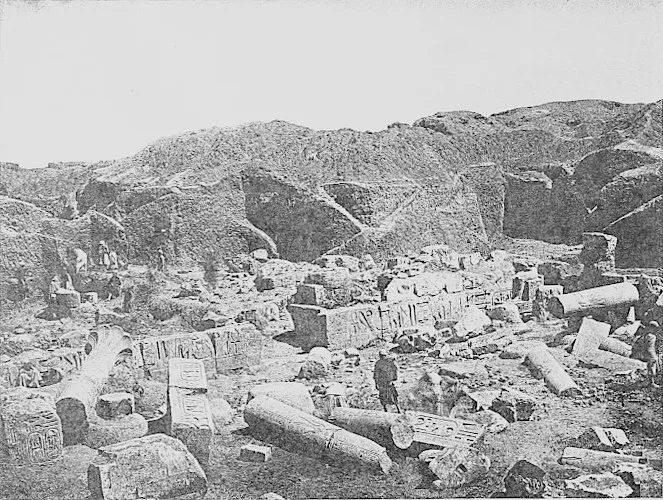
For several decades a Spanish mission from the National Archaeological Museum in Madrid has worked here, on the temple and on a cemetery of the First Intermediate Period and early Middle Kingdom. In 2008 it found the funerary chapel of Neferkhau and Sat-Bahetep and the tomb of an official named Khety. In 2026 an Egyptian mission reported a block carved with the name of Senusret III, the remains of a Roman basilica built partly from the blocks of an earlier Greek-style temple, and a marble head of Aphrodite.
Visiting tips
- The site is an active excavation area, not a monument with a ticket office, and it is not open to the public without permission. Ask the antiquities inspectorate in Beni Suef, or arrange the visit through a licensed guide or tour operator.
- What you can see is modest: low walls, scattered blocks and fallen column pieces among the fields and mounds. It suits visitors with a strong interest in Egyptian history.
- Carry your passport, and bring water and a hat, as there are no facilities on site.
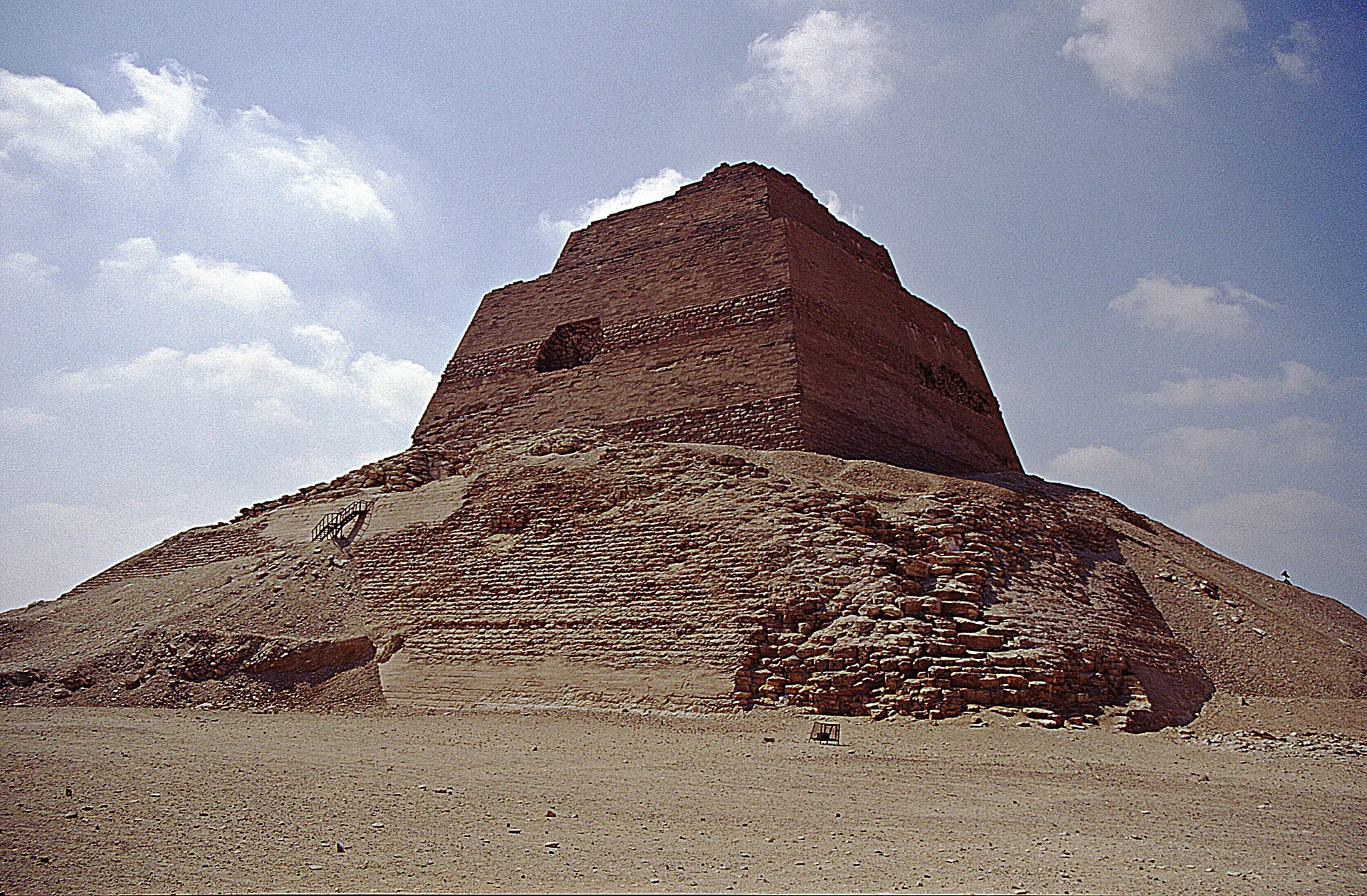
- In Beni Suef governorate, the Meidum Pyramid to the north is the main site formally open to visitors.
Getting there
Ihnasya el-Medina is about 15 km west of Beni Suef city, in farmland. There is no public transport to the ruins themselves, so you will need a car and driver from Beni Suef, ideally with someone who knows where the excavation areas are.
Last checked November 2026. Sources: en.wikipedia.org, en.wikipedia.org, riull.ull.es, egyptartefacts.griffith.ox.ac.uk, archaeology.org, de.wikivoyage.org.
Information card
At a glance
Arabic nameإهناسيا
GovernorateBeni Suef
Prices and hours change often. Confirm on the Ministry’s official site egymonuments.gov.eg before you go.
Frequently asked questions
Where is Herakleopolis?
At Ihnasya el-Medina in Beni Suef governorate, about 15 km west of Beni Suef city.
Can I visit Herakleopolis?
It is not formally open to the public. You need permission, which you can ask for at the antiquities inspectorate in Beni Suef or arrange through a licensed guide.
Why was Herakleopolis important?
Its kings, the 9th and 10th Dynasties, ruled northern Egypt during the First Intermediate Period, until Mentuhotep II of Thebes reunited the country.
Who was Heryshaf?
The ram-headed god of the city. The Greeks identified him with Herakles, which gave the city its Greek name.
What is left to see at Herakleopolis?
Low remains of the temple of Heryshaf and later buildings, with scattered blocks and column pieces. Many finds from the site are now in museums.