Temple of Hibis
Archaeological Site
The Temple of Hibis stands among palm groves about 2 km north of the town of Kharga, in the Kharga Oasis of the Western Desert. It is the largest and best-preserved ancient temple in the oasis, and one of very few Egyptian temples to survive from the Saite and Persian periods (664–404 BC). It was dedicated to Amun of Hibis, a local form of Amun closely tied to Amun-Ra of Karnak, and Osiris also had his own rooms here. Building probably began in the 26th Dynasty, perhaps under Psamtik II, and most of the decoration was carved under the Persian king Darius I (c. 522–486 BC).
A temple built over many reigns
The town around the temple was called Hebet, “the plough”, which the Greeks wrote as Hibis. It now lies under fields, and the sacred lake that once came up to the temple has gone. Later rulers kept adding to the building at the front. Hakor of the 29th Dynasty is credited with the hypostyle hall, Nectanebo I and II of the 30th Dynasty added the columned portico, and Ptolemy II built a new enclosure wall and gateway. In Roman times the governors of the oasis posted official edicts on the outer gateway.
What to see
- The approach: an avenue once lined with sphinxes leads past three gateways in turn. The innermost, built by Darius I, is decorated with scenes of the king making offerings.
- Portico and halls: the Nectanebo portico has columns with a mix of papyrus, lotus and palm capitals. Behind it lie Darius’s original entrance hall and the hypostyle hall.
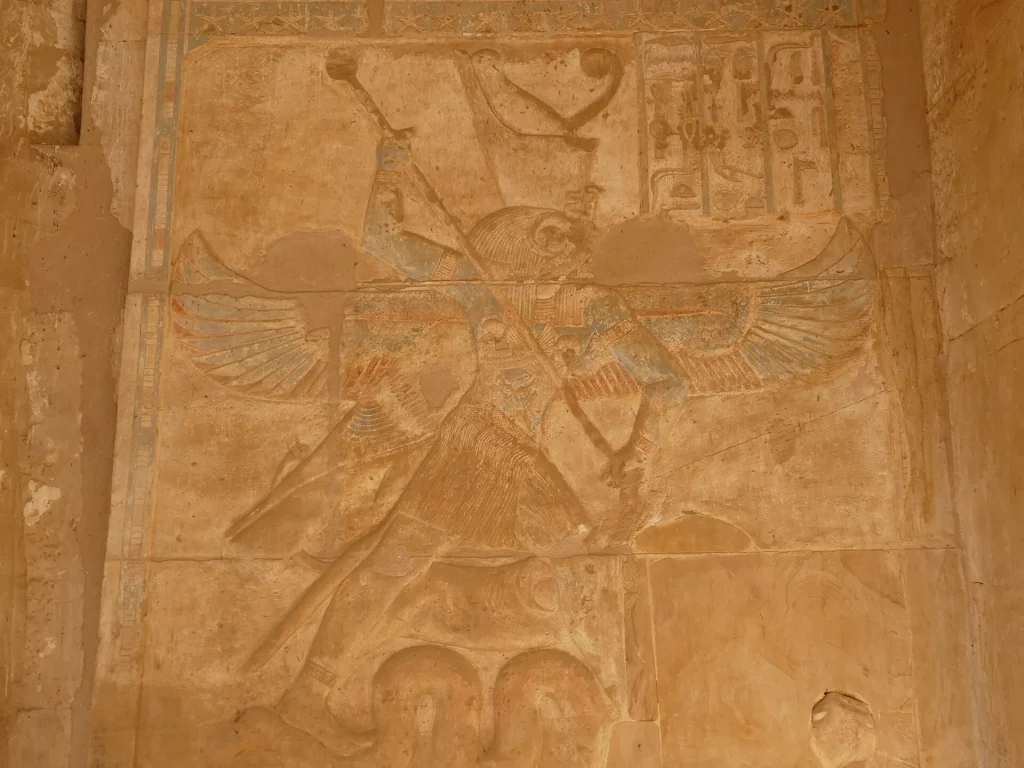
- Seth spearing the serpent: a relief in the hypostyle hall shows a winged Seth driving a spear into the serpent Apophis. Some scholars see it as a distant forerunner of images of Saint George and the dragon.
- The sanctuary: its walls carry nine registers of decoration with almost 700 figures of gods and kings, a kind of catalogue of the gods of Egypt.
- Osiris rooms: chapels and roof rooms reached by stairways were given over to the cult of Osiris.
Rescue and restoration
The Metropolitan Museum of Art in New York excavated and recorded the temple from 1909, under Herbert Winlock, and published it in several volumes. From 1958 onwards, rising groundwater from irrigation schemes nearby began to crack walls, tilt columns and damage reliefs. In the 1980s there were plans to dismantle the temple and move it to higher ground, but experts feared it would collapse and recommended restoring it where it stands. The temple was closed for many years while columns and walls were strengthened and the foundations protected from water, and it reopened to visitors in 2012.
Visiting tips
- Allow about an hour for the temple itself.
- Come early in the day when it is cooler, and bring water and a hat.
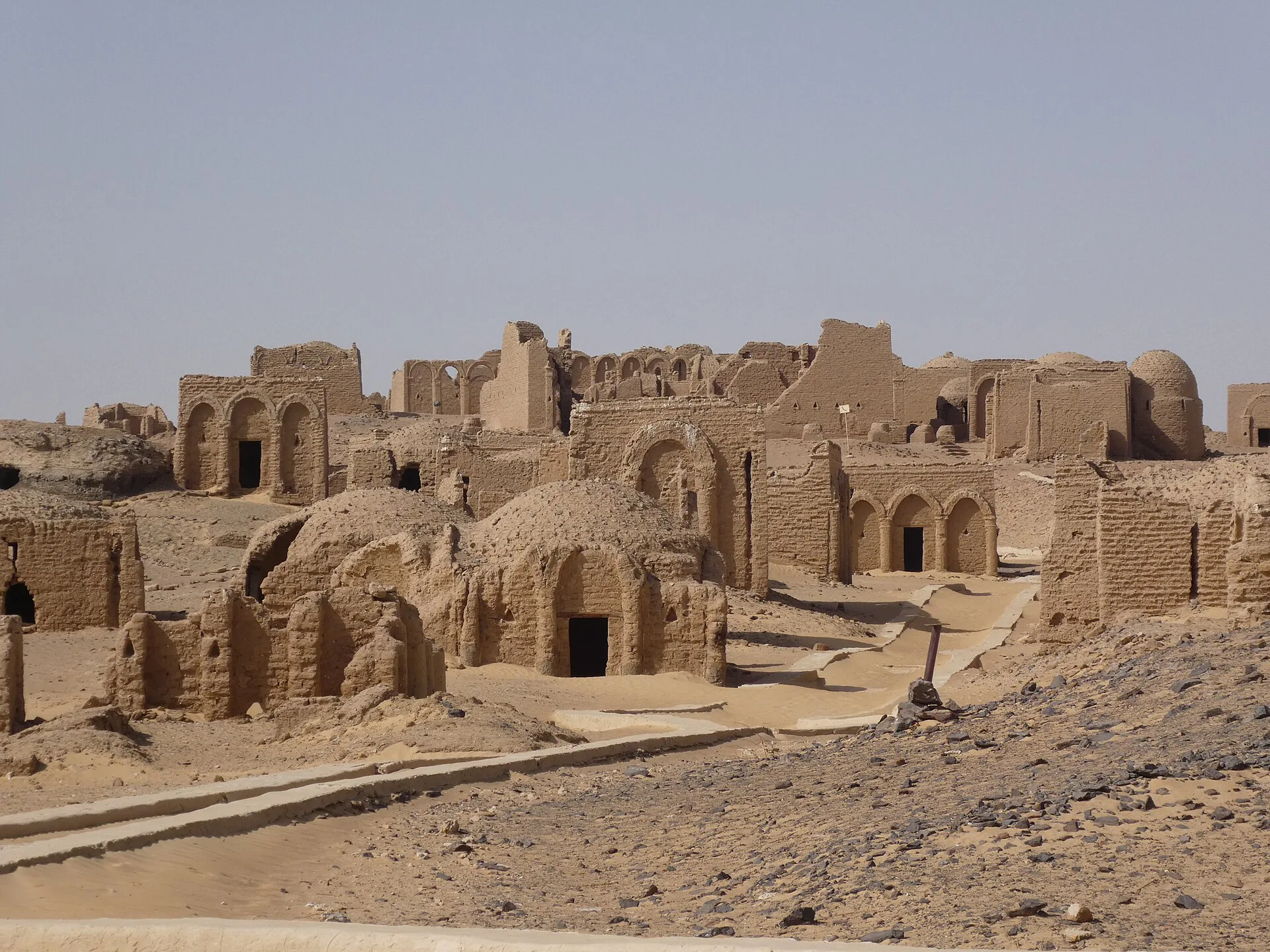
- The Bagawat Necropolis, an early Christian cemetery of domed mud-brick chapels, lies on the desert slope just to the north. The two make an easy half day together.
- Carry your passport, as you may be asked for ID when travelling between the oases.
Getting there
The temple is about 2 km north of central Kharga, a few minutes from town by taxi. Kharga itself is reached by road from Asyut or from Luxor in the Nile Valley; many visitors come on an organised tour of the Western Desert oases or hire a car and driver.
Last checked November 2026. Sources: mota.gov.eg (ticket price list), en.wikipedia.org, english.ahram.org.eg, the-past.com.
Information card
At a glance
Arabic nameمعبد هيبس
GovernorateNew Valley
Foreign adult / student (EGP)180 / 90
Egyptian adult / student (EGP)10 / 5
Opening hoursDaily 8:00–17:00
TicketsPrices from the Ministry of Tourism and Antiquities ticket list (updated November 2024); check egymonuments.gov.eg before you go.
Prices last checkedNovember 2026
EraLate Period
Prices and hours change often. Confirm on the Ministry’s official site egymonuments.gov.eg before you go.
Frequently asked questions
Where is the Temple of Hibis?
In the Kharga Oasis in New Valley governorate, about 2 km north of the town of Kharga.
Who built the Temple of Hibis?
Building probably began in the 26th Dynasty, perhaps under Psamtik II, and most of the decoration dates from the reign of the Persian king Darius I. Later kings, including Hakor, Nectanebo I and II and Ptolemy II, added a hall, a portico and gateways.
Which god was the Temple of Hibis built for?
Amun of Hibis, a local form of Amun linked to Amun-Ra of Karnak. Osiris was also worshipped in rooms of his own.
How much is the ticket to the Temple of Hibis?
Foreign visitors: EGP 180 / 90 (adult / student). Egyptians: EGP 10 / 5. Prices from the Ministry of Tourism and Antiquities list; confirm on egymonuments.gov.eg.
What are the opening hours of the Temple of Hibis?
The Temple of Hibis is open daily from 8:00 to 17:00.
Is the Temple of Hibis open after its restoration?
Yes. It was closed for many years while it was protected from rising groundwater, and reopened to visitors in 2012.
What else is there to see near the Temple of Hibis?
The Bagawat Necropolis, an early Christian cemetery with painted chapels, is just to the north and is easy to combine with the temple.