Tanis (San el-Hagar)
Archaeological Site
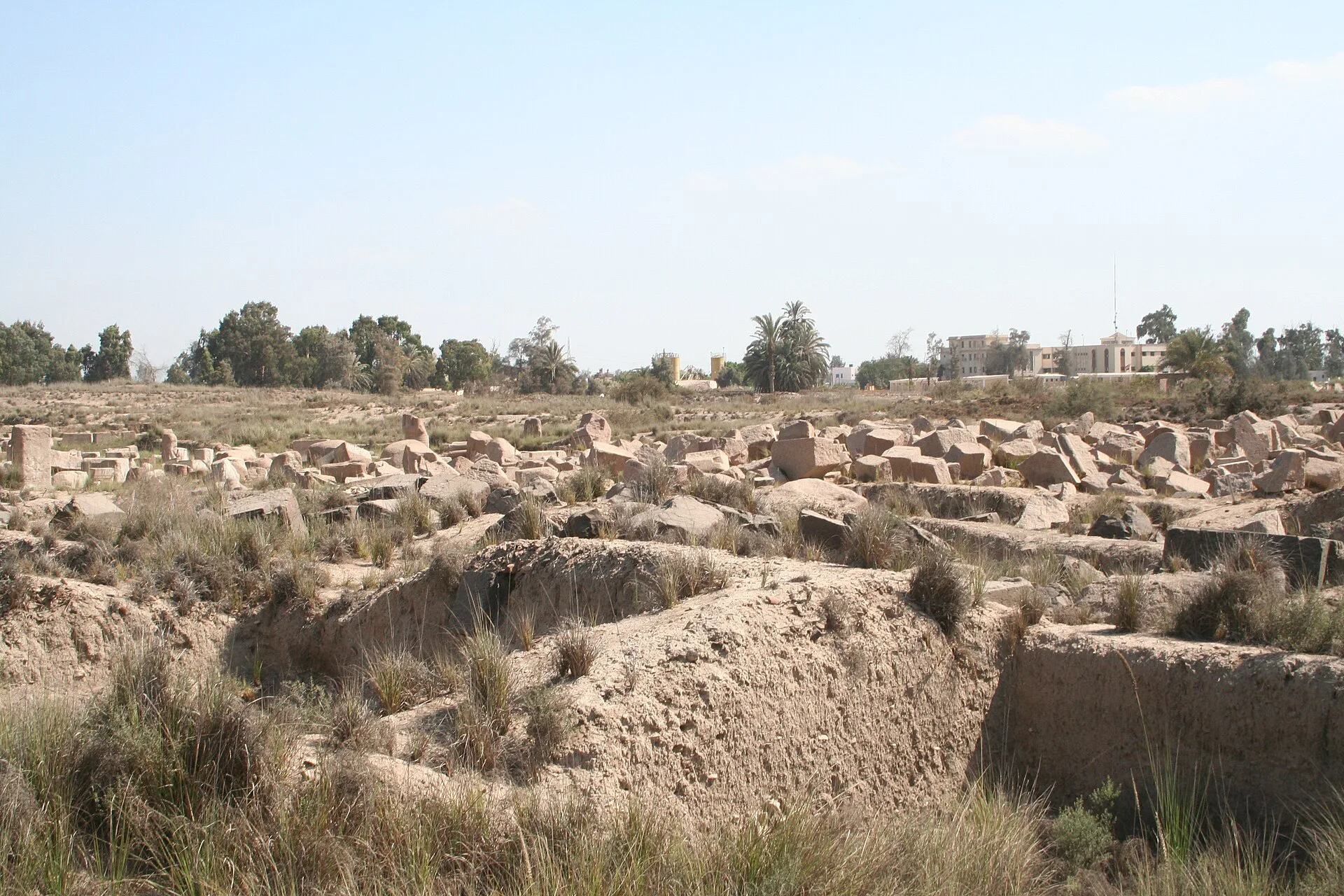
Tanis, known locally as San el-Hagar, lies in the north-eastern Nile Delta in Sharqia governorate, about 120 km north-east of Cairo as the crow flies. It was founded around the 11th century BC, after the Nile branch serving the Ramesside capital Pi-Ramesses shifted, and it became the capital of Egypt under the kings of the 21st and 22nd Dynasties. Today it is one of the best-preserved sites in the Delta, a wide field of granite obelisks, statues and blocks set among low mounds.
Capital of the north
The 21st Dynasty began with Smendes, who came from Tanis, and his successors, Psusennes I above all, built a great temple of Amun there with a layout modelled on Karnak at Thebes; for this reason Tanis is sometimes called the “Thebes of the north”. Temples of Mut and Khonsu stood nearby, and the city remained an important religious centre long after it ceased to be a capital, with its temples rebuilt into the Ptolemaic period.
Much of the stone was brought from elsewhere. Many blocks, obelisks and colossal statues carry the names of Ramesses II because they were moved from Pi-Ramesses for reuse. These inscriptions misled early scholars, who thought Tanis was Pi-Ramesses or even the Hyksos capital Avaris. Auguste Mariette excavated here in 1860–1864 and Flinders Petrie in the 1880s.
The royal tombs
In 1939 the French Egyptologist Pierre Montet found the royal necropolis inside the temple enclosure, and in 1940 he opened the burial of Psusennes I, which had never been robbed. The tombs also held the burials of Amenemope and Shoshenq II, among others. Their gold masks, a silver coffin, jewellery and vessels are now among the highlights of the Egyptian Museum in Cairo. The stone burial chambers remain on site under a protective shelter.
What to see
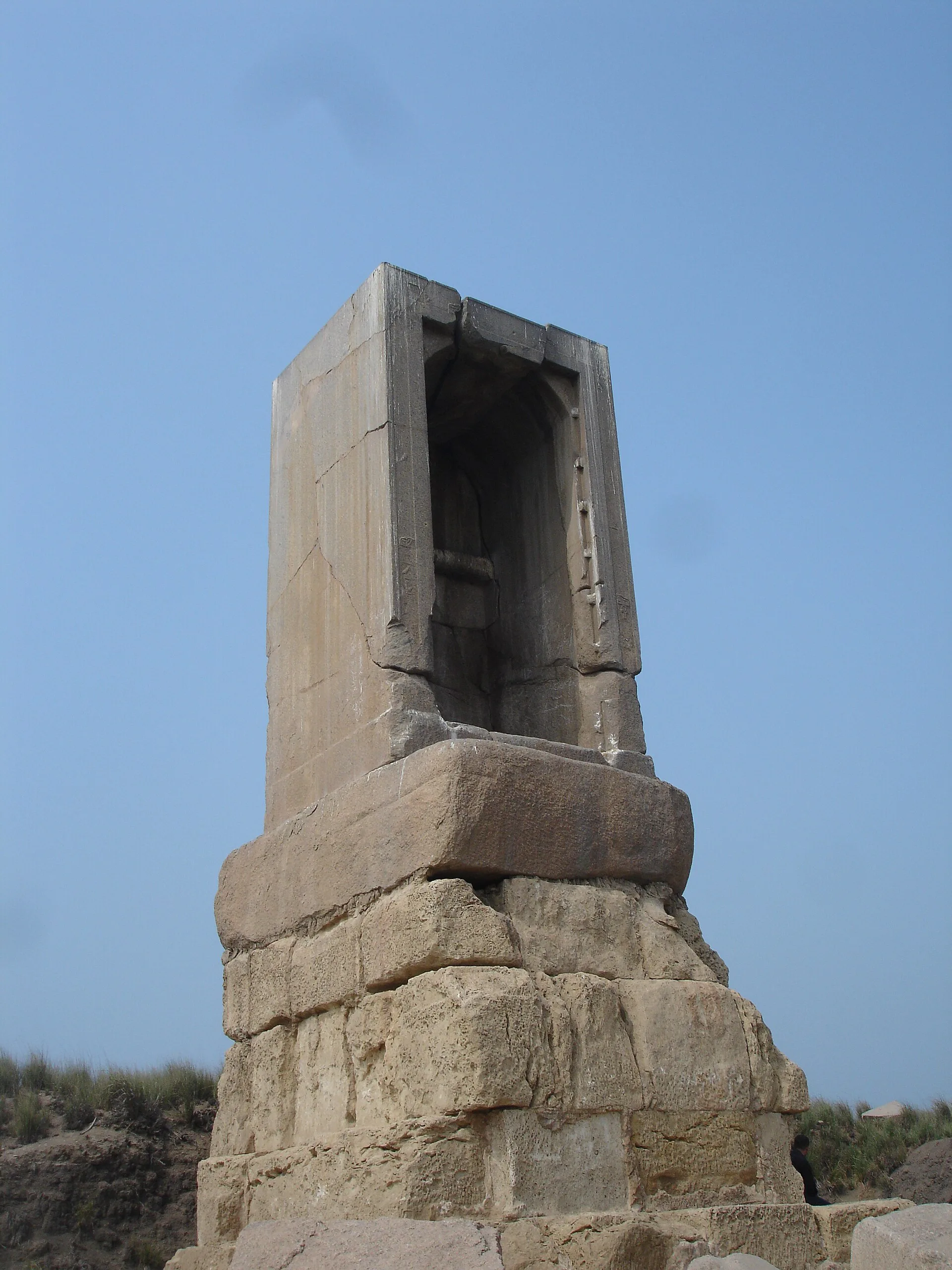
- Temple of Amun: the vast enclosure with fallen and re-erected obelisks, columns and blocks from the Ramesside and later periods.
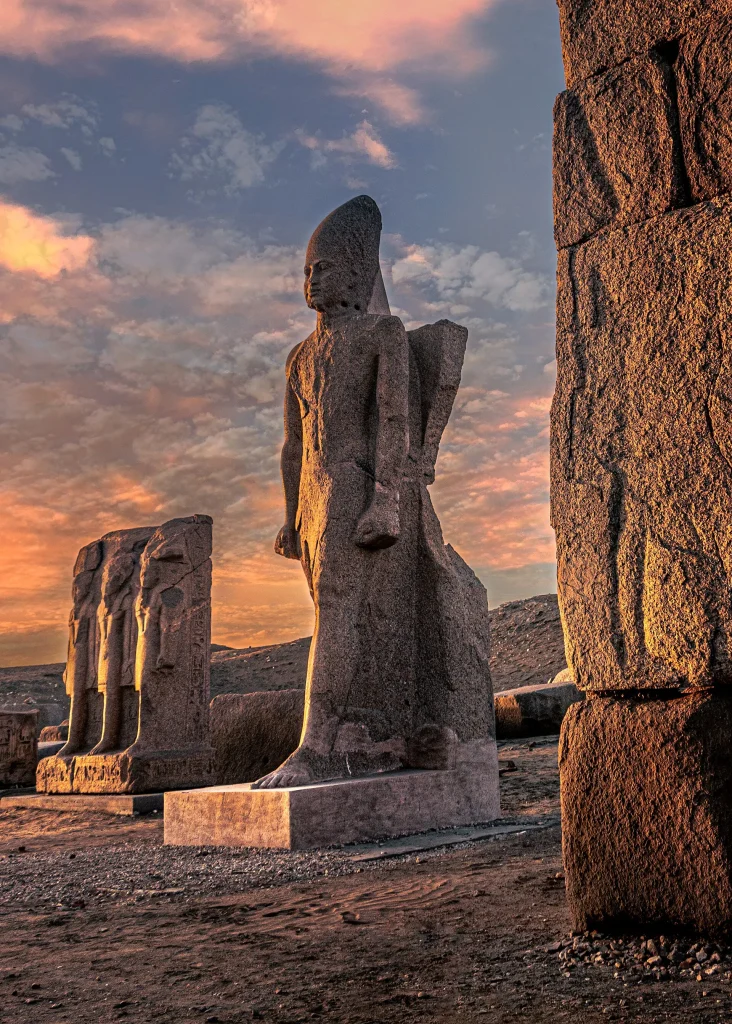
- Colossal statues: red granite statues of Ramesses II, about 6.5 metres tall, lifted off the sand onto new bases since 2017.
- Royal necropolis: the granite and limestone burial chambers of the Tanite kings.
- Temple of Mut: where a limestone sacred lake was found in 2009, about 12 metres below the surface.
- Visitor centre: opened at the entrance in December 2022, with a model of the site, a short film and panels in Arabic and English.
A French mission has worked at Tanis since 1965, and an Egyptian project begun in 2017 is restoring the monuments and turning the site into an open-air museum.
Visiting tips
- Allow two to three hours. The site is large and the ground is sandy and uneven.
- There is very little shade. Bring water, a hat and sun cream, and come early in the warmer months.
- Start at the visitor centre for an overview before walking the temple enclosure.
- Carry your passport. The gold treasures from the tombs are in Cairo, so you can see the finds and the place they came from on separate days.
Getting there
Tanis is by the village of San el-Hagar in the north of Sharqia, a long day trip from Cairo by road. The easiest way is to hire a car and driver, often combined with Tell Basta at Zagazig on the way.
Last checked November 2026. Sources: ifao.egnet.net, mota.gov.eg, en.wikipedia.org, en.wikipedia.org, english.ahram.org.eg.
Information card
At a glance
Arabic nameصان الحجر
GovernorateSharqia
Foreign adult / student (EGP)120 / 60
Egyptian adult / student (EGP)10 / 5
Opening hoursDaily 9:00–17:00 (to 18:00 in summer)
TicketsPrices from the Ministry of Tourism and Antiquities list of November 2024; check egymonuments.gov.eg for changes.
Prices last checkedNovember 2026
Prices and hours change often. Confirm on the Ministry’s official site egymonuments.gov.eg before you go.
Frequently asked questions
How much is the ticket to Tanis?
Foreign visitors: EGP 120 / 60 (adult / student). Egyptians: EGP 10 / 5. These are the Ministry's late-2024 prices; confirm current prices on egymonuments.gov.eg before you go.
What are the opening hours of Tanis?
Tanis is open daily from 9:00 to 17:00 in winter and from 9:00 to 18:00 in summer.
Where is Tanis?
At San el-Hagar in the north-eastern Nile Delta, in Sharqia governorate, about 120 km north-east of Cairo as the crow flies.
Why is Tanis important?
It was the capital of Egypt under the 21st and 22nd Dynasties, and the intact royal tombs found there by Pierre Montet in 1939–1940 held some of the richest treasures ever found in Egypt.
Where are the Tanis treasures today?
The gold masks, silver coffin and jewellery from the royal tombs are in the Egyptian Museum in Cairo.
Can I combine Tanis with other sites?
Yes. Many visitors stop at Tell Basta in Zagazig on the same day trip from Cairo.