Historical background
Akhetaten, the Horizon of Aten, is the city now known as Tell El-Amarna. Its ruins record the attempt by Amenhotep IV, ‘Akhenaten’ (1350–1334 BC), to break with old traditions and the established religious order. He abandoned Thebes, the traditional religious capital of Egypt, and its chief god Amun.
In the fifth year of his reign he founded an entirely new city in what is now Minya Governorate, on virgin land dedicated to the god Aten and his worshippers. Why he made such a complete change is still unclear: the reasons may have been purely religious, or political and administrative as well.
Akhenaten’s religion centred on one god, Aten, the source of all life. It was the only attempt in ancient Egypt to give all power to a single god, described as ‘the living one, Re, ruler of the horizon who rejoices in the horizon in his identity of Re, the father who has returned as the sun-disc’. Aten was not a new god but an obscure aspect of the sun god, shown as a sun disc whose rays end in open hands giving life and prosperity.
Overview of the ancient city
Founded in Akhenaten’s fifth regnal year, the city lay on the east bank of the Nile, about 12 km south of Mallawi, and covered 15 square kilometres. A line of 15 rock-cut boundary stelae, running from south to north, marked out the territory of Aten.
Akhenaten lived in the city only briefly, and it was abandoned after his death. The site left behind captures a distinctive phase of Egyptian history, shows every side of daily life and keeps much of its architecture and artistic innovation.
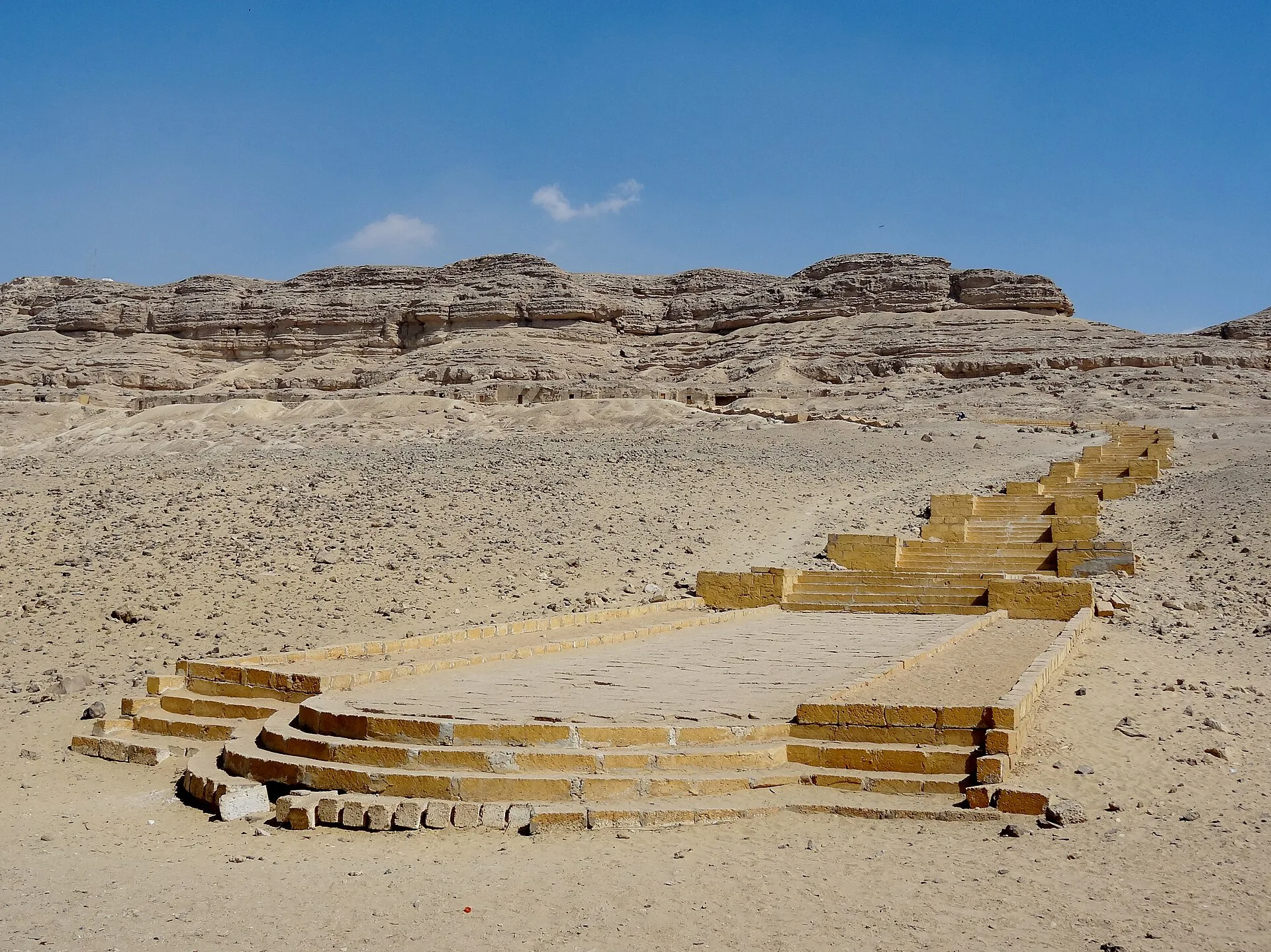
Egyptologists are still excavating the site. The main city lies between the Nile and the surrounding cliffs, where the rock-cut tombs look down on it. A royal road linked its quarters and was lined with official and religious buildings, including two temples, several palaces and an archive, of which only ruins remain. After Akhenaten’s death the citizens left, the capital moved, and the priests of Amun destroyed the monuments of Aten.
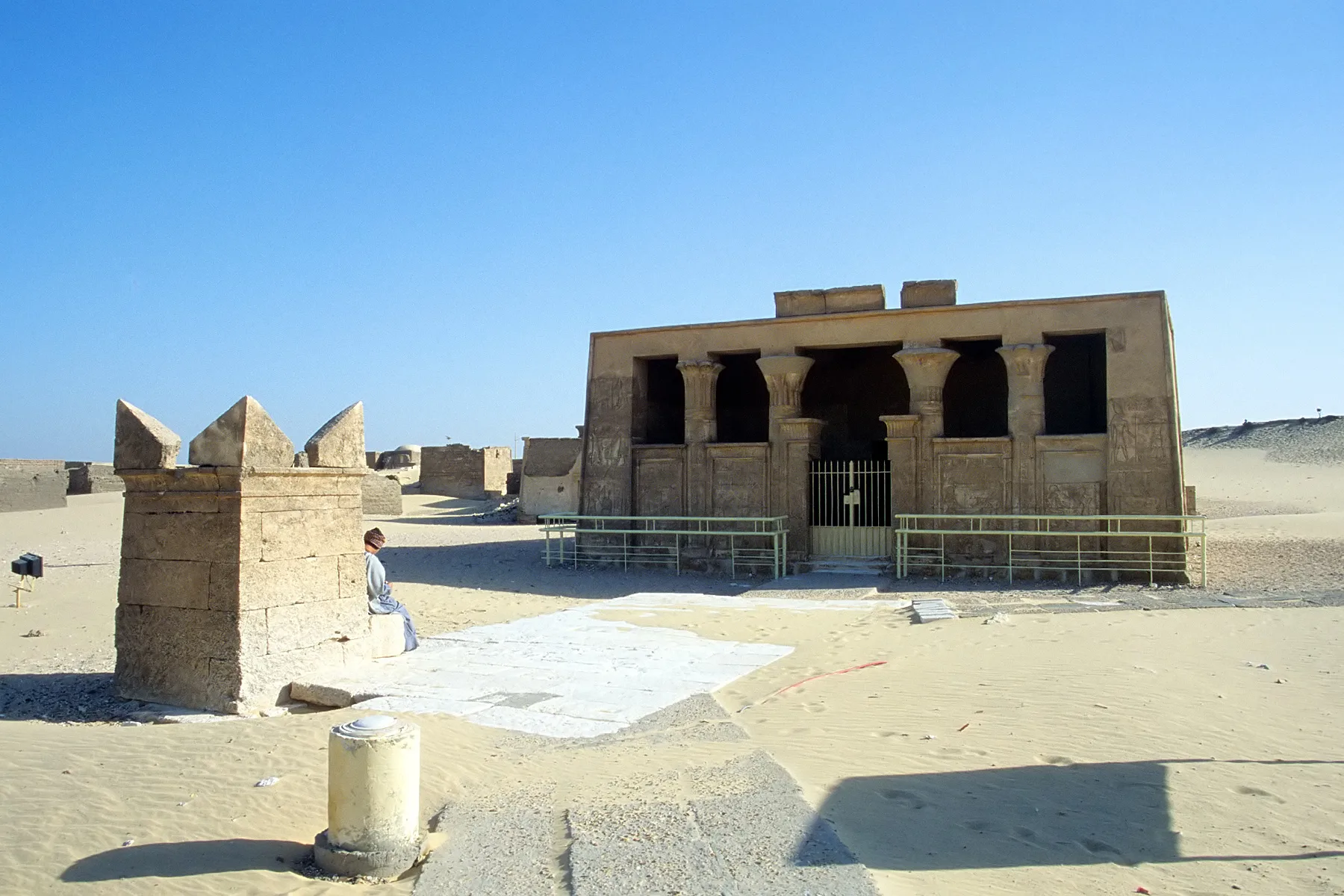
Despite this destruction, the foundations of the palaces and temples survive, and the small temple has been partly rebuilt and recently opened to visitors. The temples of Aten had a new feature: an open-air holy of holies that let the sun’s rays into the sacred space.
The famous bust of Nefertiti, now in the Berlin Museum, was found in the workshop of the sculptor Thutmose, along with several unfinished busts that show the new Amarna style.
The Amarna letters
The Amarna archive is one of the most interesting in the ancient world for the diplomatic relations of Akhenaten’s reign. In 1885 archaeologists found more than 300 clay tablets inscribed in cuneiform in the ‘House of the Correspondence of the Pharaoh’.
Tombs of Tell El-Amarna
The city’s rock-cut tombs show a new style of decoration that came with the religious change. Akhenaten presented himself as the only prophet of Aten, which explains why the cult declined and was abandoned after his death. The king and the royal family had to appear in every tomb at Tell El-Amarna, because only he could communicate with Aten and ask for his blessing.
The Amarna period also introduced a new way of showing the royal family worshipping Aten. In a scene found in almost every tomb, the king, his wife and daughters are drawn in an exaggerated style: misshapen skulls, long lantern jaws, heavy heads on elongated necks, and excess fat on the thighs, hips and breasts.
The twenty-five tombs fall into a northern and a southern group, with the royal tomb cut into the cliffs in the middle. The royal tomb was later destroyed, and scattered fragments found in modern times are on display in the Egyptian Museum in Tahrir.
The private tombs are unusual in showing daily life in the royal palace. Their emotional scenes, found nowhere else in ancient Egypt, show the royal family embracing and showing affection to the young princesses under the rays of Aten.
Information card
Tell Beni Omran, Deir Mawas, El Minya
Sat- Thurs: 9 AM-5 PM
At a glance
Arabic nameتل العمارنة
GovernorateMinya
EraNew Kingdom
Prices and hours change often. Confirm on the Ministry’s official site egymonuments.gov.eg before you go.
Frequently asked questions
Where is Tell El-Amarna?
Tell El-Amarna is in Minya governorate, Egypt.
Can I buy tickets online for Tell El-Amarna?
Many sites and museums sell tickets on the official portal egymonuments.gov.eg; most also sell at the gate, usually by card only.