Lake Qarun Protected Area
Nature
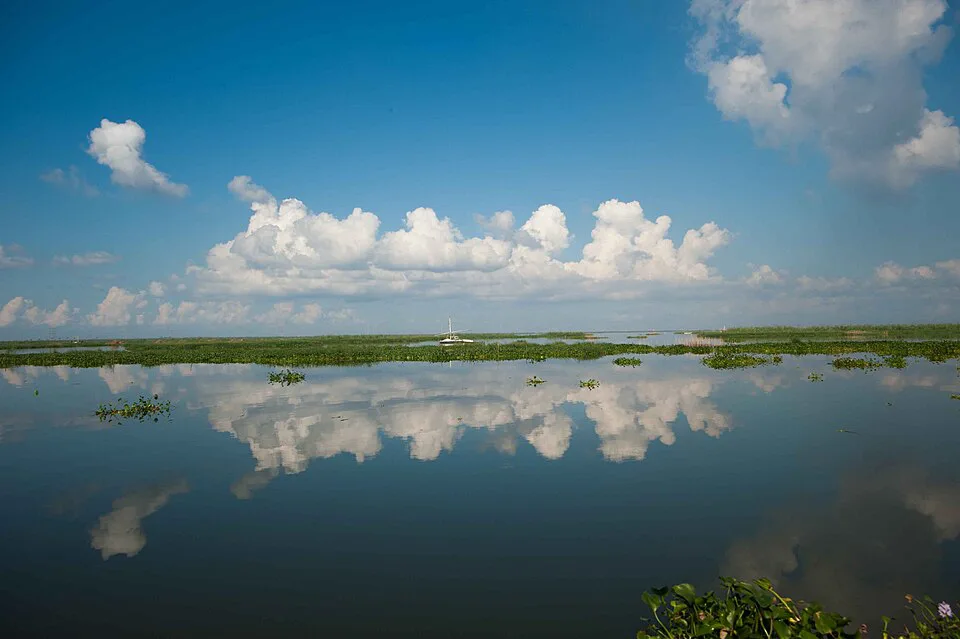
Egypt's oldest natural lake, ringed by desert hills full of fossils and ancient towns, where many waterbirds spend the winter.
- Arabic name
- محمية بحيرة قارون
- Type
- Protected area
- Governorate
- Faiyum
- Area
- 1,298 km²
- Protected since
- 1989
- Nearest city guide
- Faiyum
- Official website
- eeaa.gov.eg
Lake Qarun is a large salty lake on the northern edge of the Faiyum depression, the remnant of the ancient Lake Moeris that once filled much of the basin. The protectorate takes in the lake, its shores and the desert to the north.
Wildlife and history
The lake is an internationally recognised wetland, and in winter it hosts flocks of flamingos, grebes, ducks, herons and gulls. On the northern shore, the hills of Gebel Qatrani have yielded famous fossils of early primates and other mammals, and nearby lies one of the world’s oldest known paved roads, used to haul basalt in pharaonic times. Archaeological sites include the Ptolemaic temple of Qasr Qarun and the ruined town of Dimeh es-Siba (Soknopaiou Nesos).
What to do
- Take a boat out on the lake at sunset, or birdwatch from the southern shore.
- Explore Dimeh and the northern desert by 4×4 with a guide.
- Visit the pottery village of Tunis, on the slopes above the lake.
Getting there and best time
Faiyum city is about 90 minutes by road from Cairo, and the lake is around 25 km further north-west. The northern desert requires a 4×4. October to March is ideal; the winter months bring the most birds.
Entry fee: no fee for the lakeshore; small fees may apply at archaeological sites and the northern reserve (last checked October 2026).
Last checked October 2026. Entry fees and access rules change; check with the Egyptian Environmental Affairs Agency or a local operator before you go. Sources: eeaa.gov.eg, en.wikipedia.org.
Frequently asked questions
What makes Lake Qarun special?
It is Egypt's oldest natural lake, a remnant of ancient Lake Moeris, and an internationally recognised wetland. The desert to the north has famous fossils of early primates and one of the world's oldest known paved roads.
What birds can I see?
In winter, flamingos, grebes, ducks, herons and gulls gather on the lake. Birdwatch from the southern shore or take a boat out at sunset; October to March is ideal.
What archaeological sites are nearby?
The Ptolemaic temple of Qasr Qarun and the ruined town of Dimeh es-Siba (Soknopaiou Nesos). The northern desert needs a 4x4 and a guide.
How do I get there?
Faiyum city is about 90 minutes by road from Cairo, and the lake is around 25 km further north-west. The pottery village of Tunis sits on the slopes above the lake.
Is there an entry fee?
There is no fee for the lakeshore; small fees may apply at archaeological sites and in the northern reserve.