This Cairo travel guide covers the best things to do in Cairo, from the Giza pyramids and the Egyptian Museum to Islamic and Coptic Cairo, the Citadel and Khan el-Khalili. Below you will also find the best time to visit Cairo, how to get there and around, and a choice of hotels in Cairo.
Historical Cairo: the city of a thousand minarets
Historical Cairo lies within Cairo Governorate, home to Egypt’s capital, in the north of the country. Cairo is one of the largest cities in Africa.
Historical Cairo is on the World Heritage list and is one of the country’s main tourist sites, both for its Islamic monuments and as a place that saw the beginnings of civilization 6000 years ago.
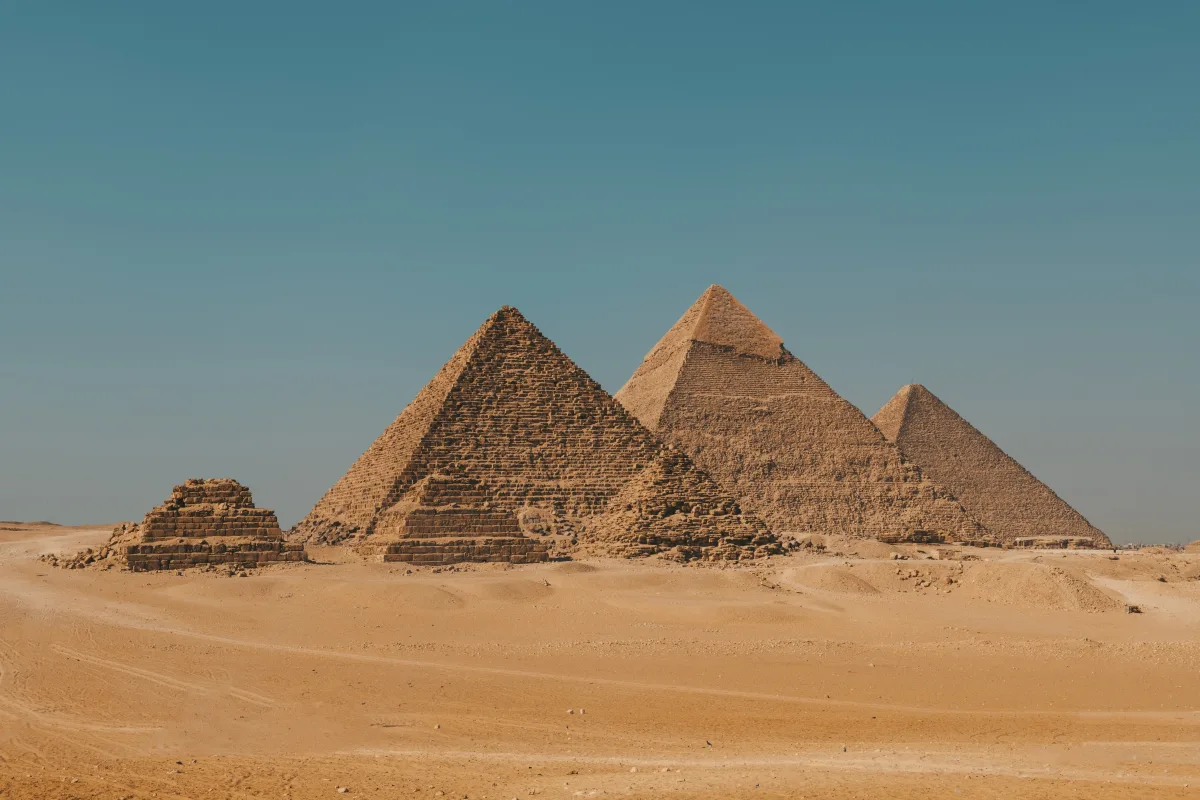
At Giza you go back to the age of the pyramid builders, with pyramids, temples and tombs to visit.
Coptic Cairo, within Old Cairo, is built largely around the Byzantine fort of Babylon, on the remains of its walls. Its buildings span the centuries between the decline of the pharaonic era and the arrival of Islam, and in one small area you can visit a church, a Jewish synagogue and the oldest mosque in Egypt.
Cairo, the “city of a thousand minarets”, is also full of medieval art and architecture from the periods when Egypt was the centre of several important Muslim eras.
In modern Cairo you can visit the museums and Cairo Tower, walk through the nineteenth-century Khedivial downtown districts, and spend time in Zamalek, Dokki and Mohandessin and in the early twentieth-century suburbs of Heliopolis and Maadi.
Cairo Opera House
The Cairo Opera House is Egypt’s official national cultural centre, with opera and symphonic music, dance, galleries, museums and educational programmes. The original opera house was built in 1869, in the reign of Khedive Ismail, by the Italian architects Avoscani and Rossi. The new Cairo Opera House was established 30 years ago to preserve traditional Egyptian music and to be a place of learning and inspiration. It encourages music-making and the other arts in Egyptian society.
Young people come for ballet classes and for singing and instrument courses. The centre also hosts seminars, conferences and cultural events, and has become a meeting place for intellectuals. Its affiliated companies regularly perform in towns around the country.
The new opera house stands 1 km from Tahrir Square, near downtown Cairo. The building was designed in 1985 with domes influenced by Islamic architecture, and was built with financial support from JICA (Japan International Cooperation Agency). At the official opening in 1988 it staged Kabuki, the traditional Japanese popular drama with singing and dancing, the first time Kabuki had been performed in Africa or the Arab world.
There are three main theatres, the Main Hall, the Small Hall and the Open-Air Theatre, which host international biennials, triennials, festivals and cultural weeks. All three have modern facilities intended to make them among the best cultural venues in Africa and the Middle East.
The Opera Museum
The museum is on the 1st floor of the Main Hall. Its collection includes documents dating back to 1869 on the construction of the original building in Khedive Ismail’s reign, old photographs of the original house, and programmes from the main performances and concerts at the old Royal Cairo Opera House. Everything else was destroyed by fire in 1971 and could not be saved, apart from two statues: one dedicated to the Egyptian artist Mohamed Hassan, and a small model of the opera house.
The musical instruments section includes an original wooden flute, or large nay, and a rare piano with extra keys that allow oriental tunes to be played.
The halls also display costumes from the Vienna State Opera, scores of the opera Aida, jewellery and historical documents describing performances during the royal period. There are posters of the main productions in all the opera house’s theatres, and programmes from the international companies that have performed in Egypt.
The Opera Music Library
The centre has one of the largest music libraries in the Arab world. It holds rare music books, reference works and programmes on the Cultural Opera Salons, Arab music, symphonic music and ballet, as well as a large collection of digital recordings of Arab singers and composers. Other sections have CDs, videotapes, recordings of Cairo Opera House performances and maquettes of its productions. The library opens from nine in the morning for 7 hours a day, and is closed at weekends.
The Opera Art Gallery
The centre has several galleries, the most important being the Art Gallery, which has an educational and cultural role. Its annual programme includes the International Photography Competition, the Egyptian Plastic Art Pioneers fair, the Arabic Calligraphy Exhibition and a celebration of International Women’s Day. The gallery has 2 visiting periods: mornings from 10 am to 2 pm, and afternoons from 04:30 pm for 4 hours.
Historical background
The Ancient City
The spectacular history of the city begins right from Abu Rawash: El-Hassana Dome Protectorate which depicts an open-air museum that shows full records of ancient life; its environment and climate during the late cretaceous age, 100 million years ago, and a Neolithic Culture (Merimde Beni Salama) flourished at the same location, in 4800 BC.
On the other side of the Nile, towards the south, specifically at Maadi; settlements were discovered layers beneath ground, which date back to the Maadi-Buto culture (3900 BC). Artifacts from this culture are preserved at the Egyptian Museum in Cairo.
Ancient Heliopolis is believed to be a religious capital since the early Old Kingdom, and Djoser was the first to dedicate a small shrine there. Later, it flourished as a center of the Solar Cult.
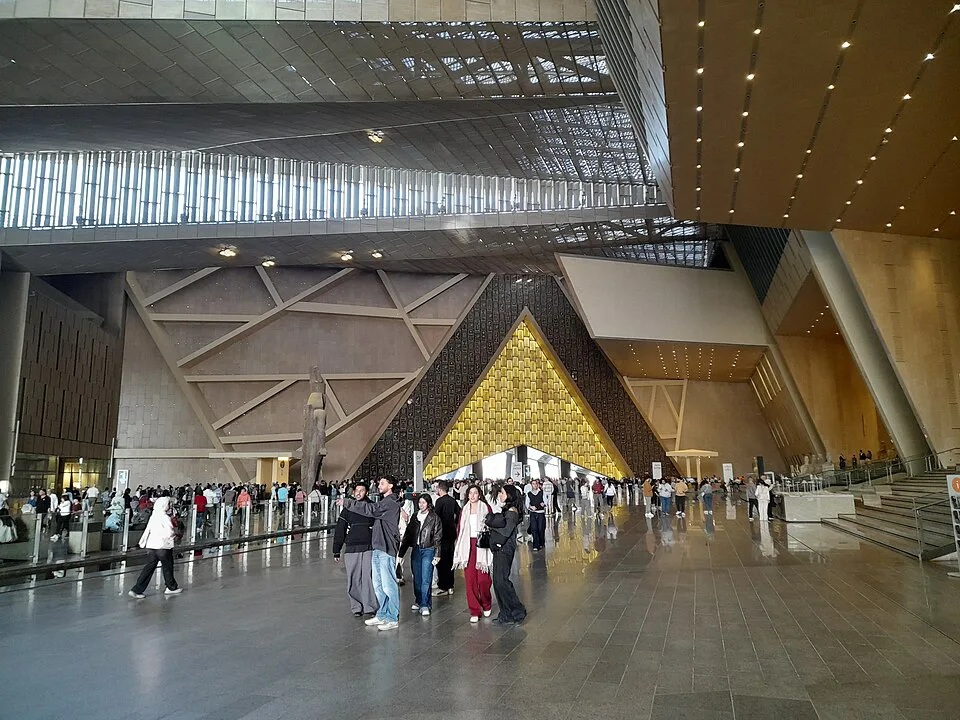
Helwan is a distinctive site, where you can witness the development of the lithic tools through Naqada III, and until the Funerary stela that depicted the tomb owners of the first and second Dynasties. Artifacts from this period were transferred to the National Museum of Egyptian Civilization (NMEC) and Grand Egyptian Museum (GEM).
Upon the unification of Egypt in (3100 BC), Giza became a part of the Memphite Necropolis located on the western bank of the Nile, site of the cemetery of the nobles and the cenotaph of the royals of the first and second Dynasties. It started from Saqqara, where the first large stone complex in the history was constructed, under the rule of King Djoser (Third Dynasty). It is considered as a turning point in the royal architecture; from a Mastaba to a Step Pyramid.
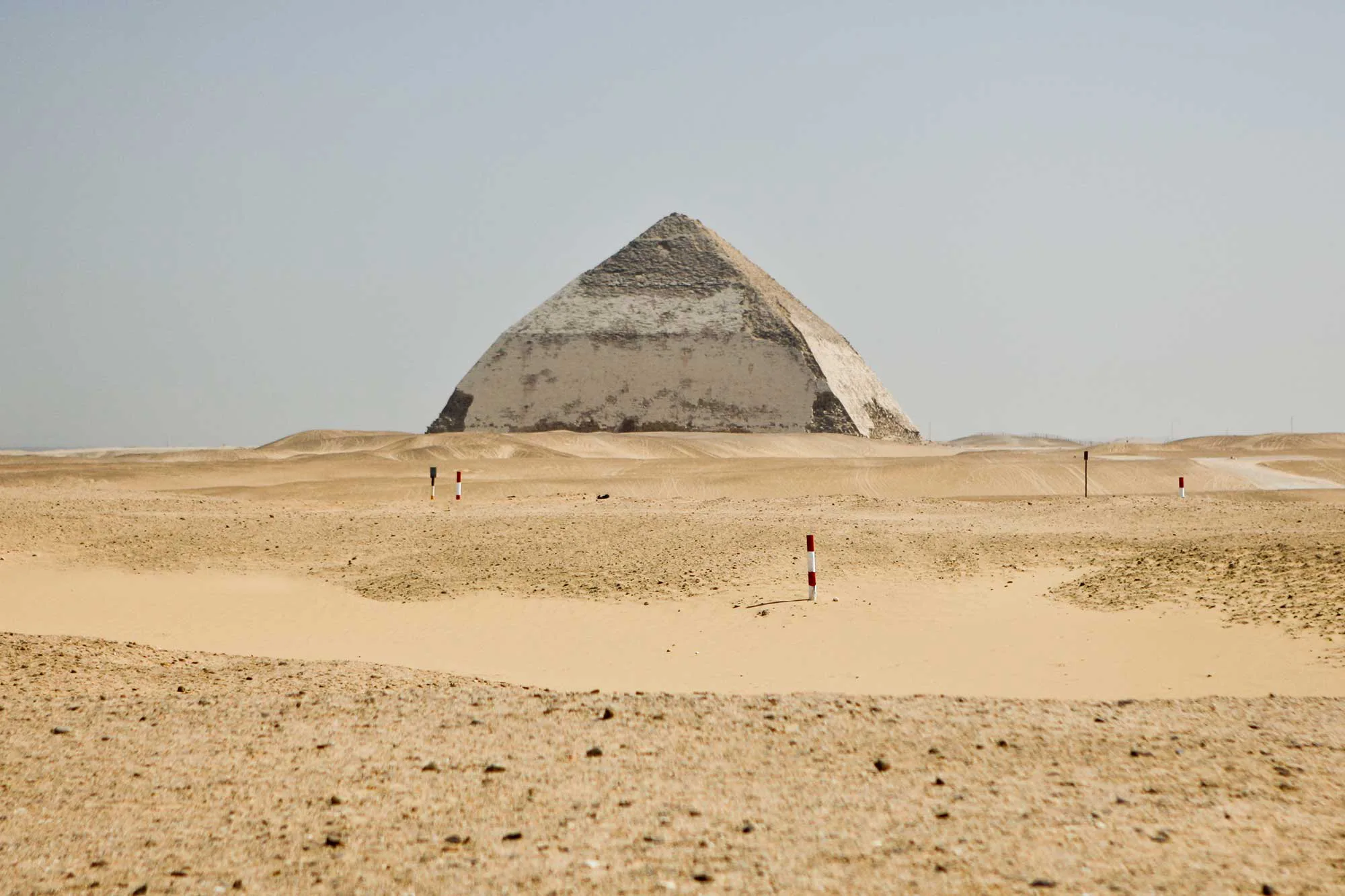
By the time of the Fourth Dynasty “Age of the Pyramids”, the Egyptian kings who will always be remembered in history as the Pyramid Builders, starting from King Senefru, who built a “Bent” pyramid at Dahshur, which is considered as a trial, followed by the “Red Pyramid”: the first successful trial in building a straight pyramid. Senefru’s successors; Khufu, Khafre, and Menkaure, built the three magnificent Pyramid Complexes of Giza and the Sphinx, which are the only remaining of the seven wonders of the ancient world.
Although it was a great dynasty, there were some unresolved problems between the heirs of Khufu, that led his son Djedefre to leave Giza and build a pyramid complex at Abu Rawash.
With the rise of a new dynasty (Fifth Dynasty), Abusir became the new royal burial site for the Sons of the Sun god Re (according to the ancient Egyptian mythology, Papyrus Westcar). Meanwhile, the well-known “Sun Temples” are considered the architectural innovation of this dynasty.
Kings of the fifth Dynasty went back and forth from Abusir to Saqqara, but the last king of the dynasty, Unas, will always be remembered for his mystical pyramid complex, with the oldest religious literature known as “Pyramid Texts”: long hieroglyphic inscriptions that are cut into the walls of the chambers of the pyramid. These religious texts are the base for later religious and mythological books. More than 200 spells were combined to reflect the formation and development of the religious thoughts, and kings of the sixth Dynasty continued the same trend.
The increase of the power of the high officials of the fifth and sixth dynasties, reached its peak during the long reign of King Pepi II, and eventually led to the fall of the Old Kingdom.
After an intermediate period, kings of the Middle Kingdom built their pyramids at Dahshur, and in the Fayoum Governorate. King Senwosret I built a temple at Heliopolis, from which the great red obelisk remains until now, standing in a modern square at Matareya.
The invasion by the Hyksos left the Memphite Necropolis for a time in the shade, to be re-highlighted by the high officials of the New Kingdom, with magnificent tombs located at Saqqara including the tomb of Horemheb, Maya, and many others.
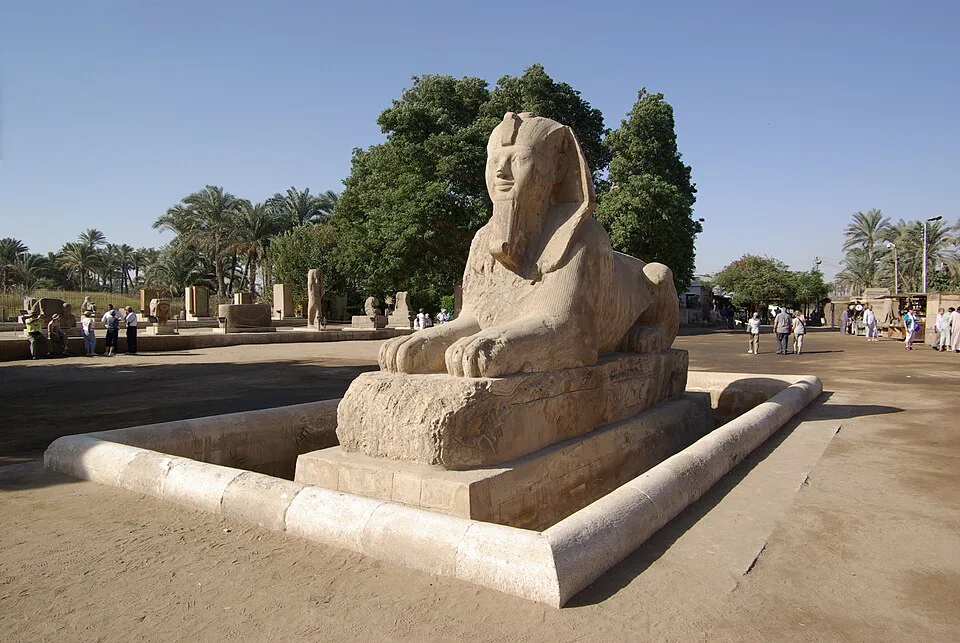
During the New Kingdom (pre and post Amarna), the Delta (Lower Egypt) played an important political and administrative role. Akhenaten, despite concentrating his building pojects at Amarna, built a great temple at Heliopolis dedicated to spreed his new Aten-religion. Later, King Ramses II built a new capital Pi-Ramesses near the ancient Hyksos capital, Avaris. At Mit Rahina, the Temple complex of the Memphite triad (Ptah-Sekhmet-Nefertum) was built in the Middle Kingdom and was expanded throughout the ancient history by several kings: Sety I, Sheshonq I and most importantly Ramsess II, whose huge colossal statue lying which can be admired in the Mit Rahina Open Museum. It is remarkable that there is hardly a site, or monument in Egypt where Ramesses II’s name is not found.
The Memphite Necropolis flourished during the Saite Period, especially Saqqara where tombs of high officials were found 30 m deep under the ground, that leads to fully carved sarcophagus-shaped chambers. A unique recent discovery there of a mummification workshop and three undisturbed stone coffins, will be transferred to the National Museum of Egyptian Civilization (NMEC).
At Matareya, a recent discovery unearthed parts of the first colossal statue dating to the Late Period, with the name of Pismatik I carved on the back pillar of the colossus. It will be reassembled and displayed at Grand Egyptian Museum (GEM).
With the arrival of the Romans and the emergence of Christianity, ancient Egyptian beliefs are given up, which can be seen in the Serapeum at Saqqara: a sacred bull catacomb cemetery that was suddenly abandoned.
With the arrival of the Arabs in the seventh century, they founded a new capital called El-Fustat and later Cairo, both built largely with stones of dismantled monuments of the Memphite Necropolis.
Coptic Cairo
The land of Egypt was given the honor to be a part of the Journey of the Holy Family, and especially in Cairo, where the Virgin Mary and Jesus stayed at the site of St. Sergius and Baechus Churches, which are now a part of the Religious Complex in Old Cairo.
Matareya (Heliopolis), was also a site blessed by sheltering Virgin Mary under one of its trees, which can still be visited, and it is believed that the naming of Matareya comes originally from (Mother).
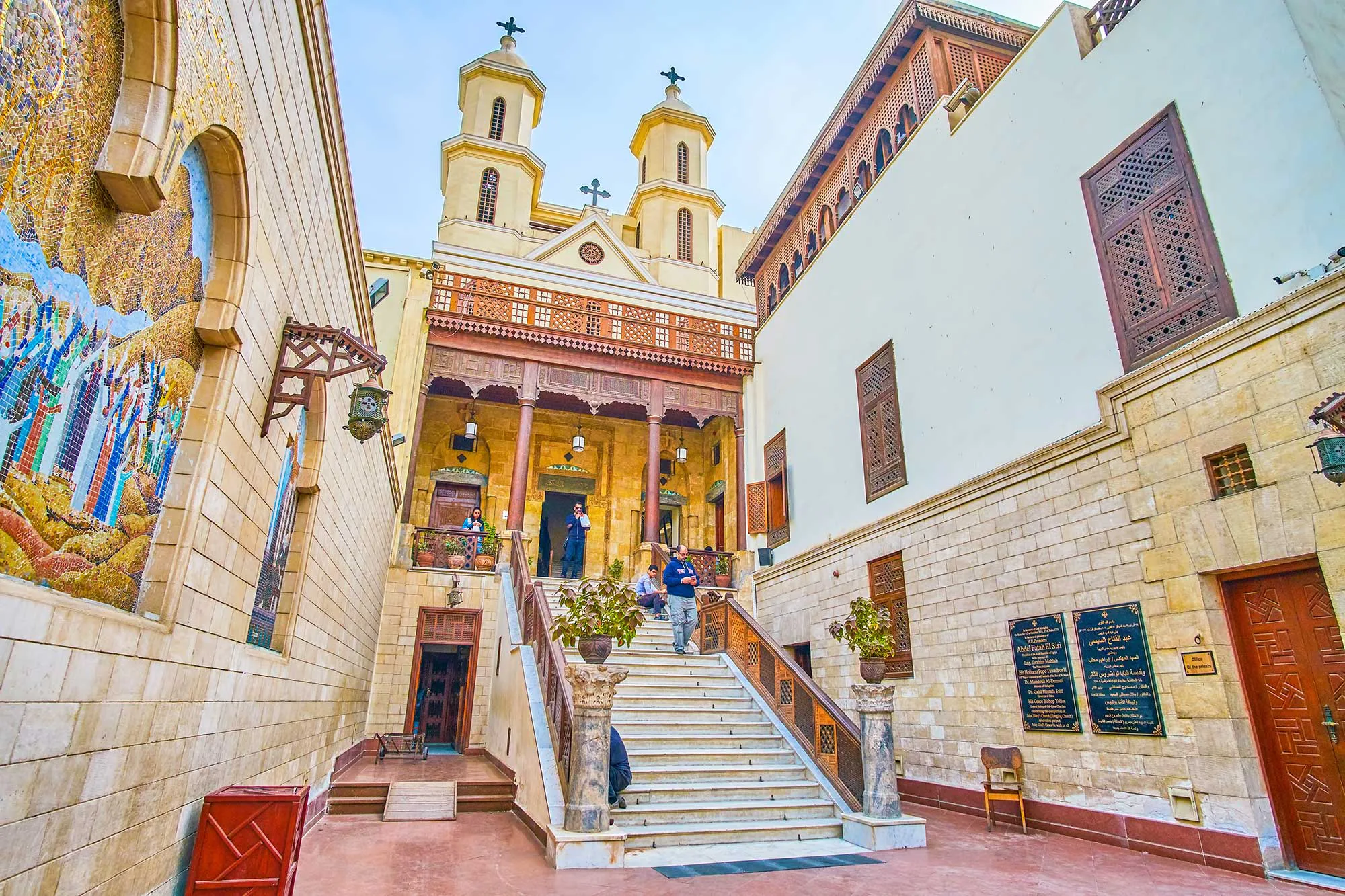
Its only on the land of Egypt where you can find a place with the three Heavenly Religions intertwining to form a complex, that consists of Ben Azra Synangogue built 882 CE: which according to local folklore is located on the site where baby Moses was found, The Hanging Church which is one of the oldest Orthodox Churches in Egypt, built on one of the gates of the Byzantine Fort of Babylon, and the Mosque of Amr Ibn Elas which was the first mosque to be built in Egypt.
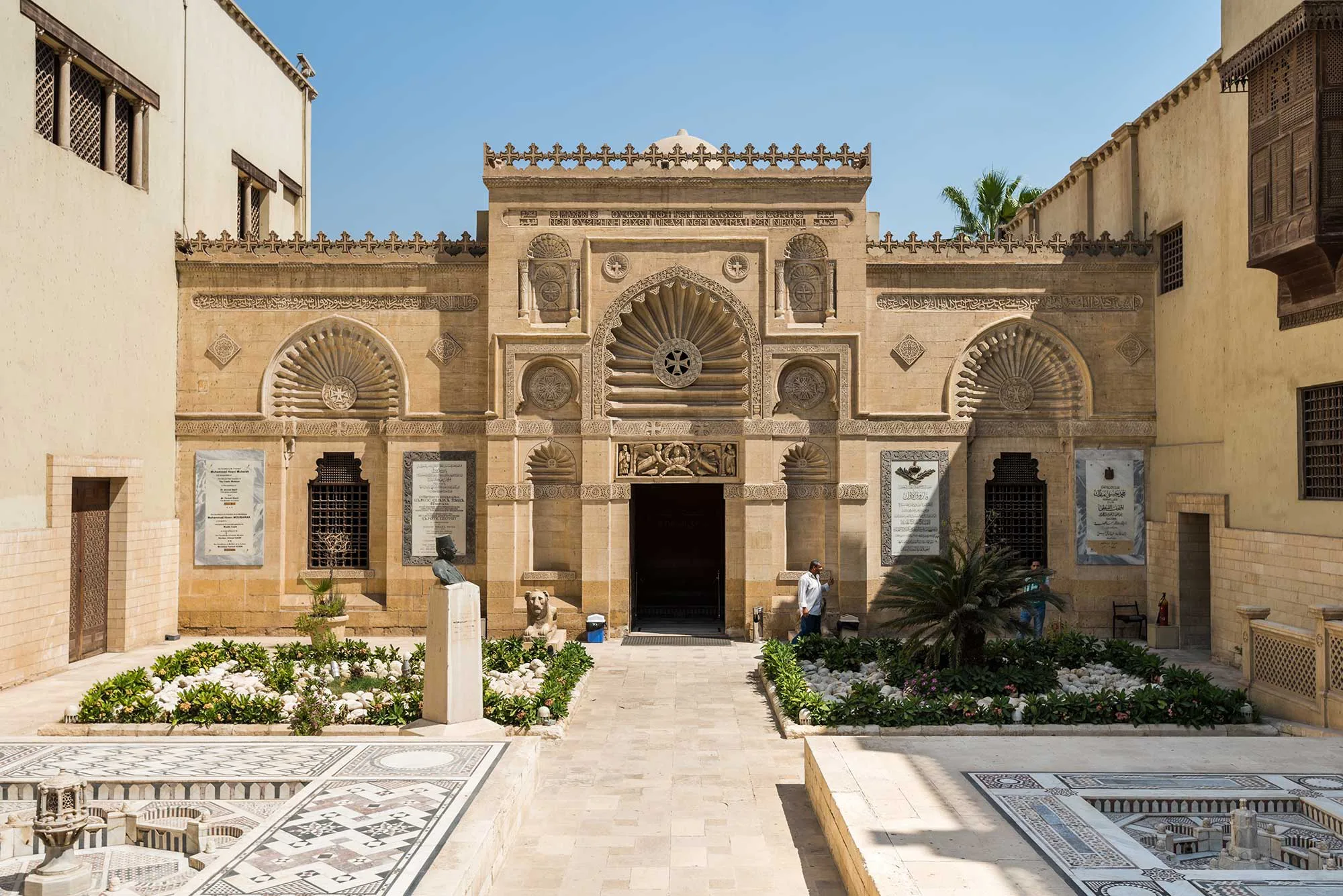
Moving back to Saqqara, ruins of The Monastery of St. Jeremias can be found, whereas the splendors from the monastery are found now in the Coptic Museum.
Carved into the Mokattam plateau is the magnificent Church of St. Samaan with its beautiful, heavenly reliefs depicting the Holy Family.
Islamic Cairo
The history of Islamic Cairo began with the arrival of by Amr Ibn Elas in 640 AD, who built his new capital city Al-Fustat, with its mosque, which lies now within the Religious Complex.
During the Abbasside Caliphate, Ahmed Ibn Tulun proclaimed himself in Egypt as the first independent ruler to split from the Caliphate. This period is well known for the Malwiya (twisted) Minerate Tower in the Mosque of Ibn Tulun, which reflects the architectural influence from the Mosque of Samarra in Iraq.
A new Caliphate from northern Africa, The Fatimids, came and settled in Egypt, and the Caliph El Muizz ordered his General Jawhar El-Seqilli to build a new capital El-Qahira (The Victorious), which was built in 4 years, and surrounded by Walls of Cairo, with its famous gates.
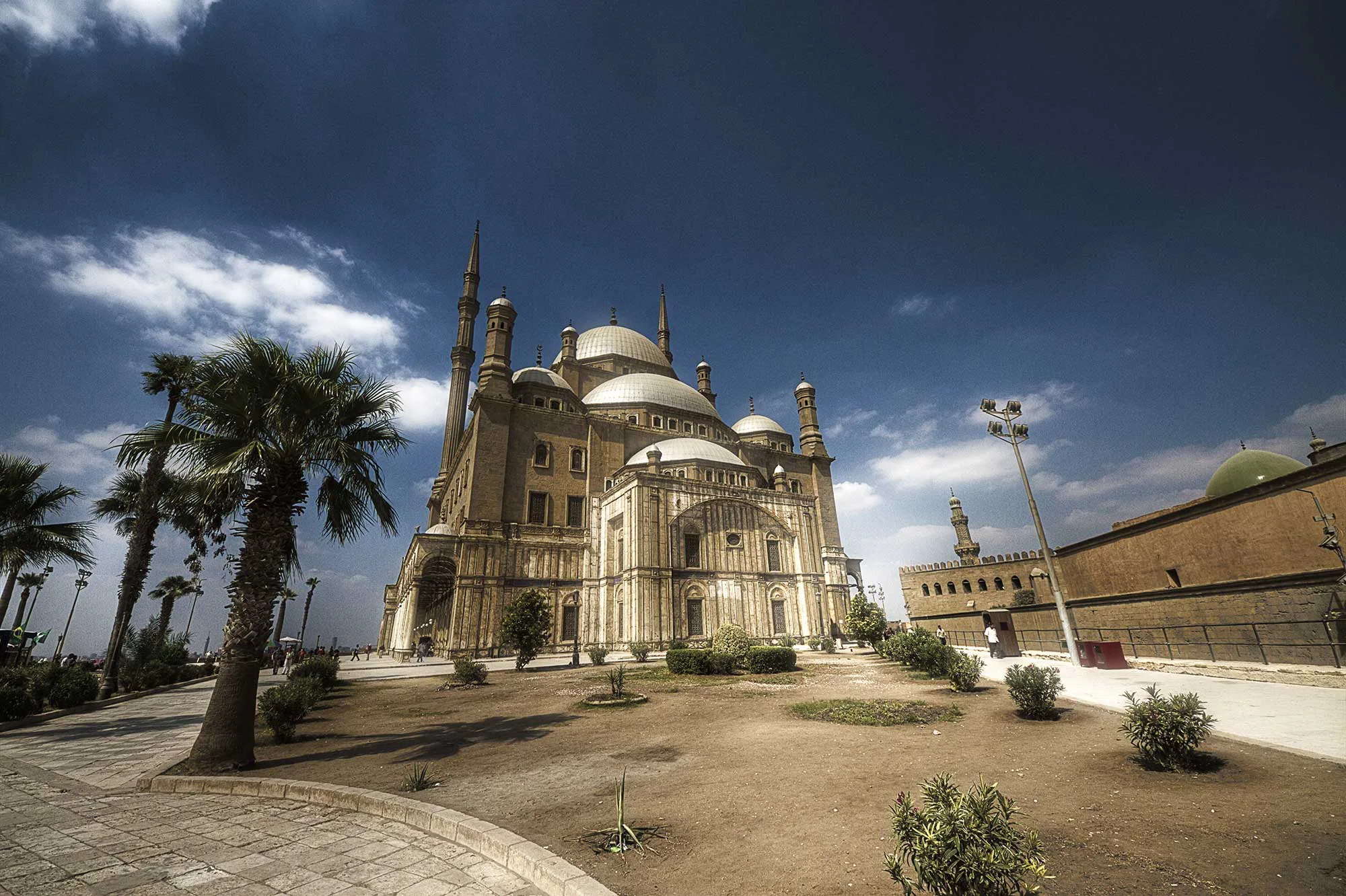
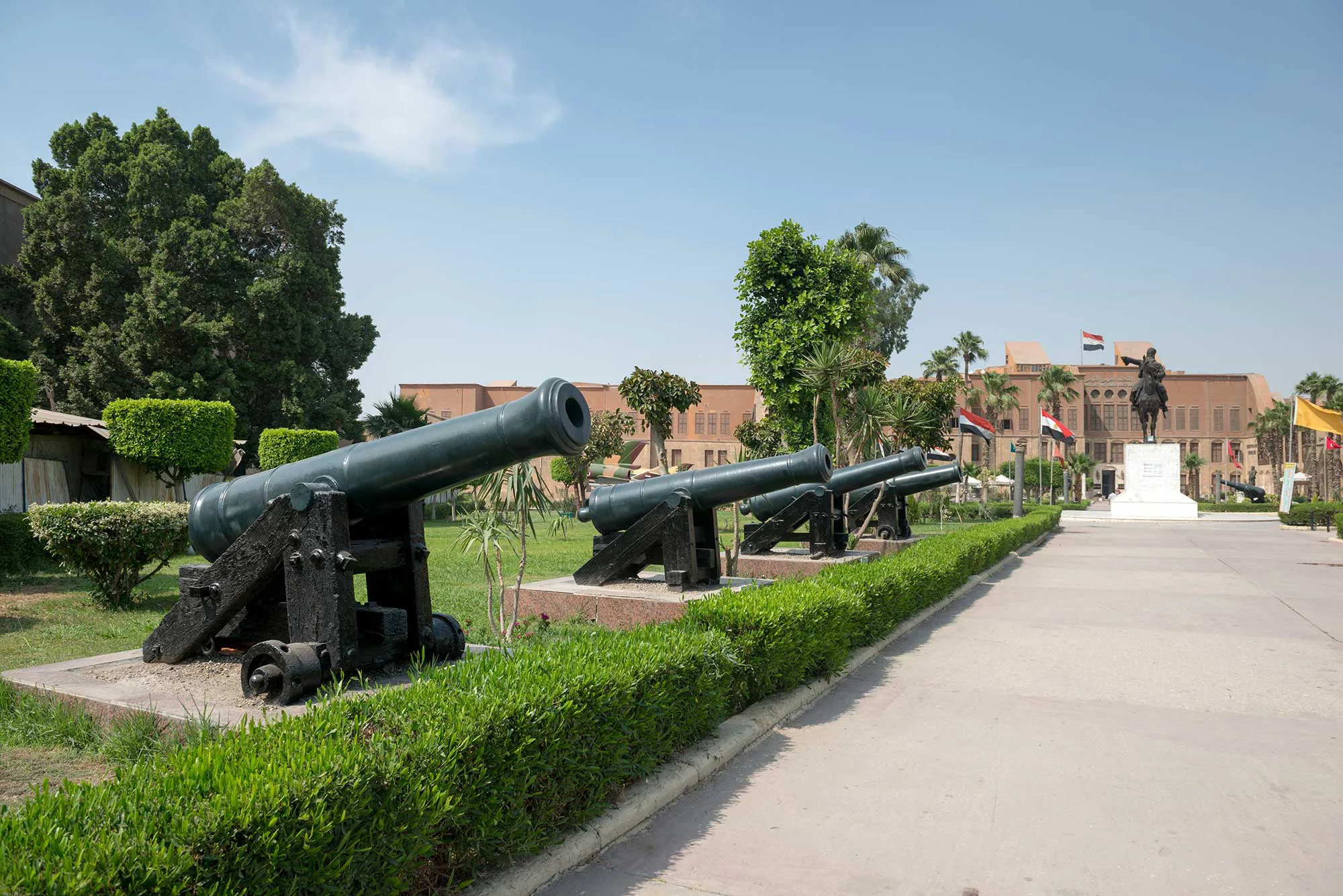
El Azhar Mosque is the second oldest Islamic university in the world, it was the center of the Fatimid rule during the Caliphate, until the formation of the Ayyubid Dynasty by the famous Saladin El-Ayubi, who built the fortifications of Citadel of Saladin to defend Egypt against the Crusaders. It also served as the seat of Egyptian government, and later during the reign of Mohammed Ali, he built a mosque inside the citadel, which was influenced by the Hagia Sophia in Turkey, and in modern times, a military museum was established inside the fort to witness the Egyptian Military history.
Cairo flourished during the Mameluke period; with many architectural and artistic renovations that included Madrasas, Hammams, Forts, Mosques, Souqs, despite the political struggle over the throne. The renovations are clearly and perfectly witnessed at the Muez Street and adjacent area.
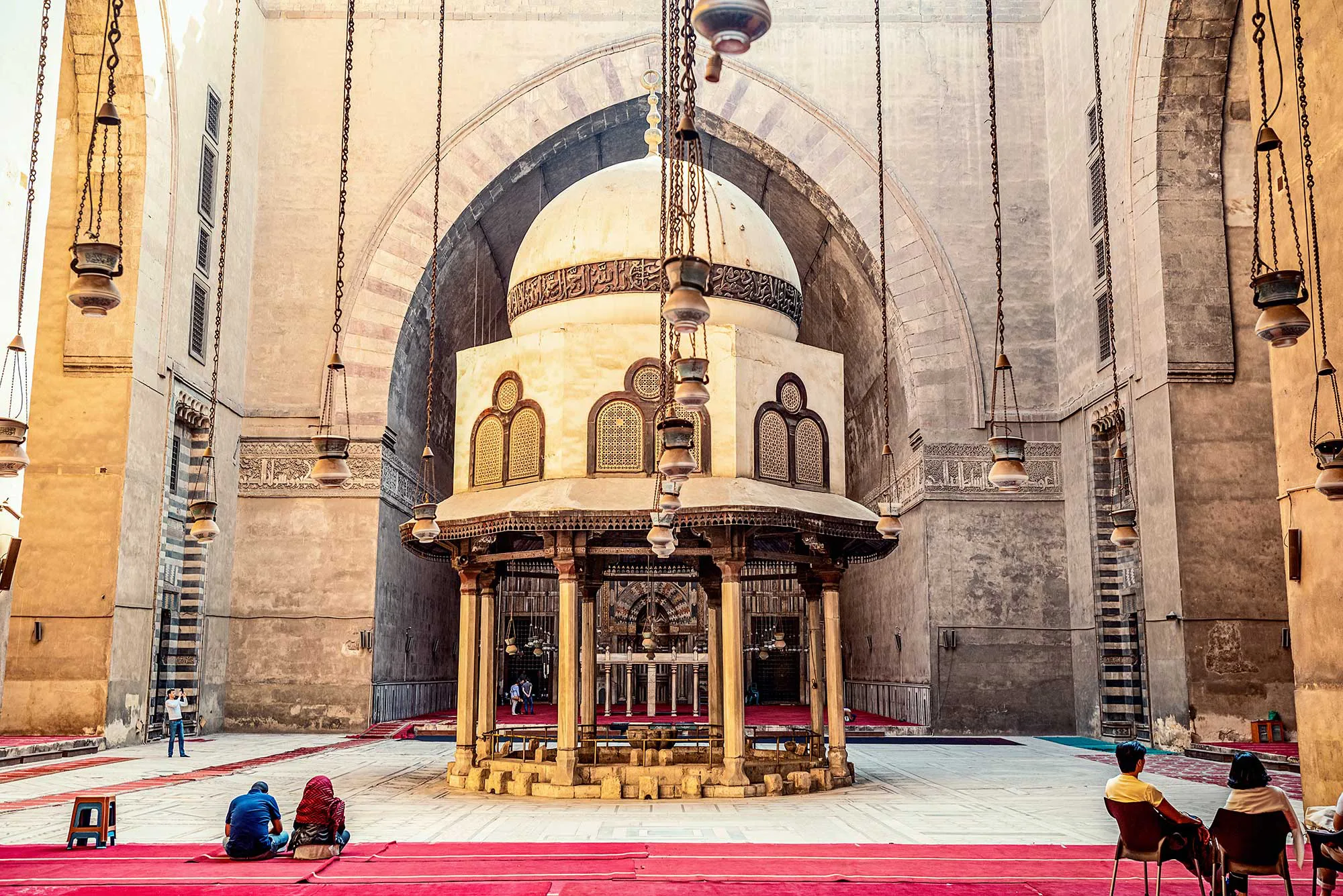
El-Sultan Hassan Mosque and Madrasa is one of the best examples to enjoy the beauty of Islamic architecture and art.
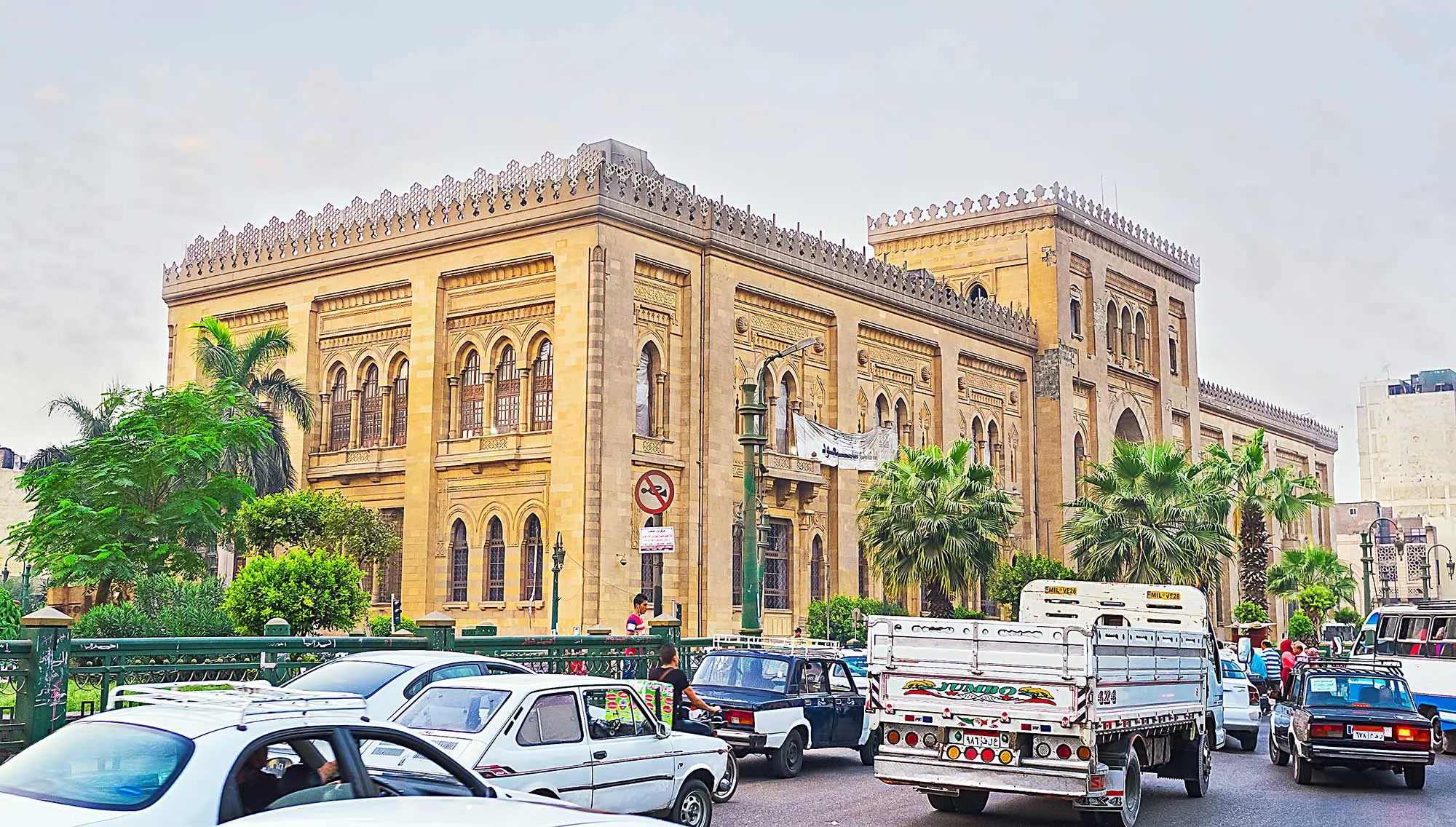
The Museum of Islamic Art in Cairo is one of the largest Museums to show Islamic art in the world, with its exceptional collection of rare woodwork and plaster artefacts, as well as metal, ceramic, glass, crystal, and textile objects of all periods, from all over the Islamic world.
The Modern Capital
Cairo is the city where history comes alive, you come in search of history in a living, modern city, which remained centered around the Fatimid era core throughout the Ayyubid, Mamluk and Ottoman eras. Today, Cairo is a vibrant city, full of life, the capital of Egypt, and one of the important Metrópoles in the world, a major center for business, trade, education and culture.
Its modern history can be traced back to the luxurious palaces of the Royal Family, heirs of Mohamed Ali Pasha, who turned the city into the European architectural style. Qasr El-Nile bridge for example was built to celebrate the grand opening of Suez Canal in 1869!
In the 1800s and early 1900s, Cairo was completely stylized by Belgium and French architects, who built several upper-class districts like: Zamalek and Manyal where you can visit the Palace of Prince Mohamed Ali. Cairo Downtown is one of the best examples of the European Architecture, and you can visit there the Sha’ar Hashamayim Synagogue (lit. Gate of Heaven) which was built in a style evoking the ancient Egyptian temples.
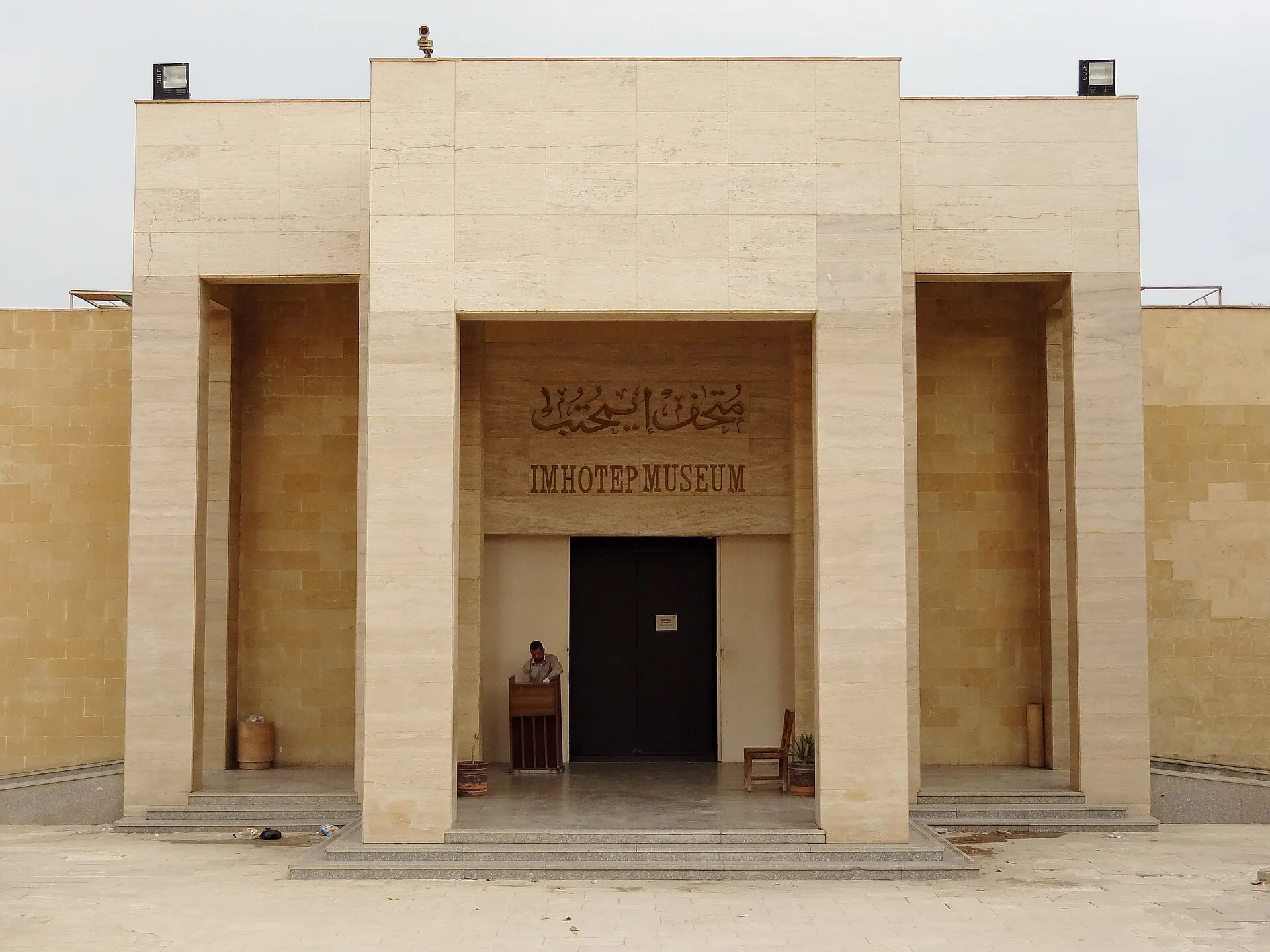
Heliopolis was built in the northern suburbs and connected to Cairo by a tram, and there stands the breathtaking Baron Palace, which was built by the Belgian architect El Baron Empain. Historically, Heliopolis is the city of great Egyptian pioneers: the city of the genius Architect-later defied- Imhoptep, the builder of Djoser complex, and the city of the Historian, Manethon, a high priest in the temple of Heliopolis, who was the first one to record the Egyptian History during third century BC and divided the Egyptian history into 30 royal dynasties.
Far to the south, in Helwan, King Farouq built a lounge currently known as Rokn Farouk Museum, which was commemorated by the Egyptian Cinema in a beautiful love story starring Omar ElSherif and Faten Hamama. And in 1919, Zulfuqar Pasha dedicated a botanical garden to El-Sultan Hussein, built in the Asiatic style, and currently known as the Japanese Garden.
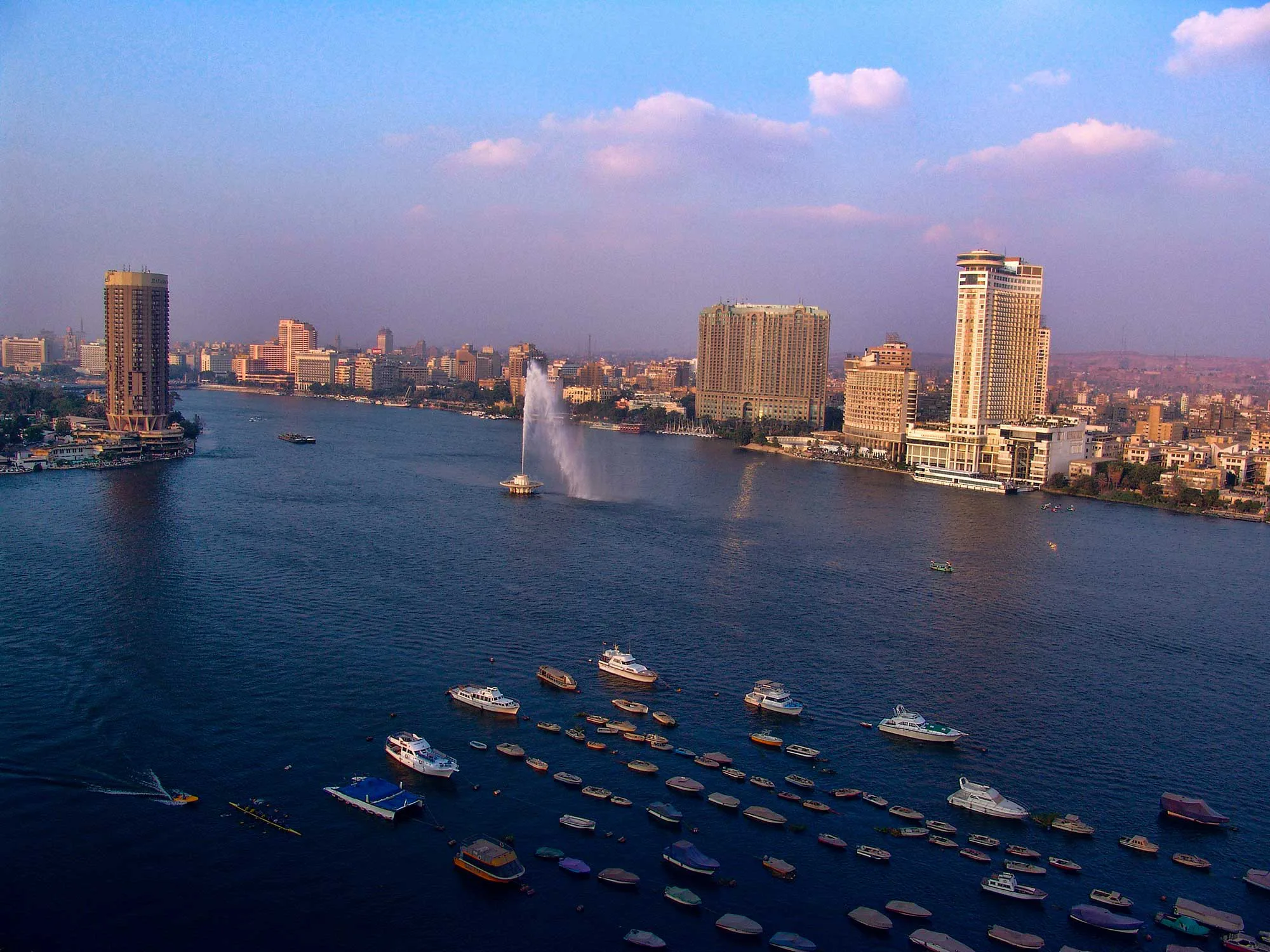
In celebration and commemoration of the 1952 revolution, President Gamal Abdel Naser built the Cairo Tower, the tallest structure in Africa until 1971. From the top view of the tower, you can enjoy a Panoramic view of the vast city on the banks of the Nile. A city where the past intertwines with the present in a very beautiful scenery viewed in a Birdseye perspective from the restaurant and open-air gallery, more than 170 m high: The Cairo Tower.
Tourist ideas
Complete guide to Cairo
About the city, its weather, the best time to visit and how to get there.
About Cairo
- Arabic name
- القاهرة والجيزة
- Governorate
- Cairo (القاهرة)
- Region
- Greater Cairo
- Top landmark
- Citadel of Salah El Din
- Good for
- Culture, city
- Destination type
- Main
- Travel region
- Cairo and Giza
What is the weather like in Cairo?
- Jan
- Apr
- Jul
- Oct
Average daytime highs, °C. Reference: Cairo and Giza.
When is the best time to visit Cairo?
- Best season
- Oct–Apr
- Ideal stay
- 3–4 days
How do I get to Cairo?
Cairo International (CAI) and Sphinx (SPX) airports serve the city. The metro, ride-hailing apps and taxis cover Cairo and Giza.
What to see in Cairo
- Citadel of Salah El Din
- Pyramids
- Grand Egyptian Museum
- Islamic Cairo
- Khan El Khalili
- Nile felucca
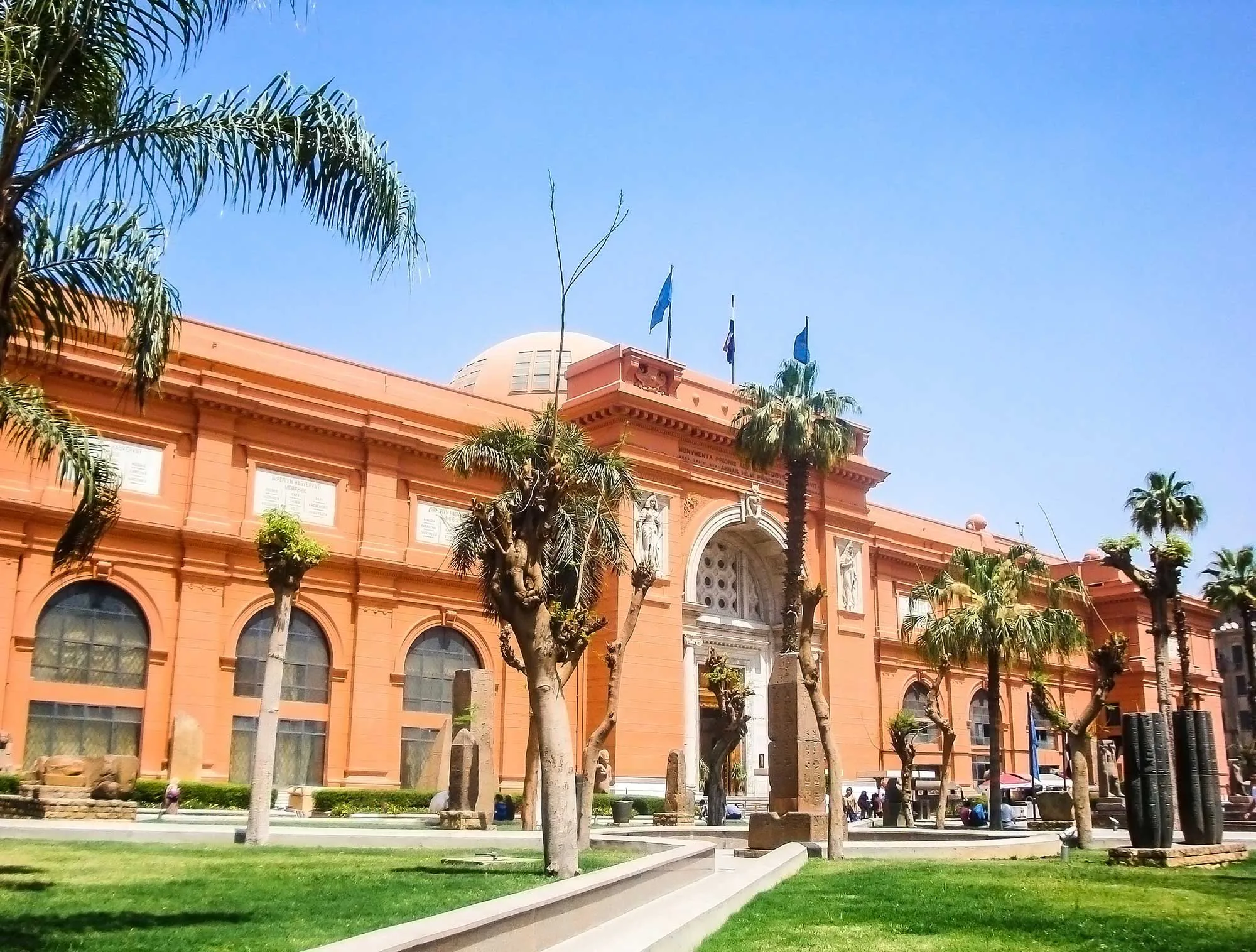
- Egyptian Museum
- NMEC
- Islamic and Coptic Cairo
- Cairo Tower
Archaeological sites in Cairo
Museums in Cairo
Things to do from Cairo
Day trips with hotel pickup, run by a local operator. Book directly with them.
Where to eat in Cairo
Abou Tarek أبو طارق
The city's best-known koshari house, serving the national dish of rice, lentils, pasta and spicy tomato sauce for decades.
Felfela فلفلة
Long-running, quirkily decorated restaurant that is a classic first stop for foul, falafel and grills.
Zooba زوبا
Colourful chain reinventing street food such as taameya, hawawshi and koshari with fresh ingredients.
Abou Shakra أبو شقرة
Historic kebab and kofta house founded in the 1940s, known for charcoal-grilled meats.
Kazouza كازوزة
Casual sandwich chain with a retro look, serving local favourites in bread with a modern spin.
Naguib Mahfouz Cafe مقهى نجيب محفوظ
Air-conditioned, ornately decorated restaurant and cafe in the bazaar, a comfortable break during a souk visit.
El Fishawy Cafe مقهى الفيشاوي
Centuries-old coffeehouse with mirrors and brass tables, ideal for mint tea and people-watching.
Sequoia سيكويا
Open-air Nile-side restaurant and lounge serving mezze, grills and shisha with river views.
Taboula تبولة
Cosy, lantern-lit Lebanese restaurant with a long mezze menu.
Fasahet Somaya فسحة سمية
Tiny, homely spot with a short daily menu of traditional dishes; it fills up quickly.
Le Pacha 1901 لو باشا 1901
Moored Nile boat housing several restaurants and bars under one roof.
Sobhy Kaber صبحي كابر
Famous local grill house for kebab, kofta, stuffed pigeon and traditional sides.
Last checked October 2026. Opening hours and menus change; check with the venue before you go.
Shopping in Cairo
Khan el-Khalili خان الخليلي
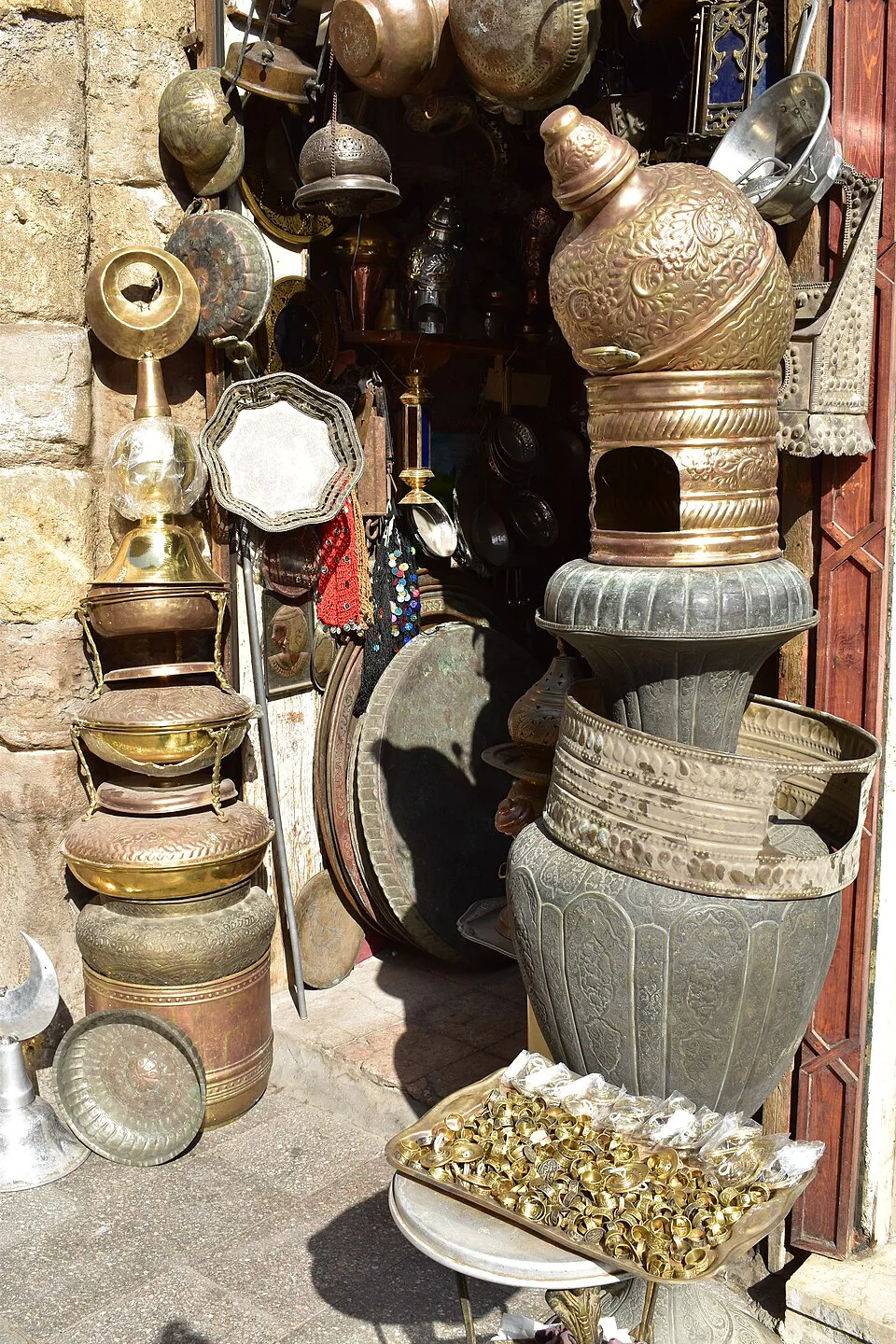
Medieval bazaar lanes packed with brass, lanterns, spices, silver and souvenirs; bargaining is expected.
City Stars سيتي ستارز
One of the largest malls in the city, combining international brands, a cinema, hotels and a big food court.
Cairo Festival City Mall كايرو فستيفال سيتي مول
Large open-air and indoor mall with IKEA, many fashion brands and a lakeside fountain area lined with restaurants.
Point 90 Mall بوينت 90 مول
Popular mid-size mall near the American University in Cairo with shops, a cinema and many cafes.
Fustat Traditional Crafts Centre مركز الفسطاط للحرف التقليدية
Government-run crafts centre where artisans make and sell pottery, glass, carpets and woodwork near the Coptic quarter.
26th of July Street, Zamalek شارع 26 يوليو بالزمالك
Leafy island street and side roads with boutiques, design stores, bookshops and handicraft shops.
Wekalet El Balah وكالة البلح
Sprawling street market famous for fabrics, used clothing and bargains, best for adventurous shoppers.
Downtown (Talaat Harb & Qasr El Nil Streets) وسط البلد (شارعا طلعت حرب وقصر النيل)
Belle-epoque streets lined with shoe and clothing stores, old cafes and local shops.
Last checked October 2026. Opening hours and menus change; check with the venue before you go.
Frequently asked questions
When is the best time to visit Cairo?
The best time to visit Cairo is from October to April.
How do I get to Cairo?
Cairo International (CAI) and Sphinx (SPX) airports serve the city. The metro, ride-hailing apps and taxis cover Cairo and Giza.
What is the nearest airport to Cairo?
The nearest airports to Cairo are Cairo International Airport (CAI) and Sphinx International Airport (SPX).
How many days should I spend in Cairo?
Plan to spend 3–4 days in Cairo.
What are the must-see places in Cairo?
Pyramids, Grand Egyptian Museum, Islamic Cairo, Khan El Khalili, Nile felucca.
Where can I eat in Cairo?
Popular choices include Abou Tarek, Felfela, Zooba, Abou Shakra. See the dining section above for more.
Where can I go shopping in Cairo?
Try Khan el-Khalili, City Stars, Cairo Festival City Mall, Point 90 Mall. See the shopping section above.