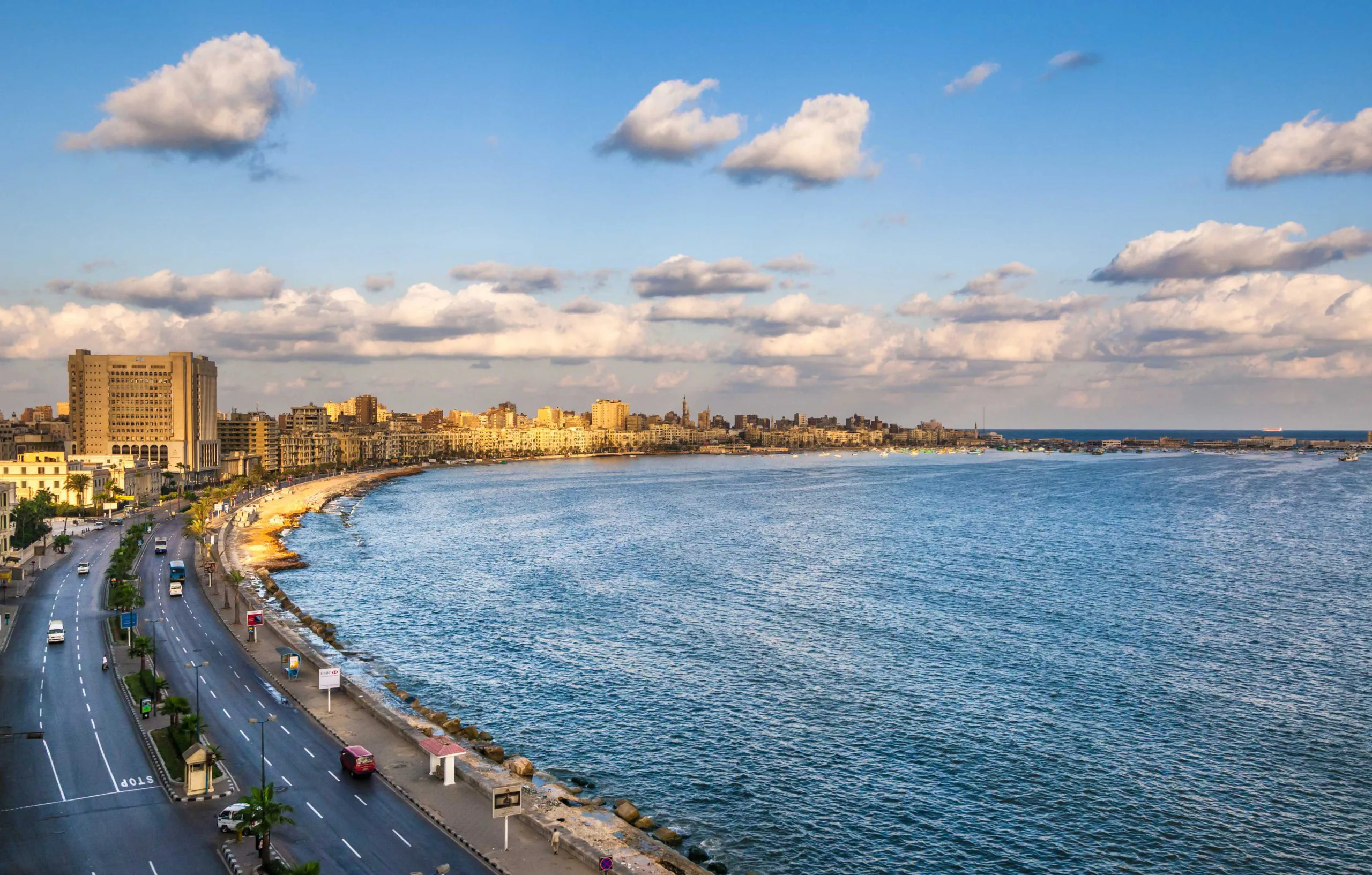
This Alexandria travel guide covers the best things to do in Alexandria: the Qaitbay Citadel, the Bibliotheca Alexandrina, Roman catacombs and seafood on the Corniche. Below you will also find the best time to visit Alexandria, how to get there and around, and a choice of hotels in Alexandria.
Alexandria: the Mermaid of the Mediterranean
Alexandria, the “Mermaid of the Mediterranean”, was founded by Alexander the Great and is now Egypt’s second largest city. Religion, heritage, culture, industry and tourism all meet here. Its story begins with several ancient islands and includes an ancient city, Heracleon, which partly sank beneath the Mediterranean and was rediscovered in modern times.
Alexandria is an ancient city that is still lived in, and its monuments trace the Egyptian timeline from the Ptolemaic era onwards. They mark the end of ancient Egyptian civilization and several hundred years of invasions. The city’s foundation brought the ancient Egyptian era to a close and began a slow, steady shift towards Hellenistic culture, which flourished for several centuries. Religious ideas of the time shaped a mixed school of art and architecture that merged ancient Egyptian and Greek culture. Alexandria became the centre of Greek and Roman culture in Egypt, and it has been a major cultural city ever since.
North Coast
Archaeological and tourist sites stretch from Alexandria to Marsa Matruh Governorate, taking in modern Alexandria, Marina and El-Alamein, scene of fierce Second World War battles and now a busy building site for the new city of El-Alamein.
Historical background
Establishment of the City
The story of Alexandria began when Alexander the Great decided to establish a new capital for his empire in Egypt. He chose for Alexandria a strategic location and visited the site himself to put the foundation deposits. Few months later, Alexander left Egypt and never returned to the city. His early death prevented him from witnessing the completion of the city construction.
The Lightouse
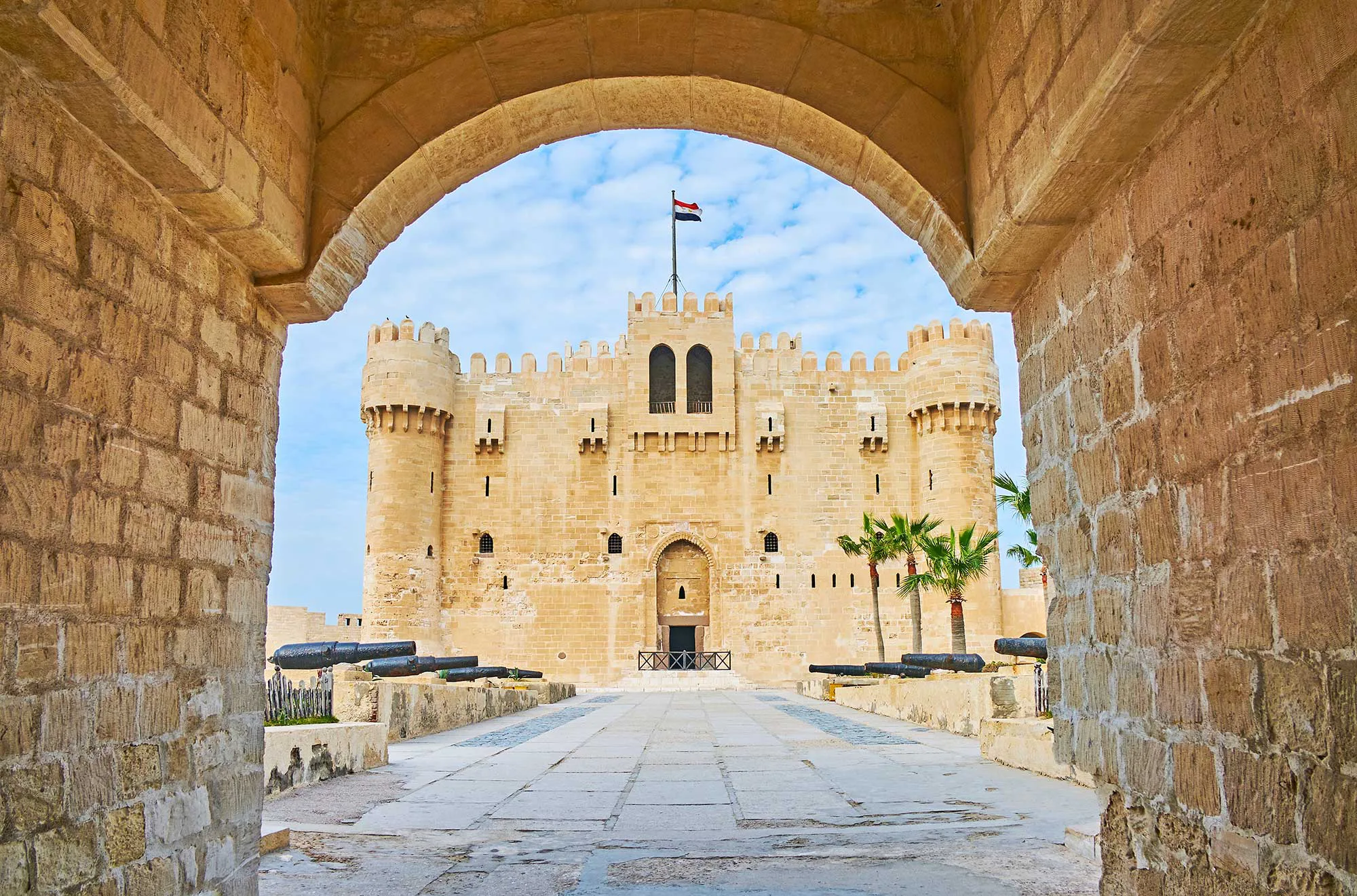
With the emergence of the Ptolemaic period, King Ptolemy I declared Alexandria as the capital, and on the Island of Pharos, the famous Lighthouse was built by Ptolemy II. The lighthouse is estimated to have been 100 m tall, the tallest at that time and one of the seven wonders of the ancient world. It was badly damaged by three earthquakes, abandoned and later dismantled and used for building the Citadel of Qaitbay during the Mamluk period.
The mergence between ancient Egyptian and Greek religious thoughts resulted in the creation of several Gods accepted by both societies, Serapis was one of the main gods, and on the western side of Alexandria stands the remains of a Serapeum dedicated to the Protector of Alexandria.
Bibliotheca Alexandrina
It was also during this time that the Great Library of Alexandria was established to house what would become the largest collection of ancient manuscripts in the classical world. Unfortunately, the library was reported to have burned down, along with an irreplaceable collection of papyri during the third century BC. It was built in 2002, not far away from the ancient site, as an academic institution: The modern Bibliotheca Alexandrina.
Ptolemaic Necropoles
Dating towards the end of the Ptolemaic era, on the Pharos Island is El Anfushi Necropolis (discovered in 1901), that shows Roman artistic influences even before the invasion of Egypt by the Roman Empire!
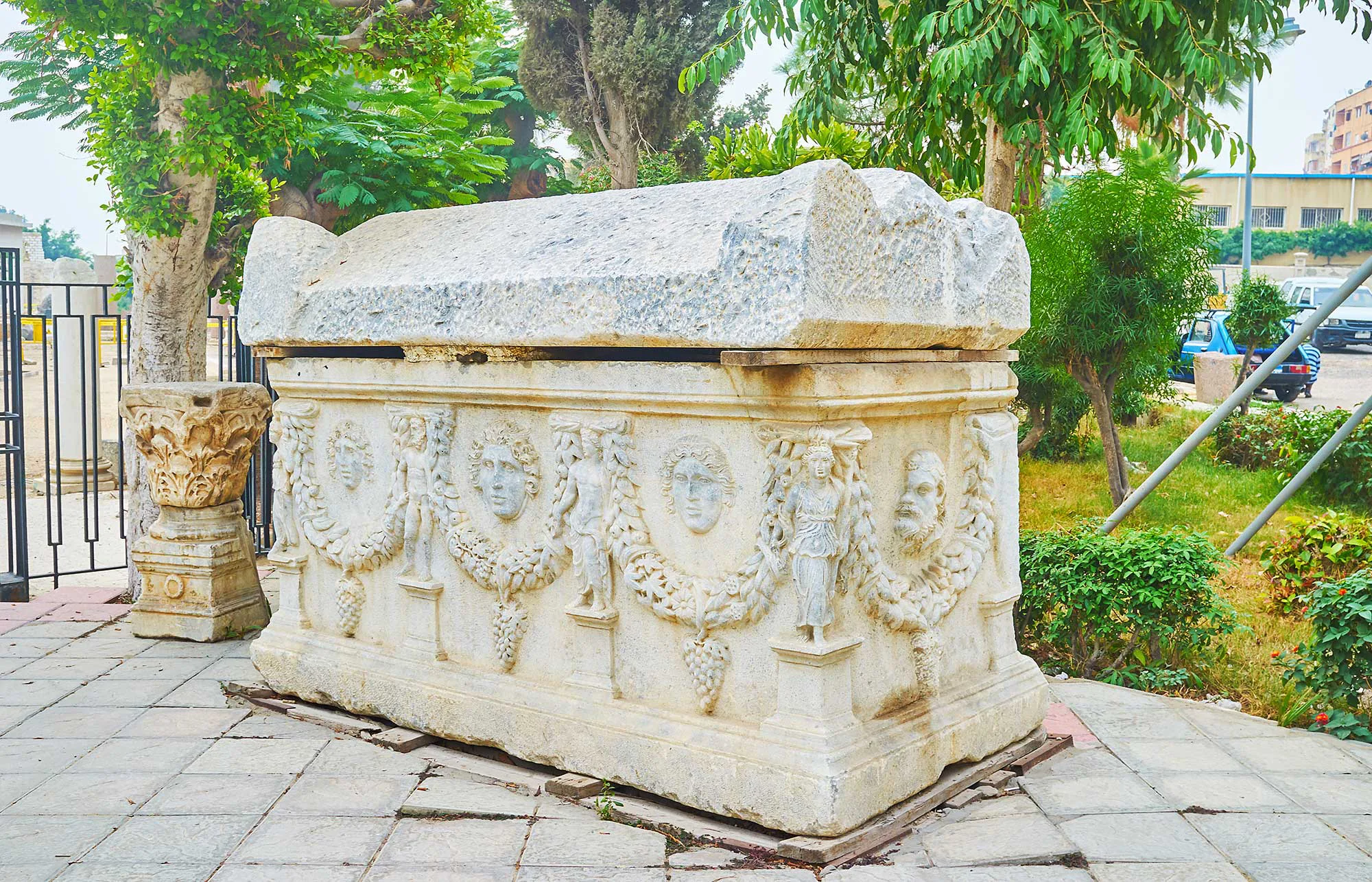
The Kom El-Shuqafa Necropolis consists of a series of Alexandrian tombs, statues and archaeological objects of the funeral cult with Hellenistic and early Imperial Roman influences.
Right in the center of the modern city, lies Kom El-Dikka Necropolis, which was occupied for a very long period: from second century BC to the fourteenth century AD. The long-time span of the site; reveals a lot of social and historical contexts. The richness of the residences is reflected by the beautiful mosaic floors and geometrical figures.
Later in the Roman era, the city became a huge construction site: a complex of big Imperial baths flanked by monumental colonnades, and numerous public buildings were built around it. Most importantly, a wide colonnade portico as a monumental setting for what is called today “Oxford” of the late antiquity, the only ancient university discovered so far, with perfectly preserved auditoria, built in a row along the portico.
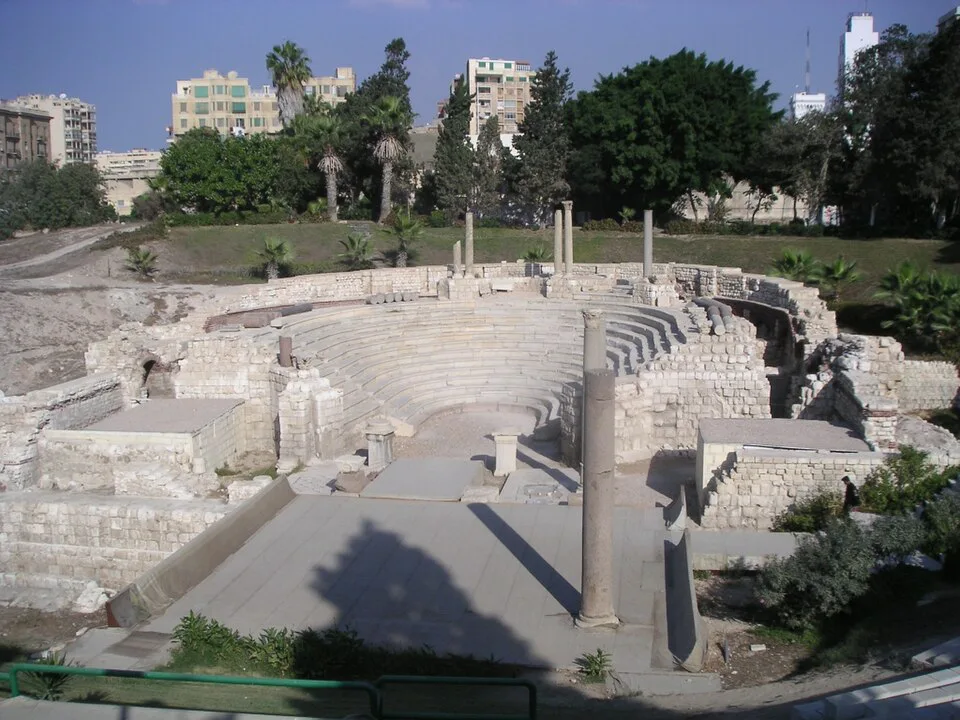
A theater built in the 6th Century AD, combined with the auditoria and baths formed the social and cultural center of late antique Alexandria.
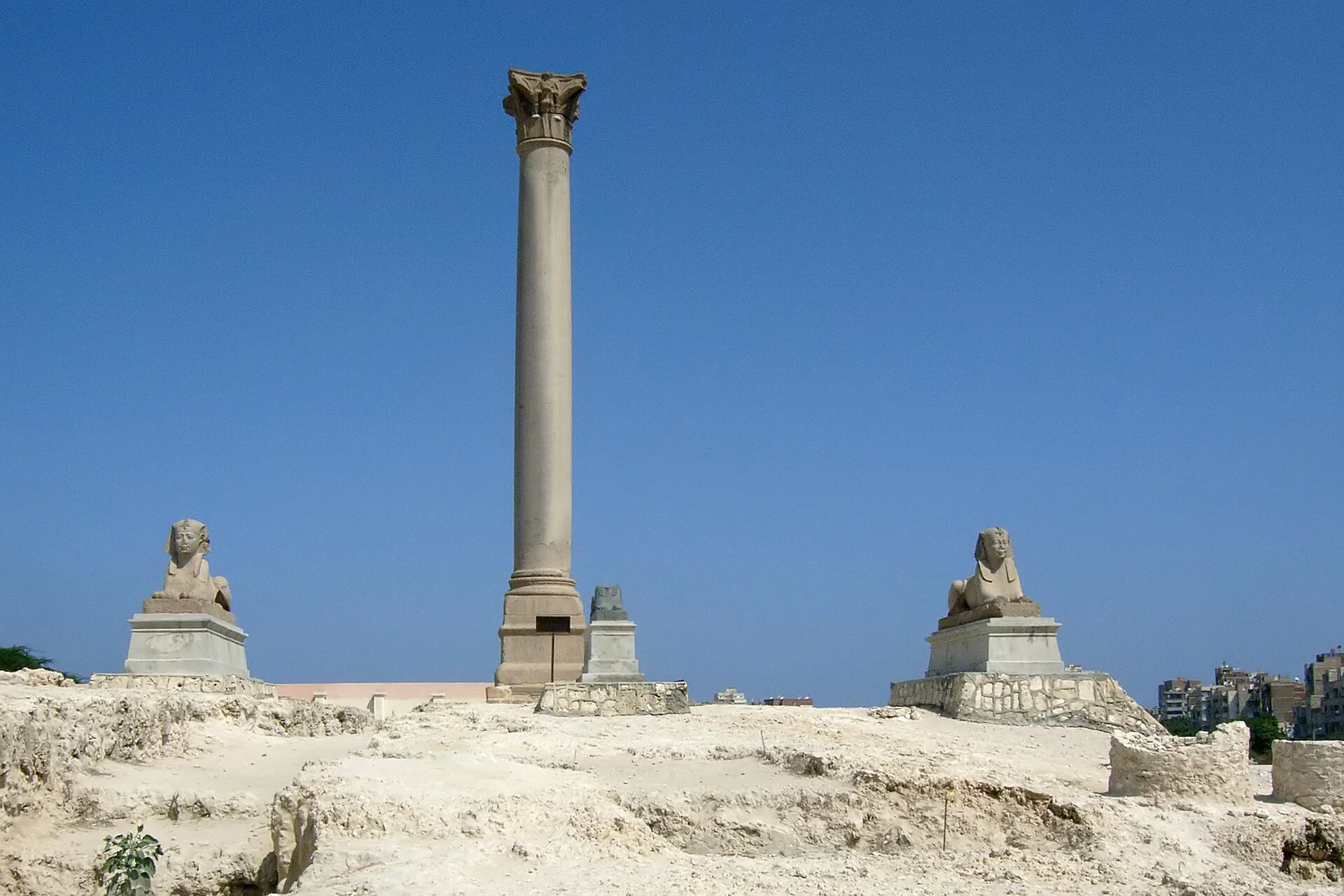
Near the Serapeum, stands the Roman Pompey’s Pillar, a triumphal monument constructed as the only free-standing column in Roman-Egypt, and one of the largest monolithic columns ever erected.
During the first century AD, Christianity found its way into the hearts of Egyptian people, through St. Mark. He died as a martyr in the Festival of Serapis (68 AD), while being dragged on the floor.
St. Mark Cathedral
His relics were divided between three Churches bearing his name: in Venice, Cairo and Alexandria. The one in Alexandria is the first and oldest Church in Egypt St. Mark Coptic Orthodox Cathedral.
Eliyahu Hanavi Synagoguem
Not far from the Cathedral, right in Nabi Daniel Street lies the Eliyahu Hanavi Synagoguem which was built in 1354, bombarded by the French during the invasion in 1798, restored by Mohammed Ali Dynasty, and lately restored by the Egyptian government in 2017.
Citadel of Qaitbay
With the arrival of Islam to Egypt in 640 AD and the foundation of a new capital El-Fustat (in modern Cairo), the political role of Alexandria decreased, but it remained an important international trade and cultural center. Retaining its role as the northern gateway of Egypt, Sultan Al-Ashraf Qaitbay built the Qaitbay Citadel in the place of the existing lighthouse to fortify the country from the foreign invasions.
Royal Palaces
During the Ottoman rule, Mohammed Ali Pasha started renovation and development projects in Alexandria, and later one of his descendants, the last Khedive, Abbas Helmy II, built El-Montazah Palace, in his hometown. A beautiful palace used as a residence for the royal family and the former presidents Al Sadat and Hosni Mubarak. You can now visit El Montazah, and even stay inside the hotel erected within the Palace’s enclosure.
The oldest Palace built by the Royal Family still in use, Ras El-Tin, a place that witnessed the abdication of King Farouq I of the throne, as the last king of Egypt.
El-Alamin
It lies 100 km west of Alexandria, witnessed two of the great battles of World War II, and several cemeteries and a museum were built to commemorate the life and death of the soldiers who took part in the battles. A modern city is currently being built as a new Metropolis of the north coast with comfortable touristic facilities and accommodations.
Tourist ideas
At a glance
Arabic nameالإسكندرية
GovernorateAlexandria
Trip typeCulture, city, sea
Best seasonApr–Oct
Ideal stay2 days
Nearest airportBorg El Arab (HBE)
Destination typeMain
Complete guide to Alexandria
About the city, its weather, the best time to visit and how to get there.
About Alexandria
- Arabic name
- الإسكندرية
- Governorate
- Alexandria (الإسكندرية)
- Region
- Mediterranean
- Top landmark
- Qaitbay Citadel
- Good for
- Culture, city, sea
- Destination type
- Main
- Travel region
- Alexandria and the North Coast
What is the weather like in Alexandria?
- Jan
- Apr
- Jul
- Oct
Average daytime highs, °C. Reference: Alexandria and the Mediterranean coast.
When is the best time to visit Alexandria?
- Best season
- Apr–Oct
- Ideal stay
- 2 days
Summer is beach season and the coast is busy; winter brings rain and rough seas.
How do I get to Alexandria?
- Nearest airport
- Borg El Arab (HBE)
Trains from Cairo take about 2.5 to 3 hours, and flights land at Borg El Arab airport. Trams, taxis and ride-hailing apps work in the city.
What to see in Alexandria
- Qaitbay Citadel
- Bibliotheca Alexandrina
- catacombs
- Corniche
- seafood
- Kom El Shoqafa catacombs
- Montaza Palace
- Roman Theatre
Archaeological sites in Alexandria governorate
Museums in Alexandria governorate
Hotels near Alexandria
Things to do from Alexandria
Day trips with hotel pickup, run by a local operator. Book directly with them.
Where to eat in Alexandria
Mohamed Ahmed محمد أحمد
Alexandria's legendary breakfast spot for foul, falafel and fresh bread.
Fish Market فيش ماركت
Choose your fresh fish from the counter and have it grilled or fried, with sea views from the dining room.
Kadoura قدورة
No-frills seafood institution where you pick your catch and pay by weight.
Zephyrion زفيريون
Seafront fish restaurant open since the late 1920s, a classic excursion from the city.
Abou Ashraf أبو أشرف
Popular local fish restaurant known for stuffed bass and seafood rice.
Balbaa Village قرية بلبع
Large, family-friendly local favourite serving grills, seafood and Egyptian staples.
Sea Gull سي جل
Castle-like seafood restaurant on the western shore, known for its setting as much as its fish.
Trianon تريانون
Elegant Art Deco cafe from the early 20th century, linked to the poet Cavafy.
Délices ديليس
Historic Greek-founded patisserie famous for cakes and pastries.
Athineos أثينيوس
Old Greek cafe overlooking the eastern harbour, full of period atmosphere.
Last checked October 2026. Opening hours and menus change; check with the venue before you go.
Shopping in Alexandria
San Stefano Grand Plaza سان ستيفانو جراند بلازا
Seafront mall with international brands, a cinema and sea views, attached to the Four Seasons hotel.
City Centre Alexandria سيتي سنتر الإسكندرية
Large mall anchored by a Carrefour hypermarket with fashion stores and a cinema.
Green Plaza Mall جرين بلازا
Long-established mall and leisure complex with shops, restaurants and a hotel.
Attarine Antiques Market سوق العطارين
Old quarter of antique and furniture dealers, good for vintage hunting.
Zan'et El Settat زنقة الستات
Narrow, crowded alley market selling fabrics, accessories and household goods.
Safeya Zaghloul & Saad Zaghloul Streets شارعا صفية زغلول وسعد زغلول
Central streets lined with local clothing stores, bookshops and historic cafes.
Last checked October 2026. Opening hours and menus change; check with the venue before you go.
Frequently asked questions
When is the best time to visit Alexandria?
The best time to visit Alexandria is from April to October.
How do I get to Alexandria?
Trains from Cairo take about 2.5 to 3 hours, and flights land at Borg El Arab airport. Trams, taxis and ride-hailing apps work in the city.
What is the nearest airport to Alexandria?
The nearest airport to Alexandria is Borg El Arab International Airport (HBE).
How many days should I spend in Alexandria?
Plan to spend 2 days in Alexandria.
What are the must-see places in Alexandria?
Qaitbay Citadel, Bibliotheca Alexandrina, catacombs, Corniche, seafood.
Where can I eat in Alexandria?
Popular choices include Mohamed Ahmed, Fish Market, Kadoura, Zephyrion. See the dining section above for more.
Where can I go shopping in Alexandria?
Try San Stefano Grand Plaza, City Centre Alexandria, Green Plaza Mall, Attarine Antiques Market. See the shopping section above.