Ptolemaic Period
History Topic
Greek kings on the throne of the pharaohs
In 332 BC Alexander the Great marched into Egypt and was welcomed as a liberator from Persian rule. He visited the oracle of Amun at Siwa, where he was hailed as the son of the god, and in 331 BC he founded a new city on the Mediterranean coast: Alexandria. Alexander died in Babylon in 323 BC, and his general Ptolemy took control of Egypt, declaring himself king in 305 BC. His descendants, all the kings called Ptolemy, ruled for almost three hundred years.
A Greek court, an Egyptian kingdom
The Ptolemies spoke Greek and ran their government in Greek, yet in the temples they presented themselves as traditional pharaohs, wearing the double crown and making offerings to the Egyptian gods. They promoted a new god, Serapis, who blended Egyptian and Greek ideas. Most Egyptians kept their own language, written in the Demotic script, and their old beliefs. Priestly decrees were sometimes carved in several scripts at once; the most famous is the Rosetta Stone of 196 BC, inscribed in hieroglyphs, Demotic and Greek, which later became the key to reading hieroglyphs.
Alexandria, city of learning
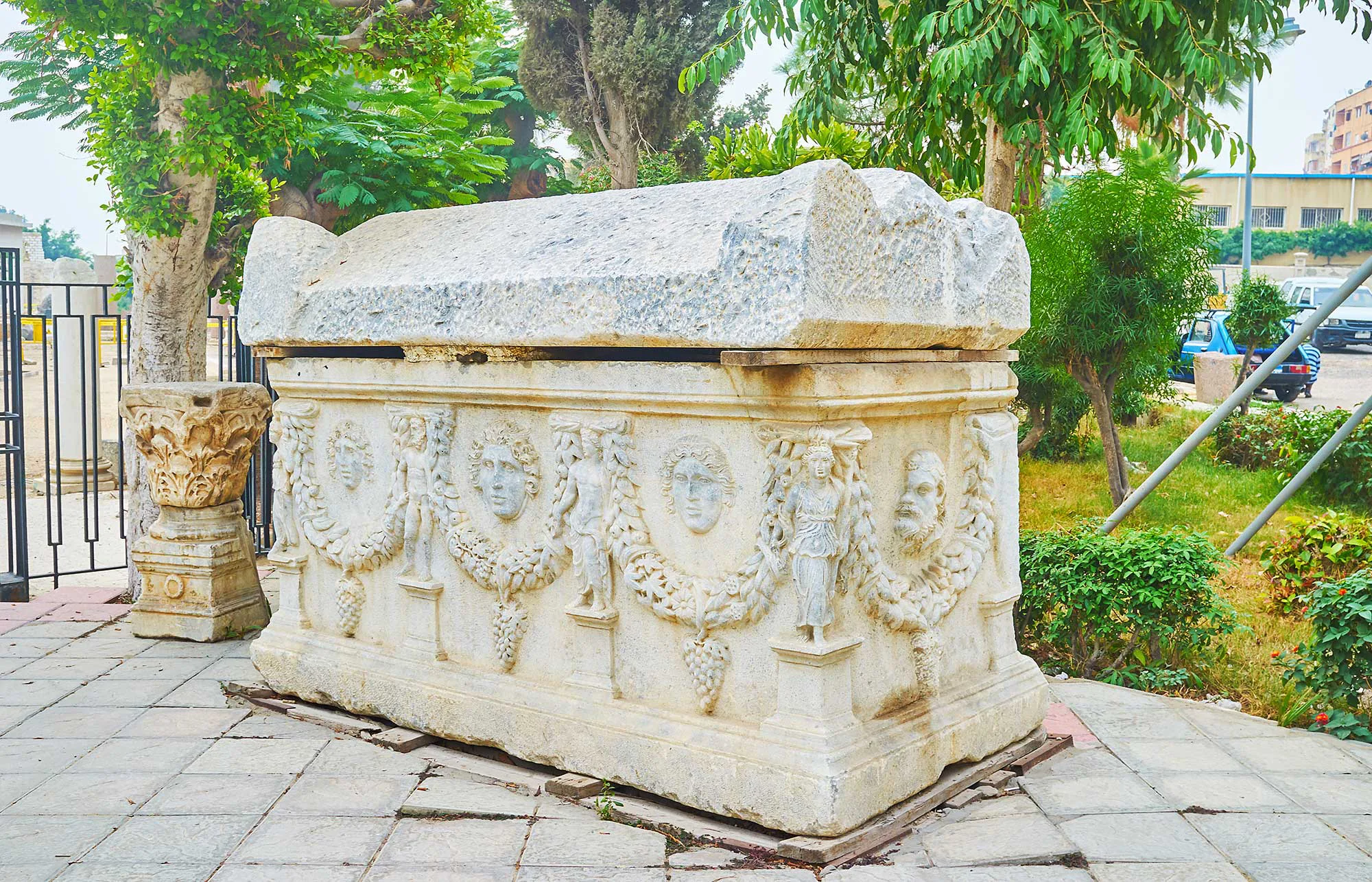
Under the first Ptolemies, Alexandria became the greatest city of the Mediterranean world. The Library and the Mouseion attracted scholars such as Euclid and Eratosthenes, who calculated the circumference of the Earth with remarkable accuracy. Off the harbour rose the Lighthouse (Pharos), completed in the early 3rd century BC and counted among the Seven Wonders of the Ancient World. It stood for well over a thousand years before earthquakes brought it down; the Citadel of Qaitbay now occupies its site.
The great temples
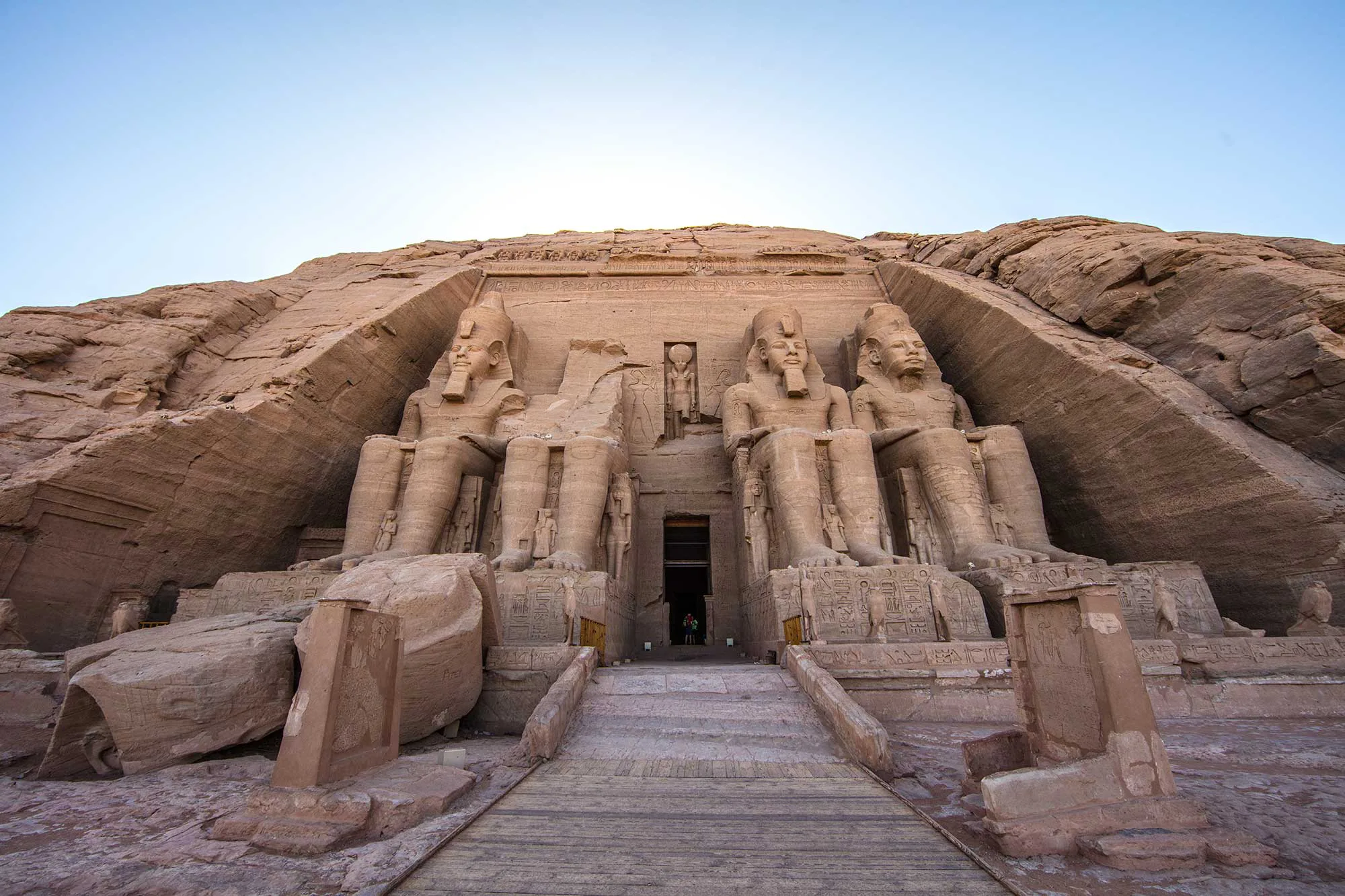
The Ptolemies were energetic temple builders, and many of the temples visitors see in Upper Egypt today date from their reign. The Temple of Horus at Edfu, begun in 237 BC and finished in 57 BC, is the most complete temple in Egypt. The double temple of Kom Ombo honours both Sobek and Horus, the Temple of Isis at Philae became a major pilgrimage centre, and the Temple of Hathor at Dendera, rebuilt in the last decades of the dynasty and completed under the Romans, still keeps its brightly painted ceilings.
Cleopatra VII and the end of the dynasty
The later Ptolemies were weakened by family feuds and increasingly dependent on Rome. The last active ruler, Cleopatra VII (reigned 51–30 BC), is said to have been the only member of the family to learn Egyptian. She allied herself first with Julius Caesar and then with Mark Antony, hoping to keep Egypt independent. After their defeat by Octavian at the Battle of Actium in 31 BC, Antony and Cleopatra took their own lives in Alexandria in 30 BC, and Egypt became a Roman province.
Where to see it today
- Edfu Temple
- Dendera Temple Complex
- The temple of Kom Ombo
- Temple of Philae
- Oracle Temple at Siwa, visited by Alexander in 331 BC
- Citadel of Qaitbay at Alexandria, on the site of the Lighthouse
- Graeco-Roman Museum and Alexandria National Museum in Alexandria
Last checked October 2026. Sources: britannica.com, britannica.com, britannica.com, britannica.com, britannica.com.
Information card
| Dates | 332–30 BC |
|---|---|
| Capital | Alexandria |
| Key rulers | Alexander the Great; Ptolemy I Soter; Ptolemy II Philadelphus; Ptolemy III Euergetes; Ptolemy V Epiphanes; Cleopatra VII |
| Languages | Greek (court and administration); Egyptian (Demotic script) |
| Religions | Traditional Egyptian religion; Greek cults; cult of Serapis |
| Big events | Alexandria founded (331 BC); Library and Lighthouse built; Rosetta Stone decree (196 BC); Battle of Actium (31 BC); death of Cleopatra (30 BC) |