Saluga and Ghazal Islands Protected Area
Nature
Tiny granite islands in the Nile's First Cataract at Aswan that preserve the river's original natural vegetation and draw many birds.
- Arabic name
- محمية جزر سالوجا وغزال
- Type
- Protected area
- Governorate
- Aswan
- Area
- 0.40 km²
- Protected since
- 1986
- Nearest city guide
- Aswan
- Official website
- eeaa.gov.eg
Saluga and Ghazal are two small islands among the black granite boulders of the First Cataract, just upstream of Aswan’s town centre. Together they make up one of Egypt’s smallest protectorates.
Plants and birds
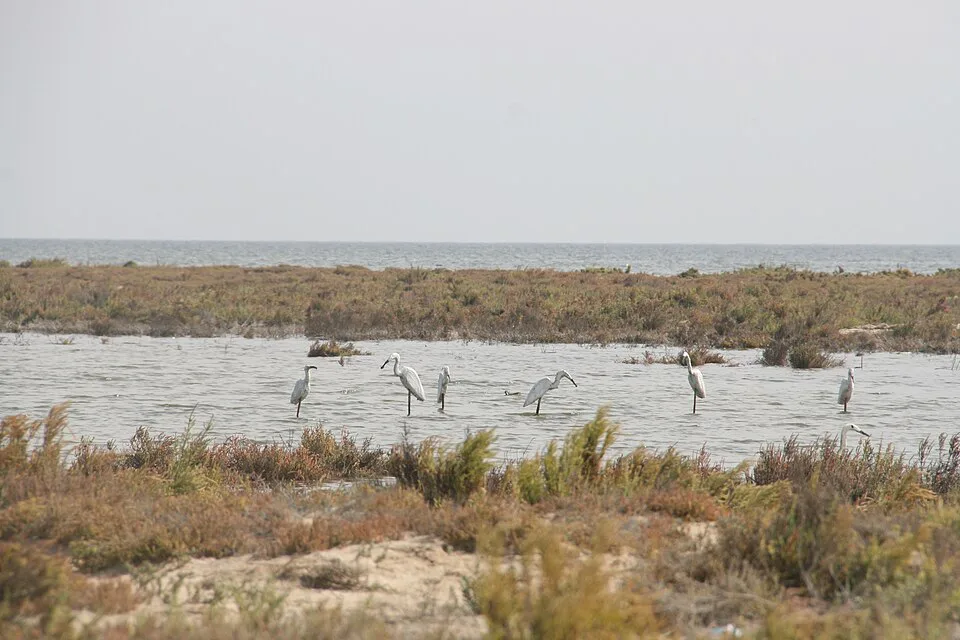
The islands keep a sample of the Nile’s natural riverbank vegetation, largely gone elsewhere: acacia, tamarisk, doum palms and dense reeds. This greenery attracts more than 60 bird species, including kingfishers, Nile valley sunbirds, purple herons, little egrets, ospreys and seasonal migrants from Europe. The boulders and channels around the islands look their best at sunrise and sunset.
What to do
- Hire a felucca or motorboat for a slow trip around the islands with a birding guide.
- Combine the visit with Elephantine Island, Kitchener’s Island (Aswan Botanical Garden) and the Nubian villages on the west bank.
- Bring binoculars and a camera with a zoom lens.
Getting there and best time
Boats leave from the Corniche in Aswan, and the trip takes one to two hours. Landing is controlled to protect the habitat, so much of the viewing is from the water. October to April is the most comfortable season, and winter brings the largest number of migrant birds.
Entry fee: a small protectorate fee may be charged if landing; you pay separately for the boat (last checked October 2026).
Last checked October 2026. Entry fees and access rules change; check with the Egyptian Environmental Affairs Agency or a local operator before you go. Sources: eeaa.gov.eg, en.wikipedia.org.
Frequently asked questions
Why visit Saluga and Ghazal?
These tiny granite islands in Aswan's First Cataract keep a rare sample of the Nile's original riverbank vegetation and attract more than 60 bird species.
What birds will I see?
Kingfishers, Nile valley sunbirds, purple herons, little egrets and ospreys, plus migrants from Europe in winter. Bring binoculars and a zoom lens.
How do I visit?
Hire a felucca or motorboat from the Aswan Corniche for a one- to two-hour trip, ideally with a birding guide. Landing is controlled, so much of the viewing is from the water.
What does it cost and when should I go?
A small protectorate fee may be charged if you land, and the boat is paid separately. October to April is most comfortable, and winter brings the most migrants.