Egypt before unification
The Predynastic Period is the long stretch of Egyptian prehistory before the country was united under a single king, around 3200–3100 BC. During these centuries people settled along the Nile Valley and in the Delta, farming, herding cattle and building villages, and the political and religious ideas of pharaonic Egypt slowly took shape.
The main cultures
- Merimde and Fayum (Lower Egypt): early farming villages in the north, from about the fifth millennium BC.
- Badarian (Upper Egypt): named after el-Badari near Asyut, known for fine thin-walled pottery with a rippled, black-topped finish and for graves furnished with ornaments and cosmetic palettes.
- Naqada I–III: named after the site of Naqada north of Luxor. Naqada culture spread from the south across the whole country. Its later phases show painted pottery with boats and figures, copper tools, growing trade, and an increasingly unequal society.
Chiefs, centres and early writing
By late Naqada times large regional centres had grown up at Hierakonpolis, Naqada and Abydos. Excavations have found unusually large tombs belonging to local rulers, such as the painted tomb at Hierakonpolis and Tomb U-j at Abydos, which contained small labels bearing some of the earliest known signs of Egyptian writing. Ceremonial objects such as decorated slate palettes and carved ivory knife handles show kings or chiefs as hunters and warriors, themes later kings would adopt.
Egypt’s first farming settlements
Read more about the cultures and sites where farming, villages and kingship began, in date order:
- First farmers of the Nile about 5200–3100 BC
- Faiyum Neolithic about 5200–4200 BC
- Merimde Beni Salama about 5000–4100 BC
- El Omari about 4600–4400 BC
- Badarian culture about 4400–4000 BC
- Maadi–Buto culture about 3900–3300 BC
- Naqada culture about 4000–3000 BC
- Hierakonpolis (Nekhen) about 4000–3000 BC (main Predynastic phase)
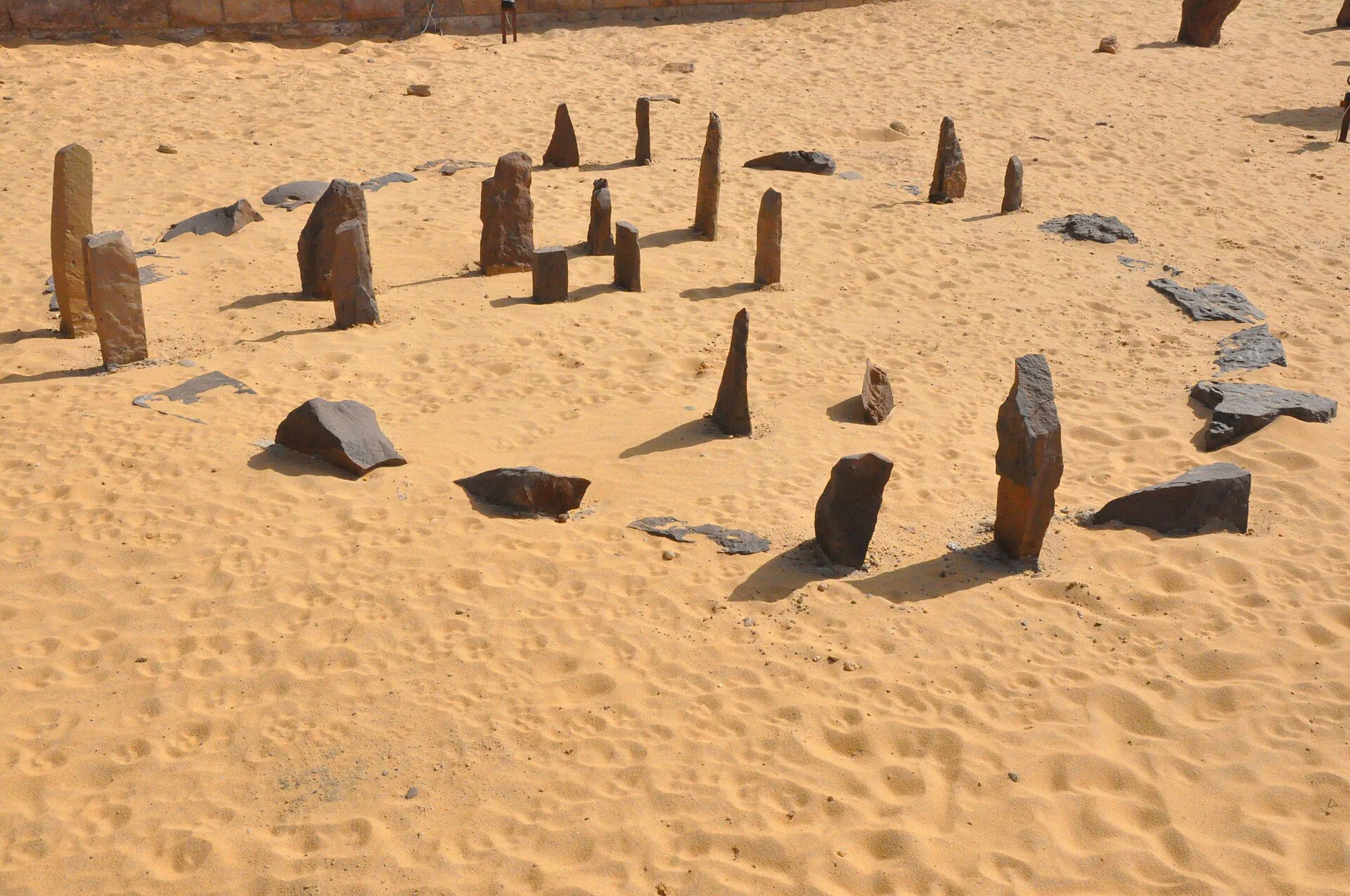
- Nabta Playa about 9000–3000 BC (seasonal use)
How the period is dated
The archaeologist Flinders Petrie developed “sequence dating” from thousands of Naqada graves, arranging pottery styles in order so that undated burials could be placed in relative sequence. His system, refined by later scholars, still underlies the division of the period into Naqada phases.
Where to see it
Predynastic pottery, palettes, figurines and flint knives are displayed in the early galleries of the Grand Egyptian Museum, which opens its story with prehistory, and in the Egyptian Museum in Tahrir Square. The National Museum of Egyptian Civilization also covers Egypt’s prehistoric beginnings. The excavated sites themselves are mostly low mounds and cemeteries with little to see for the casual visitor. If you have time for only one gallery, look for the painted Naqada pots with their many-oared boats, which show how much Egyptian life already depended on the river.
Last checked October 2026. Sources: en.wikipedia.org, en.wikipedia.org, en.wikipedia.org, en.wikipedia.org.
Information card
Frequently asked questions
What does Predynastic mean?
It refers to Egypt before the unification of the country, around 3200 BC.
Which cultures lived in Egypt before unification?
Communities settled along the Nile Valley and formed cultures such as the Badari and Naqada.
How do archaeologists date this period?
Mainly by distinctive pottery, using the sequence dating method, along with large chieftains' tombs.